Here’s a summary of this week’s science news:
Fungicidal Activity and Common Skin Infections
A study published in the Journal of Ethnopharmacology found that an extract from Cistus salviifolius, traditionally used for skin issues, effectively kills certain fungi responsible for skin infections, particularly Trichophyton rubrum and Microsporum canis. It contains polyphenols like tannins and flavonoids but showed no significant effect against Candida albicans. Electron microscopy revealed that the extract disrupts fungal cell structure. Preliminary tests on human skin models indicate promise for developing topical treatments.
Cosmic Flashes and Dead Stars
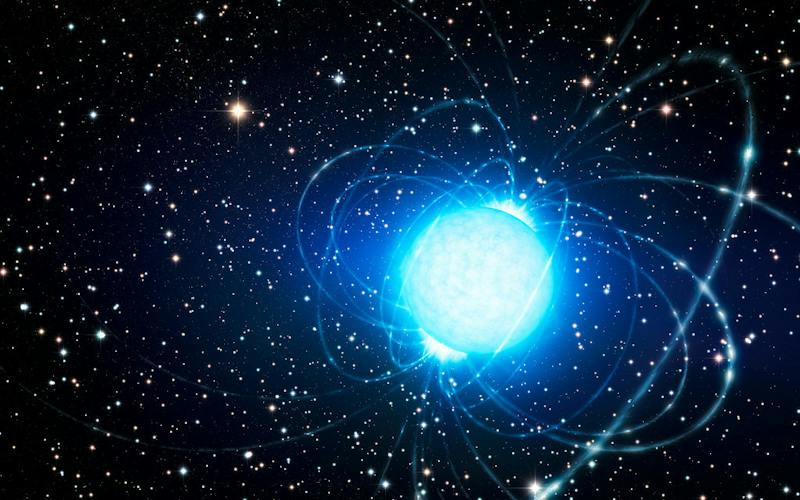
Astronomers identified a potential new method to recognize neutron star collisions in a recent study of an event called EP250704a/GRB 250704B. This event produced a brief gamma-ray burst followed by 10 minutes of X-ray emissions, possibly indicating the formation of a magnetar—a highly magnetic, rapidly spinning neutron star. The absence of a corresponding supernova adds weight to the theory that this event was a rare neutron-star merger, suggesting other X-ray transients might also stem from such collisions.
Tsunami Warnings and Pacific Ringing
A team studying the July 29, 2025, Kamchatka earthquake, which triggered an 8.8 magnitude tsunami, found that the tsunami caused oscillations in the Pacific Ocean for over 10 hours. Their computer model closely matched actual measurements, indicating the earthquake alone was sufficient to explain the tsunami. Notably, energy remained in waves with periods of 30–80 minutes, which could influence tsunami warning protocols. These findings highlight the importance of considering wave periods when assessing potential impacts on coastlines and harbors.


