Published on: 02/10/2026 – 12:19 GMT+2
Updated: 12:34
Google Launches AI Satellite in Space
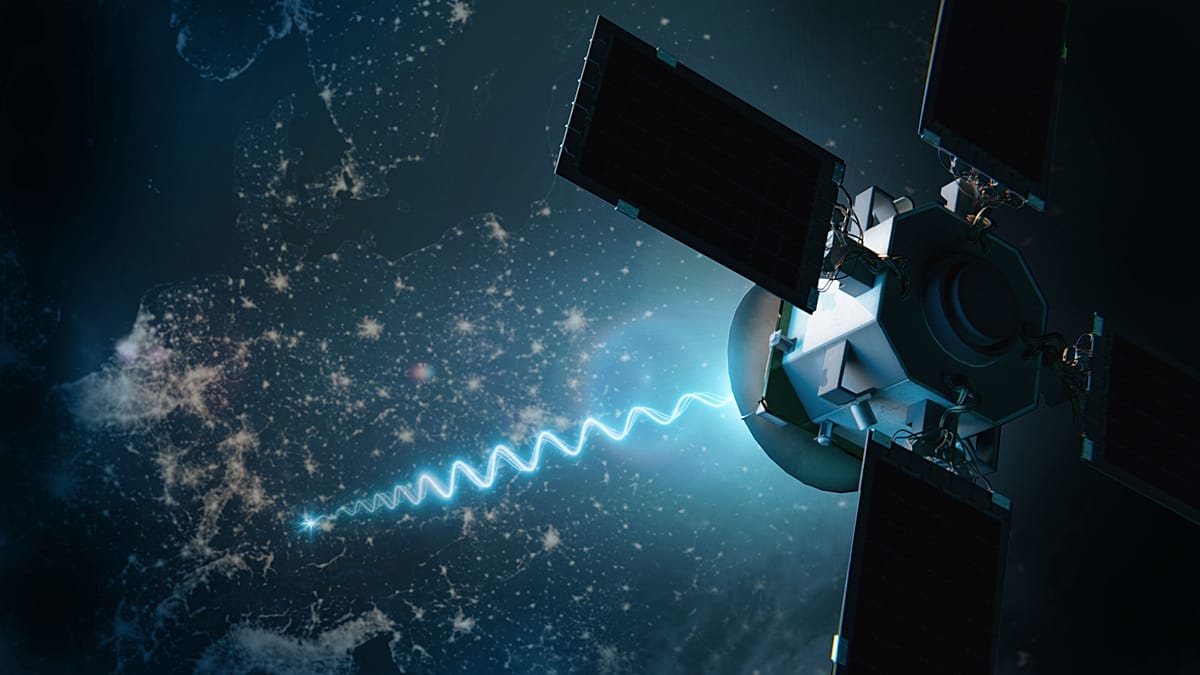
Google has launched a prototype satellite into orbit on Thursday, loaded with its AI chips as part of the initial phase of Project Suncatcher, aimed at examining space as a potential hub for large-scale AI infrastructure.
The satellite, constructed by Planet Labs and sent into orbit via SpaceX’s Transporter-18 rideshare, carries Google’s Tensor Processing Units (TPUs). This mission will assess their performance in the challenging conditions of space, including radiation, temperature variations, and physical stress from the launch.
Project Suncatcher plans to position satellites in low-Earth orbit to harness near-constant sunlight, potentially capturing up to eight times more solar energy than on Earth. With the rapidly increasing energy demands of global data centers—estimated at 415 to 485 terawatt-hours (TWh) last year, which constitutes 1.5% to 2.5% of worldwide electricity generation—Google is exploring the feasibility of AI infrastructure thriving in space.
Many data center initiatives are encountering public resistance due to concerns about escalating energy costs, making space-based solutions attractive. Google is not alone in this pursuit; other companies, like Nvidia-backed Starcloud, have already experimented with AI models from space, and SpaceX recently introduced the AI1 satellite designed for AI tasks.
The Testing Phase
The initial phase of Google’s experiment included a rapid 10-minute ascent to low Earth orbit, where the satellite faced intense vibrations and endured acceleration of up to ten times Earth’s gravity, with the TPU chips experiencing brief shocks between 50 and 100g. Pre-launch testing confirmed the satellite’s resilience to conditions akin to a rocket launch.
As the next phase begins, the team will focus on how the TPU chips cope with elevated radiation levels and cosmic events that could disrupt electronics. Unlike traditional data centers that consume vast amounts of energy and water, cooling solutions for chips in space present unique challenges. The research team will test various methods, including heat pipes and radiators.
Future missions will evaluate satellites carrying multiple TPU chips, aiming to transition from low-bandwidth connections over vast distances to high-bandwidth links over short distances for enhanced connectivity. Google is set to further develop this technology with additional satellite launches planned for next year.


