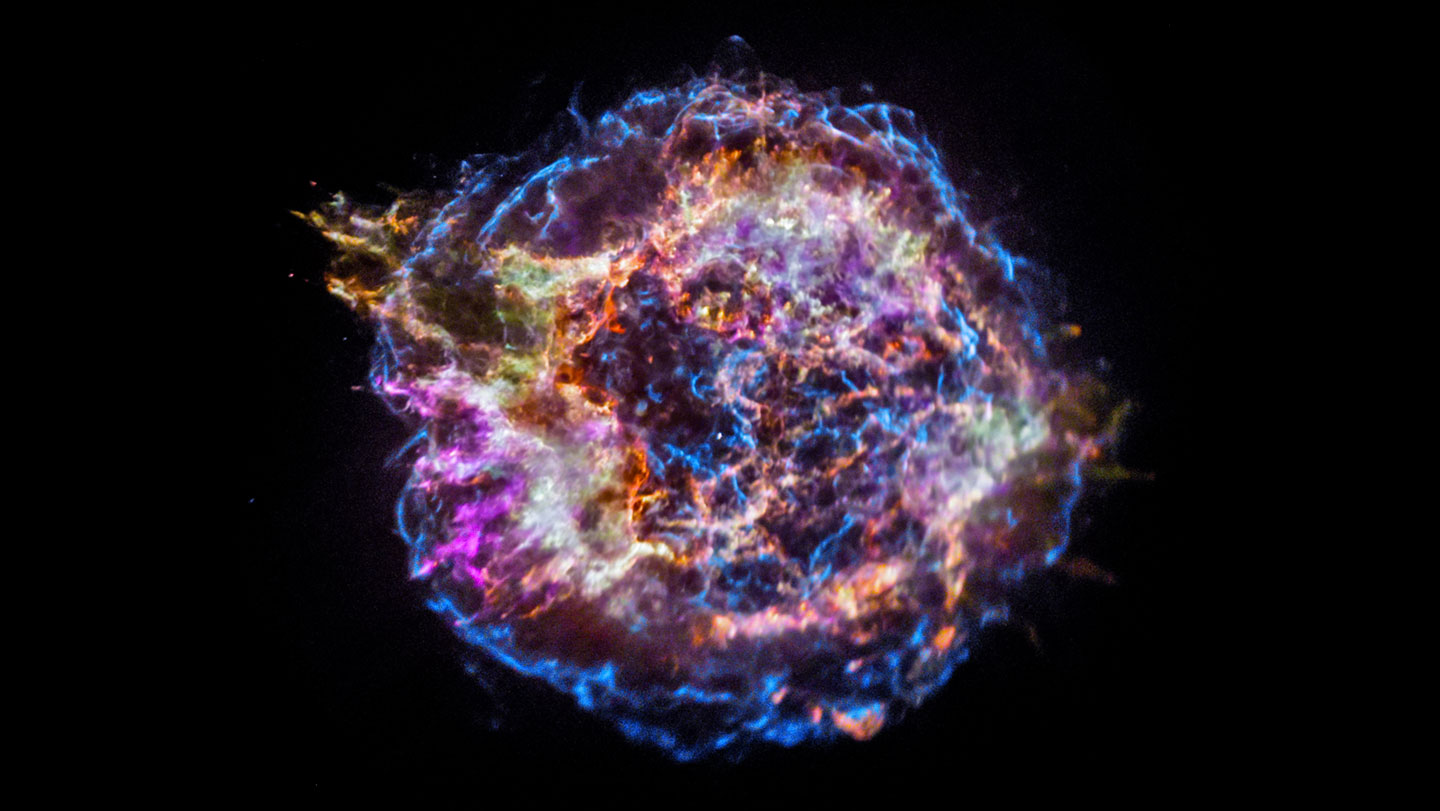
New research suggests that the chemical compositions observed in certain unusual stars may not necessarily stem from hypernovas, as previously thought. Instead, the elements might originate from standard supernovae or other common stellar events.
Astrophysicists from University College London, including Ralph Schönrich, challenge the traditional view of unique stellar origins by presenting mathematical models that account for the uneven distribution of elements after a supernova explosion. As earlier stars die, they release materials into space, which mix with gas that can form new stars. The latest findings indicate that this mixing is not uniform; hence, different areas may exhibit varying amounts of elements.
By applying these insights to create a mathematical model, researchers found that the element ratios in certain stars matched their predictions based on regular supernova events as effectively as they did with hypernova models.
However, not all astronomers are convinced. Anna Frebel from MIT acknowledges both supernovae and hypernovas could play roles in these stars’ origins. While these models enhance our understanding, they do not completely eliminate the possibility of hypernovas.
Overall, this research signifies a growing need for further studies on supernova mechanisms and interstellar gas mixing to accurately trace the origins of stars.


