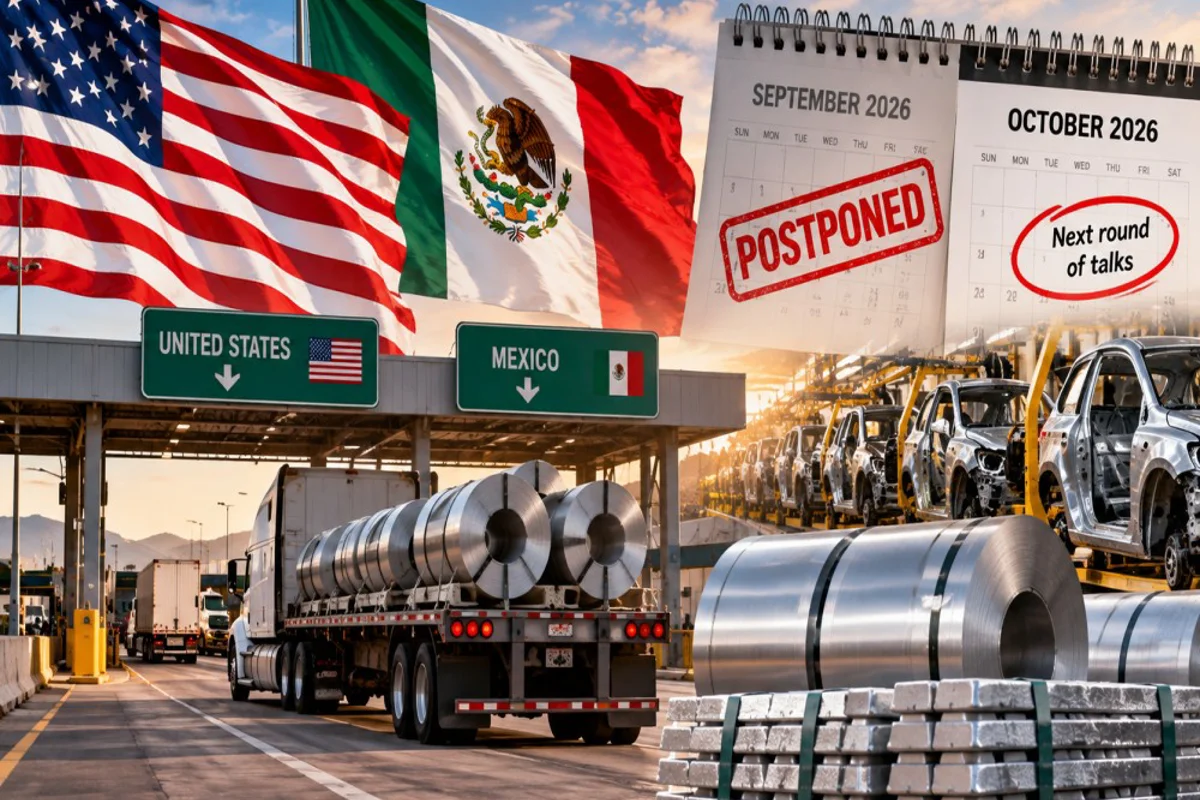
The latest round of trade negotiations between the United States and Mexico has been postponed to October, leaving North American manufacturers in a state of uncertainty regarding tariffs on automobiles, steel, and aluminum.
Key Points
-
Postponement Overview: The meeting was initially set for September but was pushed back due to scheduling conflicts, such as Chinese President Xi Jinping’s visit to the U.S. and the upcoming G20 trade ministerial. A new date is yet to be determined.
-
Ongoing Discussions: Despite the delay of the formal talks, technical coordination continues between U.S. and Mexican officials, focusing on U.S. tariffs on steel and aluminum, as well as content requirements for automobiles.
Areas of Focus
-
Steel, Aluminum, and Automotive Tariffs: Mexico prioritizes reducing Section 232 tariffs on these products. An interim agreement may be sought to alleviate tariff pressures while also addressing U.S. concerns related to automotive content and investments from China in Mexico.
-
Expanded Agenda: The negotiation agenda has expanded from 54 to nearly 90 issues, including digital platform regulation, complicating the discussions. Topics previously addressed include labor, agriculture, and electronic payment services.
Implications for Auto Supply Chains
The delay impacts automakers and suppliers by prolonging uncertainty about trade conditions, crucial for planning and sourcing components. Discussions related to automotive content rules are ongoing, emphasizing the importance of the origin of vehicle components.
Broader Trade Impacts
Negotiations are also part of a wider review of the United States-Mexico-Canada Agreement (USMCA), which includes multiple trade and economic issues, such as energy policy. The electricity market in Mexico has become a point of contention affecting investment decisions from U.S. and Canadian firms.
Future Outlook
The exact timing for the next round of talks remains unconfirmed, with expectations for the discussions to tackle outstanding trade issues and potential tariff relief. The ongoing delay may have commercial implications, depending on how the talks unfold and any resulting changes to duties or trade rules.
For continuous updates and detailed insights, stakeholders should monitor the developments closely as they directly impact strategic decisions concerning manufacturing and investment across the North American trade landscape.

