Pentagon Announces New Autonomous Warfare Command under Defense Secretary Pete Hegseth
Defense Secretary Pete Hegseth revealed a new Pentagon initiative focused on autonomous warfare during a recent speech at Quantico, Virginia. This command will emphasize artificial intelligence (AI) robotics and autonomous weapons and will be led by a four-star general, highlighting its strategic importance in future military operations.
Key Highlights from the Speech:
-
Autonomous Warfare Command:
- Aimed at integrating AI and robotic technologies into military strategies.
- The initiative is inspired by lessons from the ongoing conflict in Ukraine.
-
Project Agincourt:
- A complementary effort to streamline military acquisition, testing, and deployment of drones and related technologies.
- A Pentagon memo indicates the command is set to become operational by October 2027.
-
Critique of Military Culture:
- Hegseth criticized what he termed “woke” military policies and announced plans for deeper cuts in senior officer ranks, increasing the target for reductions to 20%.
- The secretary has been active in removing senior officers, causing concerns among lawmakers and internal military leadership.
-
Future of Warfare Study Group:
- Hegseth appointed notable figures including Elon Musk and Newt Gingrich to lead a study group focused on future military technologies and strategies.
-
Modernization Initiatives:
- Plans to enhance U.S. military bases’ infrastructure, including energy independence and robust supply chains.
- Call for pitches from state governors for new mid-sized military bases.
-
Religious Messaging:
- Hegseth emphasized Christian values in military settings, advocating for reforms in military chaplaincy and citing that 95% of service members recognize a higher power.
-
Recent Political Context:
- His speech coincided with the completion of the U.S. troop withdrawal from Iraq, marking a significant military transition.
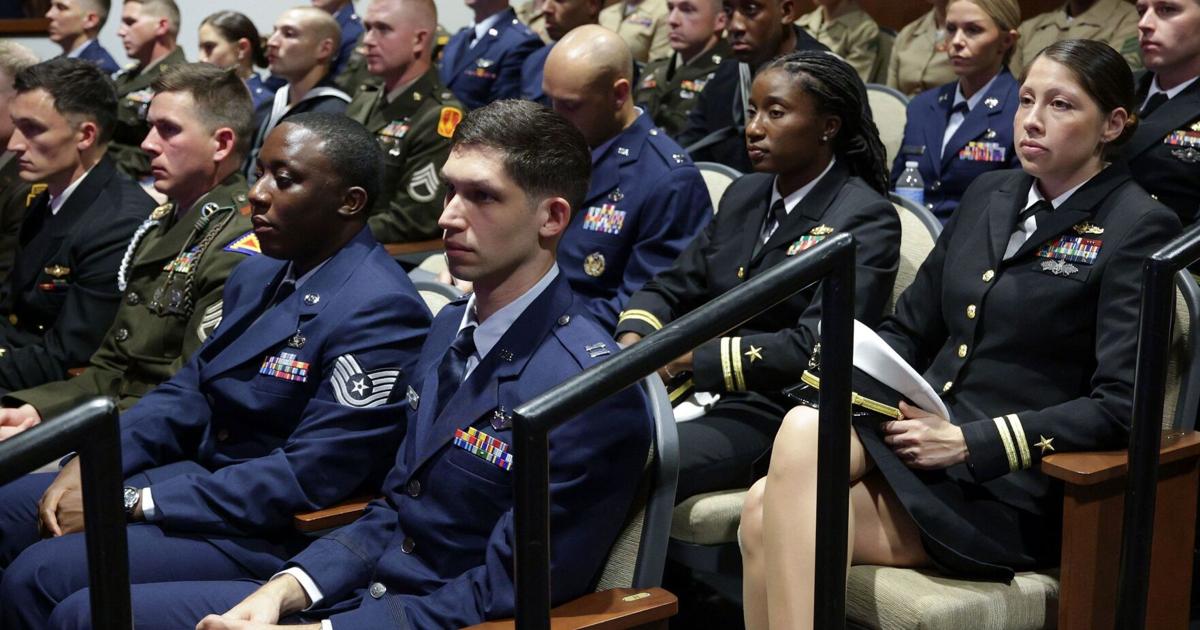
Hegseth’s address drew attention not only for its content but also for its presentation style, which included controversial remarks about military culture. Attendees were primarily junior officers, emphasizing a shift toward engaging those actively involved in military operations.
This initiative underscores the Pentagon’s evolving approach to warfare in a rapidly changing technological landscape.