The Buzludzha Monument: Transforming Contested Heritage
Introduction
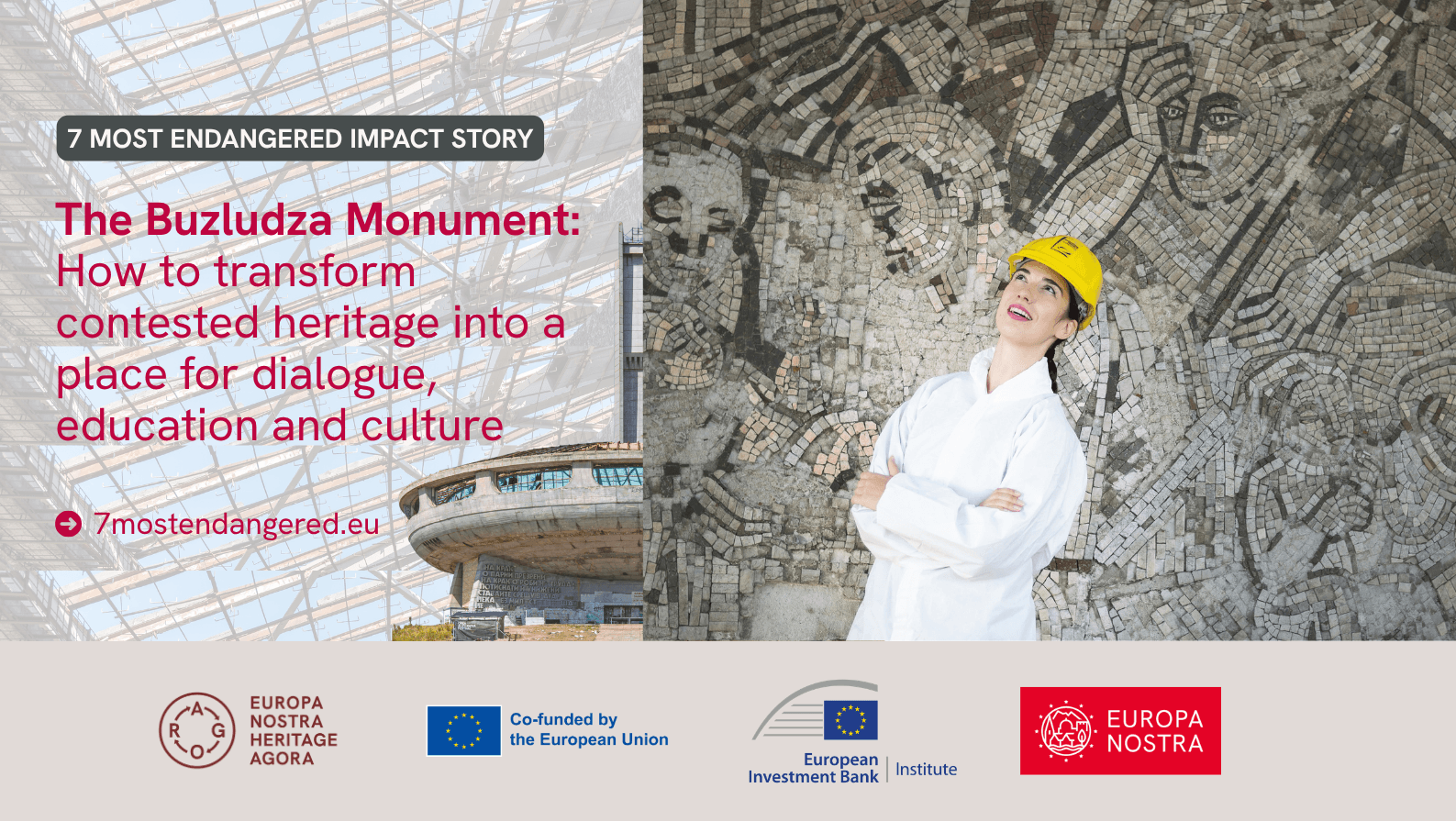
The Buzludzha Monument, built in 1981 as the House-Monument of the Bulgarian Communist Party, stands as a remarkable but contested piece of 20th-century architecture in Bulgaria. Abandoned after the fall of the Communist regime in 1989, it has faced severe challenges, including vandalism and weather damage, raising significant concerns for its preservation.
Historical Context
This striking monument has seen better days; once a symbol of the Communist era, it has become a powerful example of contested heritage. Listed among the 7 Most Endangered Heritage Sites in Europe for 2018 by Europa Nostra, it faces urgent preservation needs due to its deteriorating condition. Efforts have since focused on stabilizing and interpreting the site, aiming to redefine its narrative from one of division to one of dialogue and education.
The Role of the 7 Most Endangered Programme
The 7 Most Endangered Programme has played a pivotal role in the Buzludzha Monument’s journey to preservation. Its selection brought international expertise and media attention, crucial for generating support and funding options. The program led to the first independent expert assessment, laying the groundwork for ongoing conservation efforts.
Turning Points and Achievements
Since the monument’s inclusion in the programme:
- 2019: Major funding secured from the Getty Foundation for conservation strategies.
- 2021: Achieved national cultural heritage status, facilitating further protective measures.
- 2024-2026: Development of a digital twin for educational and interpretive purposes, broadening public engagement.
Community Involvement
The preservation efforts have mobilized a diverse community, including:
- Architects, engineers, and historians collaborating on restoration.
- Volunteers participating in cleaning and maintenance activities.
- Cultural events like the OPEN BUZLUDZHA festival, which bring together people and foster ongoing interest in the site.
Future Aspirations
Looking ahead, secured funding of 3.5 million euros will facilitate essential structural repairs (windows and roof) to protect the monument from the elements. Future plans envision the Buzludzha as a vibrant cultural destination, hosting exhibitions, educational events, and spaces for dialogue.
Conclusion
The journey of the Buzludzha Monument is a testament to the power of community engagement and the importance of heritage preservation. The monument is set to evolve into a place where history is not just remembered but actively discussed, challenging narratives and encouraging intercultural understanding.
This outline captures the essence of the Buzludzha Monument’s history, its ongoing preservation efforts, and the vision for its future, showcasing how contested heritage can foster dialogue and education.