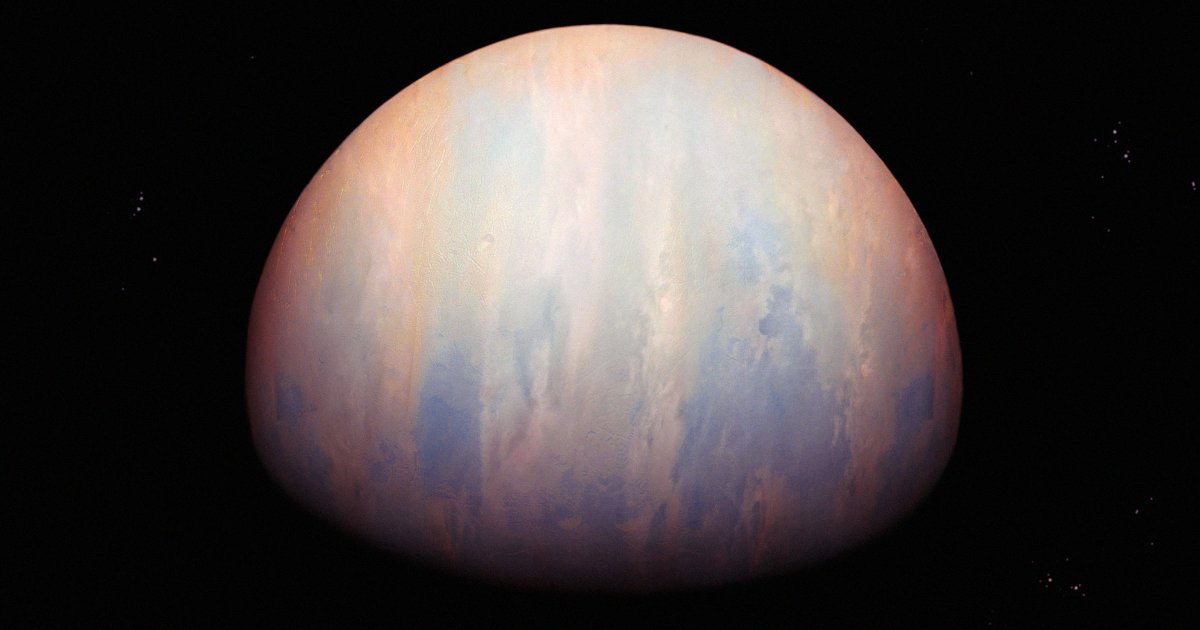
Discovering Exoplanets: A Breakthrough in Astronomy
Introduction
Astronomers have confirmed over 6,300 exoplanets, which are planets orbiting stars outside our solar system. This range includes small, rocky planets and large gas giants like Jupiter. Among these, some exoplanets exist in the “habitable zone,” where conditions might allow for liquid water.
Recent Findings
A significant development has emerged: a team of astrophysicists from Harvard and the University of Oregon claims to have detected radio signals from the exoplanet beta Pictoris b using the MeerKAT radio telescope in South Africa.
Key Insights:
- Beta Pictoris b is a massive gas giant, over 11 times the mass of Jupiter, orbiting its star every 23 Earth years.
- Located 64 light-years away, it was discovered in 2008.
Nature of the Signals
The detected radio emissions are not a sign of extraterrestrial life but are rather attributed to auroras driven by charged particles in the planet’s magnetic field—similar to those observed on Earth.
Key Measurement:
- The signals detected range from 0.85 to 3.5 GHz, exhibiting rapid and highly circularly polarized bursts.
Methodology
The team isolated the signals from the star beta Pictoris by leveraging quasars—extremely bright celestial objects acting as navigation points in space. This technique allowed the researchers to pinpoint the source of the emissions.
Magnetic Field Discovery
The findings also enabled the team to measure the planet’s magnetic field, revealing it to be over 300 times stronger than Jupiter’s. This marks the first direct measurement of the magnetic field strength for an exoplanet, providing insights into its characteristics.
Conclusion
Despite these advancements in monitoring exoplanetary radio emissions, physical exploration of these distant worlds is still a far-off dream. The Voyager 1 spacecraft, our most distant traveler, is only recently approaching a distance of one light-day from Earth, while the closest star system, Proxima Centauri, lies over four light-years away.
Further Reading
For more on exoplanets, you might be interested in:
Learn more about the incredible universe beyond our own and sign up to receive updates on cutting-edge science and technology advancements!


