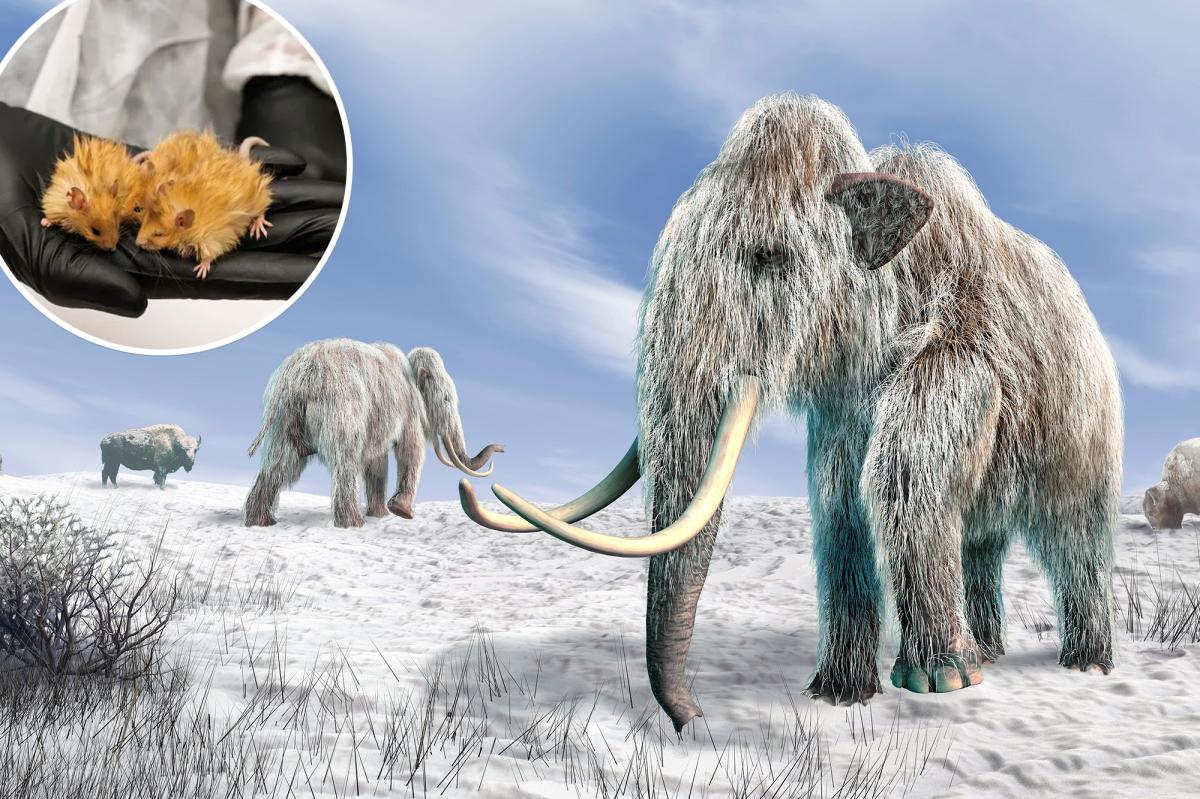
Scientists at Colossal Biosciences are working hard to de-extinct the woolly mammoth, but the project is taking longer than anticipated. Using DNA from a frozen mammoth discovered in Siberia, they aim to revive this ancient species through gene editing. Originally, they expected to have baby mammoths in their labs by 2028, but this timeline has now shifted to the early 2030s.
The complexity of the genetic work has increased; they now estimate they need to edit over 150 genes, up from the initially planned 60. Their research has already led to insights about mammoth traits, such as ear size. They’ve previously de-extincted the dire wolf successfully but found the mammoth project significantly more challenging.
In addition to their efforts with woolly mammoths, Colossal is also working on other species like the dodo bird and Tasmanian tiger using AI and CRISPR technology. Recent successes include creating a lineage of 38 genetically modified “woolly mice” with traits resembling those of the mammoth.


