Why Women’s AI Fluency Could Become an Increasingly Important Factor in Leadership, Visibility, and Career Opportunity
Editor’s note: This Leading Fearlessly column first appeared in the Fearless e-newsletter on Sept. 14.

I was recently catching up with a former colleague who told me she was avoiding “getting on the AI bandwagon.” Her comment puzzled me. “What do you mean, bandwagon?” I asked, noting that AI had moved far beyond a trend.
The woman, an accomplished professional in her 50s, explained that she had significant concerns about AI, so she resisted using the tools even when her leaders were rolling them out. Like many people, she worried about the quality and accuracy of the output. But she also worried about something more personal. If she used AI, would people think she wasn’t doing her own work?
I told her that quality, accuracy, and originality absolutely still matter, maybe more than ever before. But so does learning to use tools that are rapidly becoming part of how work gets done. Increasingly, AI fluency may be less a nice-to-have than a factor in how performance and potential are assessed. Her hesitation made me wonder whether AI could become the next leadership gap for women.
New research suggests this may indeed be the case. In a 2026 working paper, “Global Evidence on Gender Gaps and Generative AI Over Time,” reported on in Harvard Business Review, researchers Katelyn Cranney, Solène Delecourt, and Rembrand Koning analyzed evidence from more than 100 countries and 318,000 respondents. They found that men use generative AI at higher rates than women, with an estimated adoption rate of 47.8% for men compared with 39.3% for women. While the gap has narrowed, it has remained persistent, particularly regarding newer and more advanced AI tools.
The reasons matter. As was the case for my former colleague, research suggests women may be more concerned about the ethics of using AI or about being judged for relying on it. Koning notes, “Women face greater penalties in being judged as not having expertise in different fields.” That can create a powerful disincentive. Why experiment with a new tool if you believe using it could make others question your competence?
New research from Pew Research Center points to a related concern. Its 2026 survey found that men and women are now equally likely to say they have used an AI chatbot, a significant shift from 2024. However, men are more likely to use the tools regularly, including for work, and are more likely to say AI helps their productivity. Twenty-seven percent of men reported using chatbots daily compared with 20% of women. Women are also less likely to say they have heard “a lot” about AI or to feel highly confident using chatbots.
Women’s adoption of AI extends beyond being just a technology issue. At a deeper level, it has implications for our future leadership pipeline. While not keeping up with technology is problematic and limiting for anyone, the larger risk is that women who are more cautious about experimenting with it may accumulate less experience, less confidence, and less visibility around a capability that will increasingly shape how organizations operate. That matters because the skills people develop today often become the experiences that position them for tomorrow’s opportunities.
Leaders must therefore go beyond providing access. Organizations need to create permission to experiment, make AI learning universal, and clarify that using a new tool is not a shortcut around expertise. It is another capability to develop. As Koning argues, the organizations with the smallest gender gaps in adoption tend to be those where leaders explicitly encourage everyone to try the tools and acknowledge that some experiments will work and others will not.
The goal should not be to persuade women or anyone to jump on an AI “bandwagon.” It should be to ensure caution does not become a career disadvantage. Because, as in the past, the next leadership gap may not be about who has the most talent. It may be about who had the opportunity, encouragement, and confidence to learn what comes next.
Insights from Leaders on Leveraging AI Adoption:
-
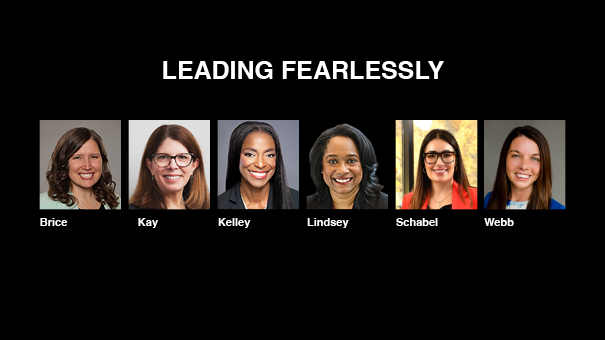
Nicki Brice, Vice President, Community State Bank: Emphasizes that women should combine caution with curiosity and that organizations should foster a culture of exploration with AI.
-
Kathy Kay, Chief Information Officer, Principal Financial Group: Views AI as an opportunity for women, encouraging them to experiment, gain confidence, and find new ways to solve problems.
-
Ardis Kelley, Founder, Cornflower Studio: Reflects on using AI as a tool for efficiency and urges women to embrace technology without fearing it diminishes their expertise.
-
Katrina Lindsey, Chief Legal Officer, Casey’s General Stores: Points out that the risk lies in keeping AI experimentation invisible and stresses the importance of sharing experiences to build confidence.
-
Claudia Schabel, President and CEO, Iowa Women’s Foundation: Calls for engagement with AI, emphasizing that women must help shape the future through thoughtful involvement with the technology.
-
Emily Webb, Senior Commercial Counsel, Google: Advocates for the importance of experimenting with AI while also recognizing the responsibility organizations have to create safe learning environments.
Women ought to see AI as a tool for empowerment rather than a threat, allowing them to enhance their skills, visibility, and impact in the workplace.


