NASA’s CAPSTONE 02 Mission Announcement
NORTH LOGAN, UT — Utah State University’s Space Dynamics Laboratory (SDL) has been chosen by Advanced Space LLC to provide advanced deep space communications and timekeeping technology for NASA’s upcoming CAPSTONE 02 mission. This critical technology demonstration aims to enhance autonomous navigation, spacecraft communications, and proximity operations around the Moon, contributing to NASA’s Artemis program and Moon Base initiatives.
Expanding on CAPSTONE Success
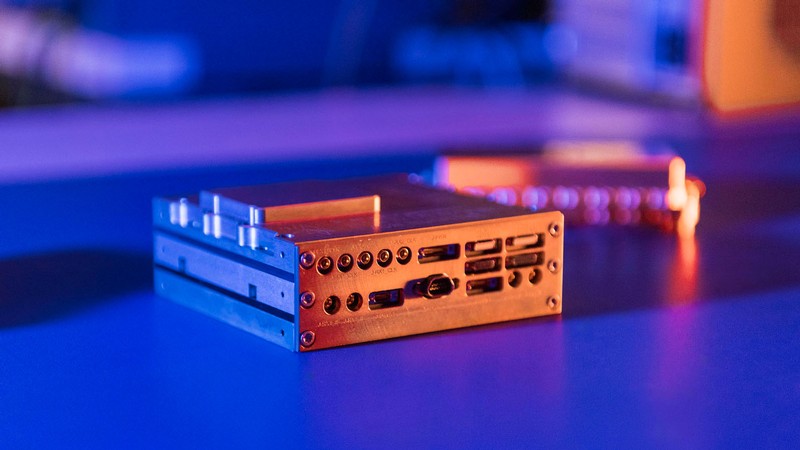
Building on the achievements of the original CAPSTONE mission launched in 2022, SDL will design, manufacture, and test two flight-qualified Iris Radios and other related hardware for CAPSTONE 02’s twin 400-kilogram small satellites. These radios will enable direct-to-Earth connectivity and spacecraft-to-spacecraft links, facilitating autonomous operations in lunar orbit.
Enhanced Technologies
CAPSTONE 02 is set to test new capabilities, including autonomous rendezvous and proximity operations, advanced navigation techniques, and reduced reliance on Earth tracking. It will employ two spacecraft functioning within cislunar space—between Earth and the Moon—to achieve these objectives.
Tim Neilsen from SDL commented on the significance of the mission: “CAPSTONE was a pathfinding mission that demonstrated small satellites’ potential to achieve significant objectives beyond Earth’s orbit. The Iris Radio on CAPSTONE provided essential communication, navigation, and timekeeping, which supported mission control and data relay.”
The Iris Radio
SDL’s Iris Radio is a software-defined telecommunications subsystem crafted for deep space missions. Originating from technology developed at NASA’s Jet Propulsion Laboratory, the radio is specifically designed to endure the harsh conditions of deep space while maintaining constant contact with NASA’s Deep Space Network.
Supporting NASA’s Exploration Goals
This mission further solidifies SDL’s longstanding support for NASA’s exploration beyond Earth’s orbit. The Iris Radios have previously been employed in various missions, including MarCO, Lunar Flashlight, and BioSentinel.
CAPSTONE 02 is scheduled for launch in late 2027. SDL, located at USU’s Innovation Campus in North Logan, Utah, continues to tackle technical challenges across military, scientific, and industrial domains. For more information, visit sdl.usu.edu.


