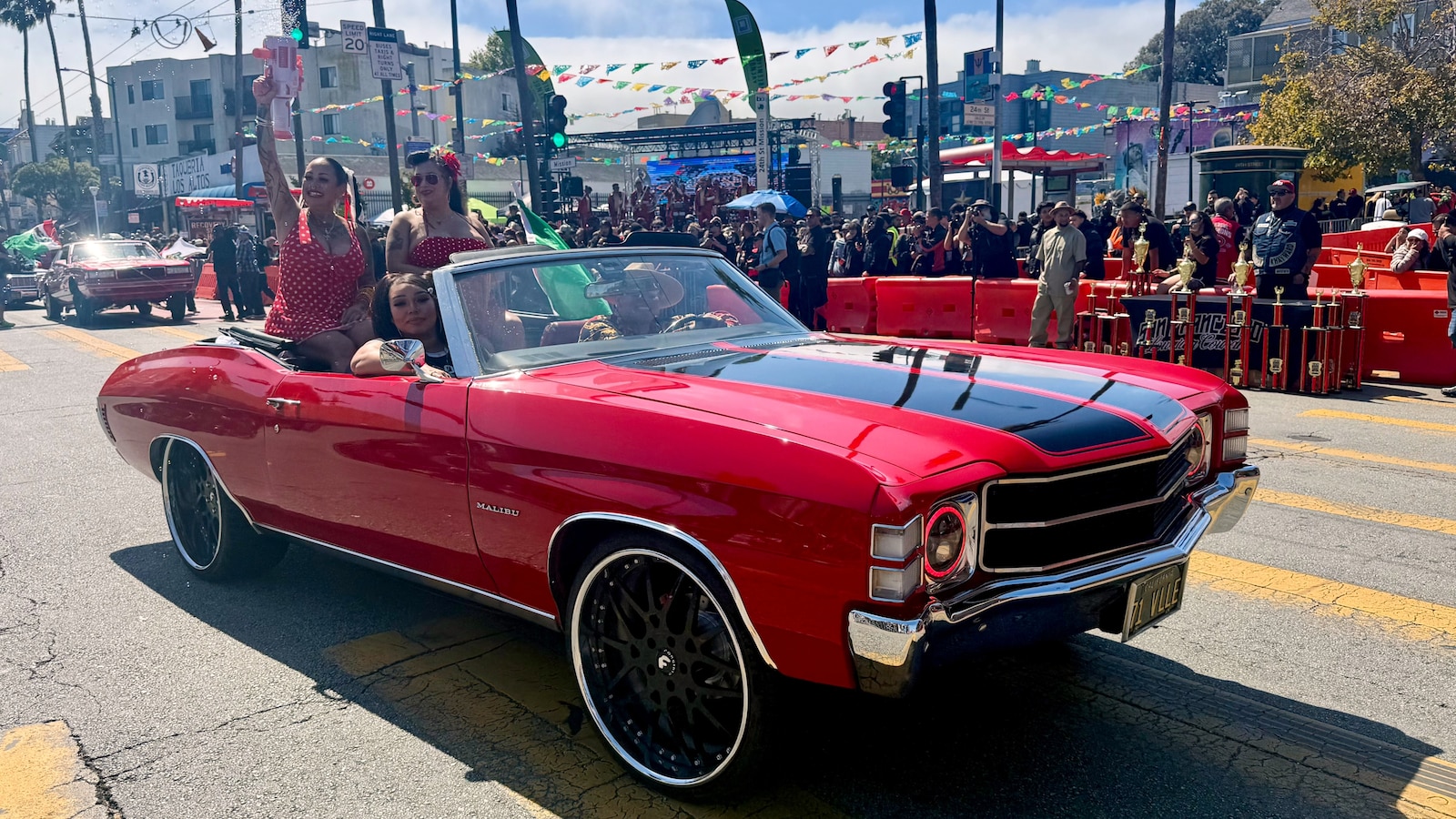
The recent King of the Streets event in San Francisco showcased the vibrant culture of lowriding, a celebration of a distinctive cultural tradition that has evolved over the years. Hundreds of customized cars cruised down Mission Street, accompanied by music and joyous participants of all ages, in a gathering marking National Hispanic Heritage Month.
Roberto Hernandez, founder of the San Francisco Lowrider Council, highlighted the significance of the event, noting the recent release of stamps featuring classic lowriders, alongside California Governor Gavin Newsom’s announcement of specialized lowrider license plates. “We finally got our stamp of approval,” Hernandez said, underscoring the cultural validation that lowriding has achieved.
Lowriding has its roots in Mexican American and Chicano communities of the U.S. Southwest, particularly in California, where the modern lowrider movement originated. Cars are transformed into artistic expressions with lowered suspensions, intricate paint jobs, and hydraulics, embodying craftsmanship and identity.
Participants, like Johnny Castro, emphasized the importance of showcasing their cars as art, stating, “It’s about driving low, being seen and going slow.” The journey to acceptance has been challenging; in the past, law enforcement targeted lowriders, leading to legal battles for the right to cruise. Recent legislative changes have removed restrictions on cruising, affirming its place in cultural heritage.
For families like Castro’s, lowriding transcends mere recreation; it’s a shared passion that solidifies bonds across generations.