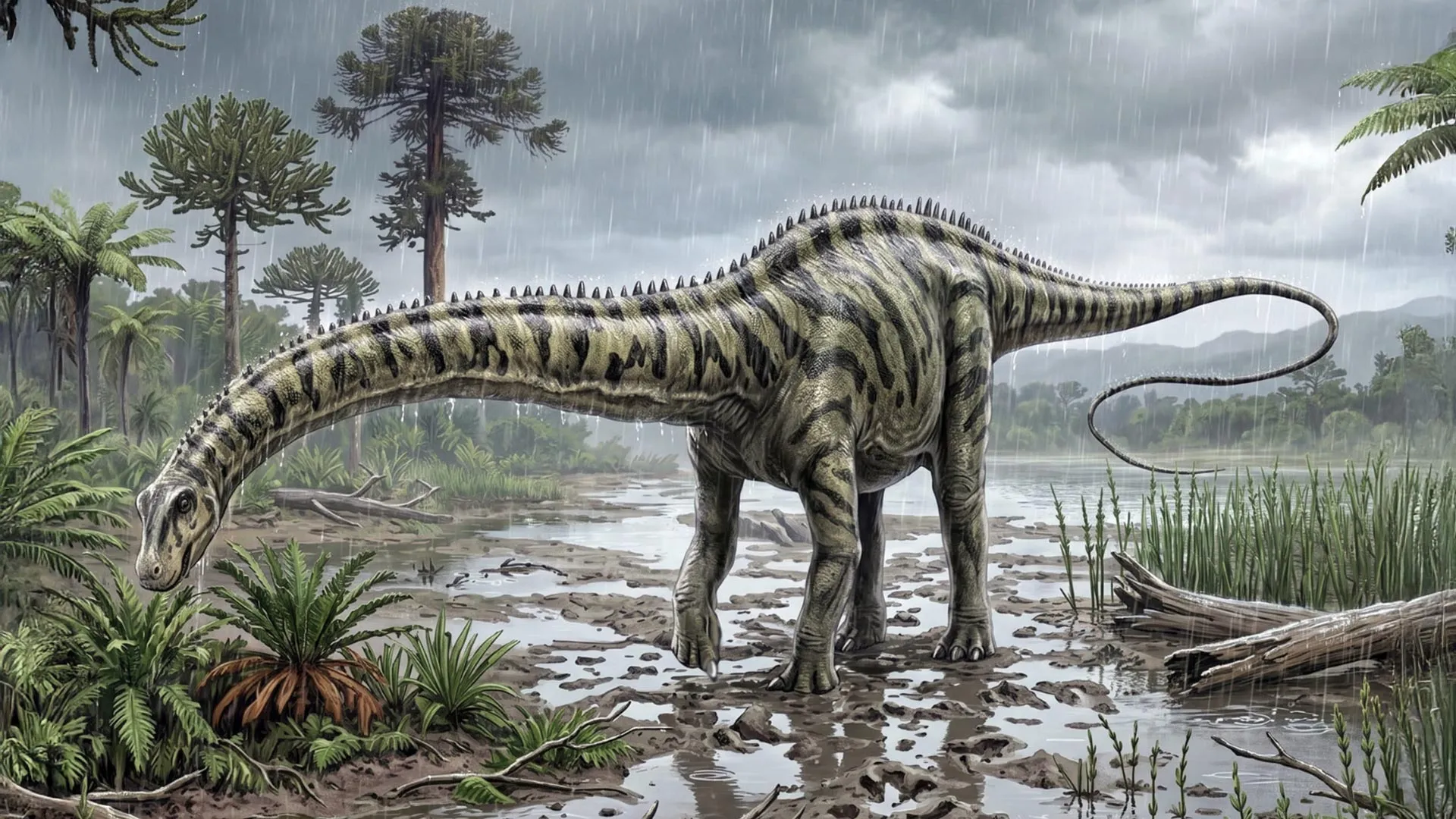
Diplodocus Found in Europe: A Landmark Discovery
Paleontologists have made a groundbreaking discovery by identifying the first known evidence of Diplodocus outside North America, which transforms our understanding of this iconic dinosaur’s habitat during the Late Jurassic period. This discovery was detailed in the peer-reviewed Journal of Vertebrate Paleontology by researchers from the Fundación Conjunto Paleontológico de Teruel-Dinópolis. The fossils represent one of the most complete diplodocid skeletons ever found in Europe.
Discovery Details
The fossils were unearthed at the La Tejería site in El Castellar, Teruel, Spain, where the research team recovered 14 well-preserved caudal (tail) vertebrae and several chevron bones during their excavations. Previously, all confirmed specimens of Diplodocus originated from the Morrison Formation in the western United States.
Sergio Sánchez Fenollosa, a PhD student at Fundación Dinópolis and lead author of the research, expressed excitement about the discovery. He noted that their osteological study revealed significant similarities with various diplodocine sauropods, leading them to identify the anatomy as characteristic of Diplodocus. The evolutionary analyses they conducted only reinforced their conclusion.
Implications of the Find
This discovery marks not only a new geographic location for Diplodocus but also provides compelling evidence for dispersal and faunal exchange between North America and Europe during the Late Jurassic. Researchers suggest that temporary land bridges could have formed during periods of lower sea levels, facilitating the movement of these dinosaurs between continents.
Characteristics of the Spanish Diplodocus
This specimen lived around 150 million years ago and measured approximately 25 meters in length, similar in size to its North American relatives. Dr. Alberto Cobos, managing director of Fundación Dinópolis, emphasized that it adds to the roster of enormous sauropods in the Spanish Jurassic, alongside others such as Turiasaurus and Losillasaurus. Together, these fossils illustrate the incredible diversity of giant dinosaurs that once roamed the region.
Anatomical Features
The exceptional preservation of the Diplodocus fossils enabled researchers to identify several key anatomical traits:
- Large pneumatic cavities within the vertebrae
- Deep longitudinal grooves beneath the tail bones
- Forked chevron bones with unique medial fossae
- Elongated vertebral centra without lateral ridges
The research team employed both traditional anatomical comparisons and advanced phylogenetic analyses. Their findings firmly placed the specimen within the Diplodocus genus, identifying it as a close relative of Diplodocus hallorum.
Display and Public Engagement
Currently, the fossils are displayed for ongoing research and educational purposes at the Museo Aragonés de Paleontología at Dinópolis in Teruel.
Diplodocus in Popular Culture
Diplodocus is one of the most recognizable dinosaurs, celebrated for its substantial length, lengthy tail, and relatively small head. Since its discovery in the United States in 1878, casts of its skeleton have been a staple in major natural history museums, cementing its status as an international symbol of paleontology.
Conclusion
This discovery adds a significant chapter to our understanding of dinosaur diversity in Jurassic Iberia, highlighting the complex ecosystems that existed in the region and the connections between distant continents during the time of the dinosaurs.


