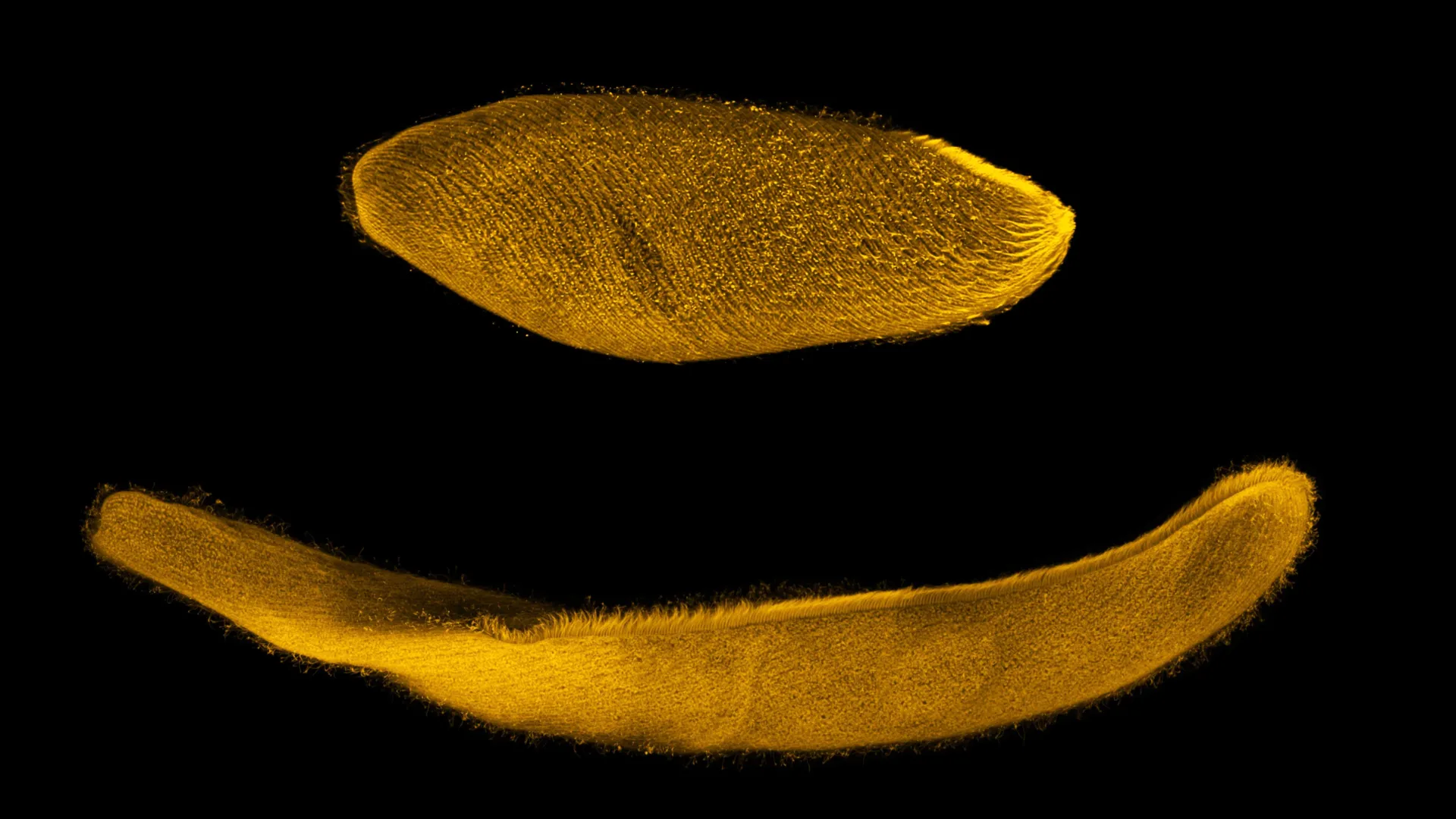
The article discusses the tiny aquatic organism Spirostomum ambiguum, a single-celled ciliate known for its extraordinary ability to contract its body remarkably fast—up to 100 body lengths per second—significantly quicker than human muscles.
Key Highlights:
-
Unique Mechanism of Movement:
- Spirostomum relies on calcium ions and a specialized network of proteins arranged like a fishnet, enabling rapid contraction and quick recovery.
-
Comparison with Human Muscle:
- While human muscle fibers can contract similarly, they do so about ten times slower. The differences in contraction mechanisms—ATP in human muscles versus calcium ions in Spirostomum—are noted.
-
Fishnet Structure:
- Myonemes, fibrous structures that replace muscle fibers in Spirostomum, form a web that provides uniform contraction while protecting organelles.
-
Research Implications:
- Understanding how Spirostomum manages repeated contractions could inspire the development of faster, ATP-independent artificial muscles, which would be valuable in engineering.
-
Future Research:
- Researchers aim to further investigate how calcium triggers contractions and the resetting of this process, which currently remains a key question.
This groundbreaking research highlights the potential applications of biological mechanisms in synthetic technology and muscle development.


