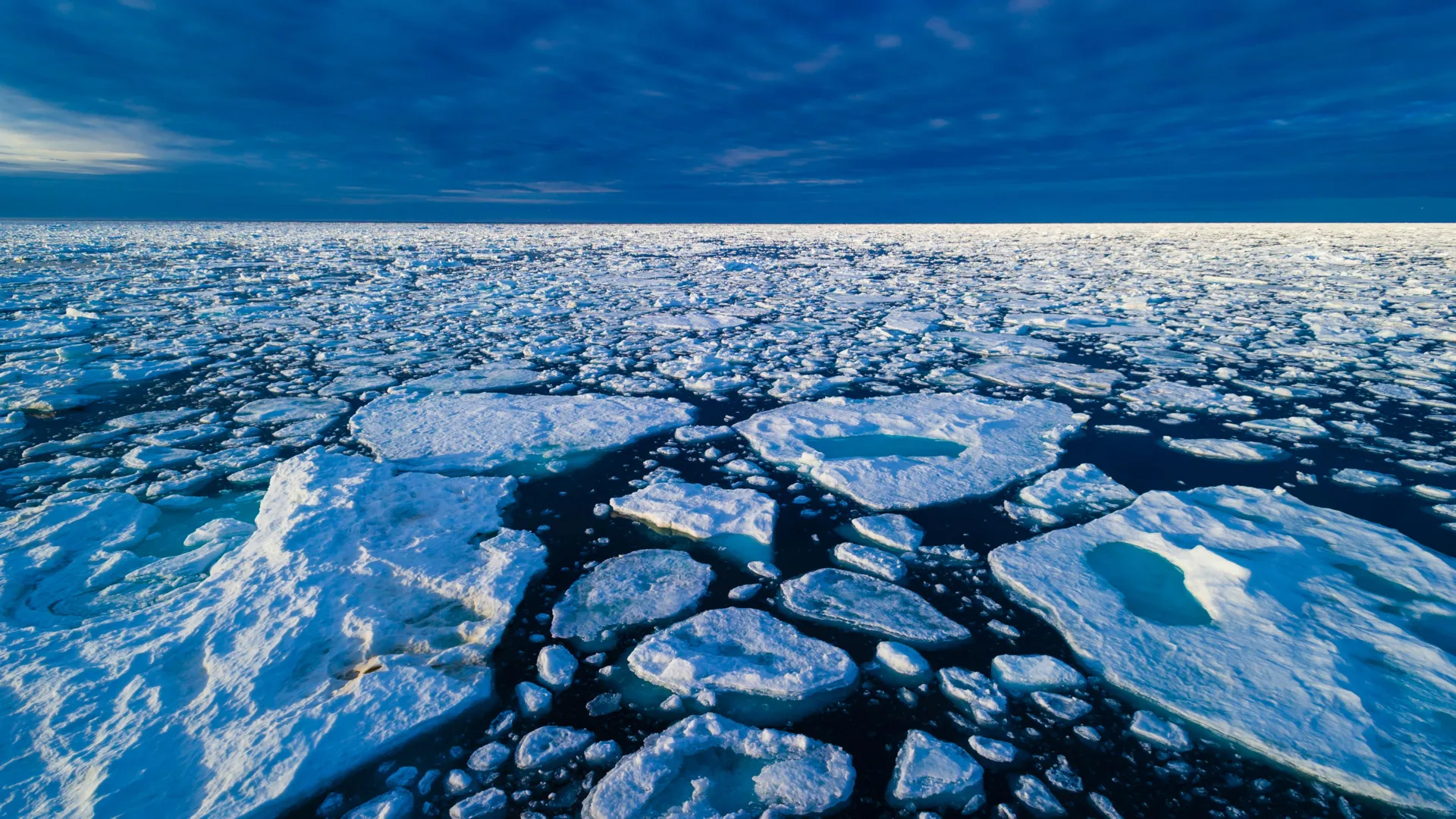
The research led by UC Riverside provides new insights into Arctic sea ice dynamics, illustrating how collisions between ice floes significantly influence their movement. Unlike traditional models that rely heavily on wind, this study posits that the jostling of floes against one another can better explain unusual patterns in ice speed and spread.
Here are the key takeaways:
-
Ice Dynamics: Instead of a continuous sheet, Arctic sea ice consists of fragmented floes, which can vary in size. Wind drives their movement, but this doesn’t fully account for their observed behavior.
-
Collision Impact: Collisions between neighboring floes transfer energy, reducing the distance each floe can travel. This interaction is crucial for understanding why ice does not accelerate endlessly due to wind.
-
Model Development: Scientists created a simulation likening ice floes to grains in a silo, accounting for wind impact and floe collisions. This model successfully replicated sea ice behavior in the Fram Strait.
-
Broader Implications: Understanding collision dynamics can help improve predictions of how sea ice will behave as the Arctic warms, potentially informing climate models and broader applications in various fields like materials science.
-
Wider Applicability: The principles behind the model could extend beyond sea ice to other systems where many objects interact under unpredictable forces, such as avalanches or 3D printing materials.
This research underscores the importance of considering small-scale interactions to explain larger phenomena in complex systems.


