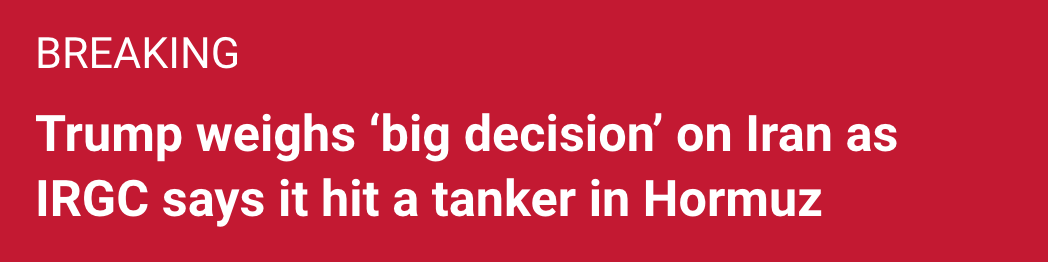
In a recent interview, Trump emphasized his intention to utilize the upcoming UN meeting as a platform to gather firsthand insights from regional allies regarding the future trajectory of the ongoing conflict.
Driving the news: In early August, Trump hesitated to escalate military operations again after concerns were raised by Saudi Arabia and Qatar about potential Iranian strikes on their oil and gas facilities in retaliation….
State of play: According to U.S. officials, Trump and Secretary of Defense Pete Hegseth have directed the military to sustain its current presence in the Middle East through the end of the year, maintaining readiness for a possible return to full-scale warfare.
- Officials indicate that Trump must make a timely decision on the future strategy, as the military cannot maintain its existing status quo indefinitely. “At some point, you have to decide what the endgame is,” commented one official…
The big picture: The White House is also developing a post-war strategy aimed at a regional initiative to contain Iran, while promoting normalization of relations between Israel and neighboring countries.
In essence, Trump seeks to encourage Gulf states to accept significant economic risks in exchange for U.S. military action against Iran.
However, U.S. interests are at risk as well. Reports from Ars Technica indicate that Iranian strikes have resulted in irretrievable data losses for Amazon data centers:
Six months after Iranian drone attacks severely damaged several Amazon data centers, the tech giant has confirmed a permanent loss of certain customer data stored in Bahrain and the United Arab Emirates.
Amazon Web Services stated it was “unable to restore access to resources and data” in some of the conflict-affected centers, as noted in a September 15 dashboard update. This was first reported by Reuters and underscores the devastating impact of the Iranian strikes.
Data was permanently lost in one of three availability zones across the UAE, specifically mec1-az2, each of which is serviced by one or more Amazon data centers.
The company continues to work on “recovering regional resources” and aims to restore services in the remaining two availability zones. An update described efforts to replace “affected infrastructure” with assurances to keep customers informed about service restoration timelines.
However, Amazon admitted that damage across the Bahrain region was even more extensive, with a complete loss of access to resources and data in all three of its availability zones there.
Moreover:

Turning to Aljazeera’s live feed, here are highlights from the overnight summary:
- South Korea has ruled out the deployment of military forces in any intervention concerning the U.S.-Iran conflict.
- Only four cargo ships traversed the Strait of Hormuz on Thursday, a decline from six the previous day and significantly lower than the ten-day average.
- Oil prices fell by approximately 1 percent, dropping below earlier highs but remaining above $100.
- Multiple Israeli airstrikes have been recorded across southern Lebanon, including regions in Nabatieh al-Fawqa and the Jinjil area of al-Qantara.
- A UN official reported during a Security Council meeting that the U.S.-Iran conflict has cost Arab economies approximately $150 billion in the first month alone.
South Korea’s decision to abstain from involvement is unexpected. Analysts had anticipated the country would contribute a minimal force to placate allies. This highlights the diminishing influence of the U.S. among its supposed partners.
In an attempt to garner support at the UN, the U.S. tried to feign that the JCPOA had not expired in October 2025, hoping to initiate new sanctions against Iran. However, China and Russia vetoed this proposal on procedural grounds:
BREAKING: Russia and China have vetoed a U.S. draft resolution at the UN Security Council aimed at extending the mandate of the committee overseeing sanctions on Iran.
🔴 LIVE updates: https://t.co/bqrEgIs0cb pic.twitter.com/7zeEIC3VG5
— Al Jazeera Breaking News (@AJENews) September 17, 2026
Empty rhetoric from the Bahraini representative at the Security Council: Iran and its proxies have destabilized our region.
🔹 Russian representative at the Security Council: “Snapback” sanctions against Iran lack legal grounding.
🔹 British representative at the… pic.twitter.com/1B7kiOYIbh
— 𝕊𝕡𝕣𝕚𝕟𝕥𝕖𝕣 𝕻𝕣𝕖𝕤𝕤 (@SprinterPress) September 17, 2026
Despite setbacks, the U.S. appears to be achieving some objectives elsewhere:
On the Ansar Allah-Saudi front, updates from JH on Twitter highlight:
Key insights based on recent Kpler data:
1) Even if Riyadh restores about 50% of pipeline flows as guided, Red Sea export availability will still be heavily restricted due to inventory levels on the Western coast.
They are eager to prevent run cuts at domestic refineries, meaning refiners may receive initial access to crude allocations, squeezing export volumes from Yanbu further.
2) More crude is making its way through Hormuz, which is now an undeniable fact supported by satellite imagery and other indicators. Denying this reality no longer holds validity.
3) Bahri has already been subtly shifting away from Red Sea operations in favor of redeploying resources towards the Gulf of Oman. This shift could ease potential tonnage shortages, providing some relief for the Saudis.
During Crown Prince Mohammed bin Salman’s visit to Cairo, the Egyptian President advised him to engage in dialogue with the “Ansar Allah” movement, emphasizing that negotiation is the best approach moving forward.
— 𝕊𝕡𝕣𝕚𝕟𝕥𝕖𝕣 𝕻𝕣𝕖𝕤𝕤 (@SprinterPress) September 17, 2026
From Patricia Marins on Twitter, she raises the possibility of collaboration between Iran and Ansar Allah. However, skepticism exists. The swift territorial gains by Ansar Allah were seen as a direct reaction to Saudi strikes on the Sanaa airport, targeting mourners attending a Khamenei funeral. Moreover, many observers were surprised by Ansar Allah’s restraint in opening a second front against U.S. and Gulf interests sooner, believing it would have significantly advanced Iran’s strategy.
JD Vance has initiated discussions with the Yemenis. The anticipated consequence of these negotiations: a surge in oil prices spurred by the Yemen conflict.
Yet, Vance has limited leverage, as resolution of the conflict hinges solely on Tehran’s involvement.
Discussions between Riyadh and Tehran commenced yesterday to address the prevailing issues.
Why did the Trump administration allow the situation to escalate? It was calculated that the Gulf Cooperation Council would be deterred by the prospect of a prolonged conflict and ultimately accept a deal with Iran, assuming the financial burden of the war. (Now, the focus is on who will foot the bill.)
This scenario did not unfold, and fears are rising that surging oil prices could further diminish Trump’s already waning approval ratings.
Today, there is no issue in the Middle East that was not escalated by the war. The original aims seem far forgotten.
Yet, breaking news contradicts prior reports of outreach:
Breaking news:
Activation of air defenses east of Sanaa.
Sounds of anti-aircraft artillery have been reported.
This marks the first time in years since the Saudi-led coalition’s campaign against Yemen, indicating possible drone attacks targeting Sanaa.Retaliation is likely to fall upon Riyadh.
— Hussain Albukhaiti حسين البخيتي (@HussainBukhaiti) September 18, 2026
Yahoo has reported instances of diesel shortages across the U.S., with some stations out of supply. Some independent commentators are spreading speculation about looming larger diesel shortages in the U.S. market.
However, such a scenario is unlikely unless the Trump administration mishandles the situation massively. The U.S. is a primary diesel exporter, currently shipping substantial quantities to Europe. It could rapidly bolster domestic supplies and reduce diesel prices if it imposed caps or bans on exports.
The shortages appear to be limited to a few rural locations likely at the end of supply routes; this seems to be driven more by stockpiling in anticipation of price increases than any systemic issue.
Some insights from various sources:
🤡🌍 Silly Bibi. Israel finds itself in a precarious position, vulnerable to increasingly powerful adversaries.
And now, its sole strong ally has been diminished, thanks to the very Iran Bibi seeks to overcome.
— Will Schryver (@imetatronink) September 18, 2026
According to Aljazeera’s live updates, even though Ansar Allah claims its focus is solely on Saudi targets, some shipping operators have pursued and attained enhanced protection:
Italy to deploy warships to ensure safe navigation through Bab al-Mandeb
The Italian Defence Minister, Guido Crosetto, has announced the deployment of warships to safeguard its commercial vessels traveling through the Bab al-Mandeb strait, stating that Rome will act independently from any joint EU decisions.
“We have the capabilities to ensure safe passage,” Crosetto noted, warning of severe economic repercussions if the strait were rendered impassable.
This escalating situation illustrates the complexities surrounding U.S. efforts to maintain influence in the Middle East and the far-reaching consequences of regional conflicts. As Trump seeks guidance from allies, the future remains uncertain, marked by shifting alliances and increasing tensions.