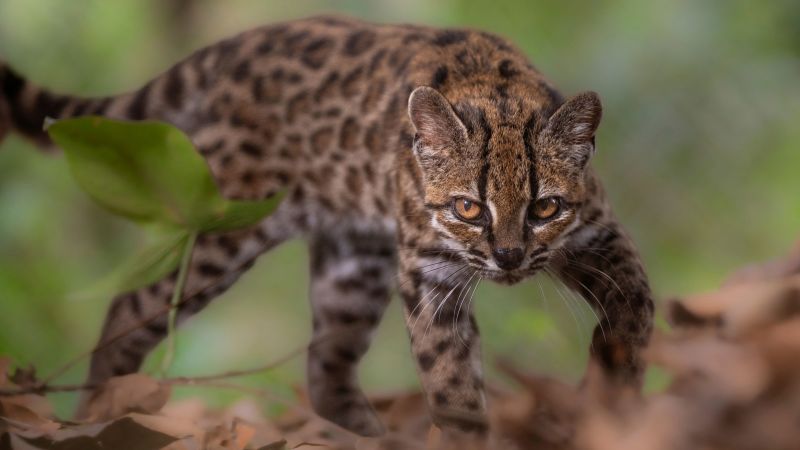
New Wild Cat Species Identified in Bolivia
A diminutive wild cat residing in Bolivia’s cloud forests has been officially recognized as a new species. This marks the first time that a new living cat species has been formally documented in over a century.
Discovery of Leopardus tilcayo
Locally named Tilcayo, this small feline belongs to a group known as tiger cats found across much of South America. The Tilcayo was discovered in the lush Yungas forest—characterized by mountainous terrain, high humidity, and frequent cloud cover. Measurements reveal it to be about 18 inches (46 cm) long and weighing around 3 pounds (1.4 kg), making it smaller than an average domestic cat. Researchers utilized genetic data to confirm its status as a new species, naming it Leopardus tilcayo while retaining its local name.

Physical Characteristics and Diet
Paola Nogales-Ascarrunz, a National Geographic Explorer involved in the study, described the Tilcayo‘s fur: “Its fur is light brown … with irregularly shaped rosettes across its body.” Although details regarding its behavior and biology remain limited, scat analysis indicates that small rodents might be part of its diet. Evidence from camera traps suggests that Tilcayo could exhibit nocturnal behavior.
Genetic Findings
This discovery adds to the complexity of understanding tiger cats, which are considered cryptic species—difficult to distinguish solely by appearance. Jonas Lescroart, an evolutionary biologist and co-lead author of the study, noted, “Our information at this moment is limited to the two live individuals that we examined, and a small number of camera-trap records.”
Traditionally viewed as a single species, genetic studies over the past few decades hinted at the existence of multiple species. The research team analyzed DNA from 38 cats sampled across several South American countries and found that tiger cats encompassed five genetically distinct species.
Conservation Implications
The International Union for Conservation of Nature (IUCN) currently lists tiger cats as two “vulnerable” species experiencing population declines. Researchers have communicated their findings to the IUCN, as the recognition of the Tilcayo may necessitate reassessment of its conservation status, potentially categorizing it as endangered.
Threats and Urgent Priorities
The Yungas region, home to the Tilcayo, faces significant threats from deforestation, agricultural development, human-induced fires, and mining activities. As Nogales-Ascarrunz highlighted, it’s urgent to focus on restoring damaged forest patches, protecting remaining native habitats, and ensuring connectivity between ecosystems.
Conclusion
The identification of Leopardus tilcayo emphasizes the existence of undiscovered species and the importance of their protection. Eduardo Eizirik, a senior author of the study, remarked, “There are many undiscovered species out there in the world, and they are at risk of disappearing before we even discover them.” This revelation serves as a vital reminder of the ongoing need for conservation efforts in biodiversity hotspots like Bolivia.


