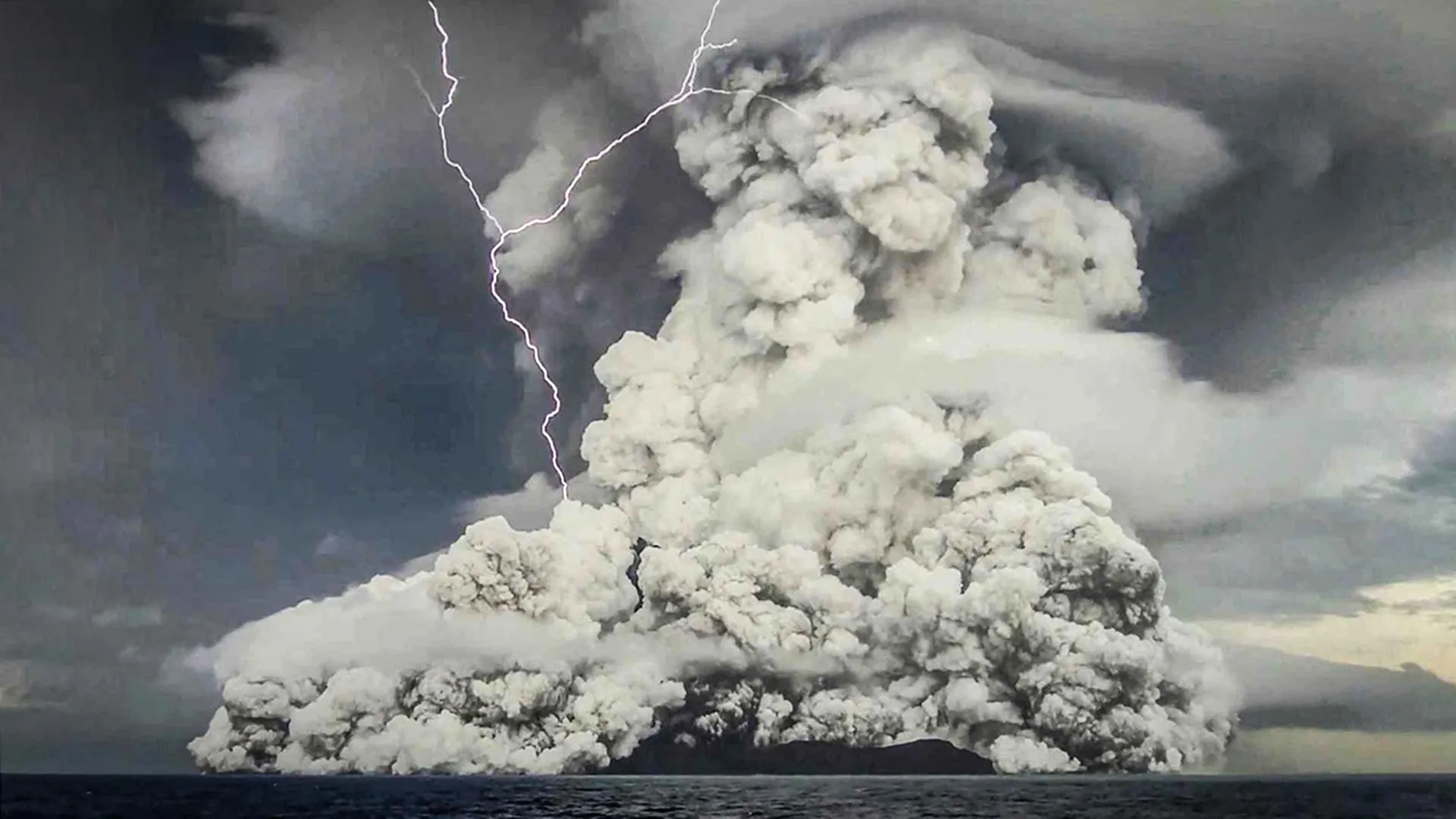
The eruption of Hunga Tonga-Hunga Ha’apai in January 2022 revealed an unexpected benefit: the volcanic cloud contributed to the destruction of methane pollution. Methane, a potent greenhouse gas, poses a major challenge to climate stability. Researchers used satellite data to identify high levels of formaldehyde in the cloud, suggesting active methane breakdown.
Key Findings:
- Volcanic Methane Emissions: The eruption released approximately 300 gigagrams of methane, equivalent to the annual emissions of over two million cows.
- Methane Destruction Mechanism: The combination of volcanic ash, seawater, and sunlight created conditions that generated reactive chlorine, which helped break down methane in the atmosphere.
- Significance of Formaldehyde: High levels of formaldehyde served as an indicator of ongoing methane degradation.
Implications:
-
Impact on Climate: Methane is a significant contributor to global warming, being over 80 times more potent than CO2 in the short term. Rapid reductions could help mitigate climate change.
-
Atmospheric Chemistry Insights: The findings suggest that natural processes can enhance methane destruction, prompting research into potential methods for human-induced atmospheric methane removal.
-
Revising the Methane Budget: The influence of atmospheric dust and volcanic activity needs to be recognized in global methane calculations, which could change our understanding of methane dynamics.
Future Research and Applications:
- The insights from Hunga Tonga’s eruption could inform engineering efforts aimed at replicating this natural chemical process on a smaller scale, offering a potential method for addressing methane emissions.
- Satellite Monitoring: The use of advanced satellite instruments like TROPOMI helps validate these observations and could be vital for future climate initiatives.
In summary, the Hunga Tonga eruption not only demonstrated the natural destruction of methane but also opened new avenues for climate research focused on leveraging similar chemical processes to combat global warming.


