BYD’s Move to Local Production in Europe
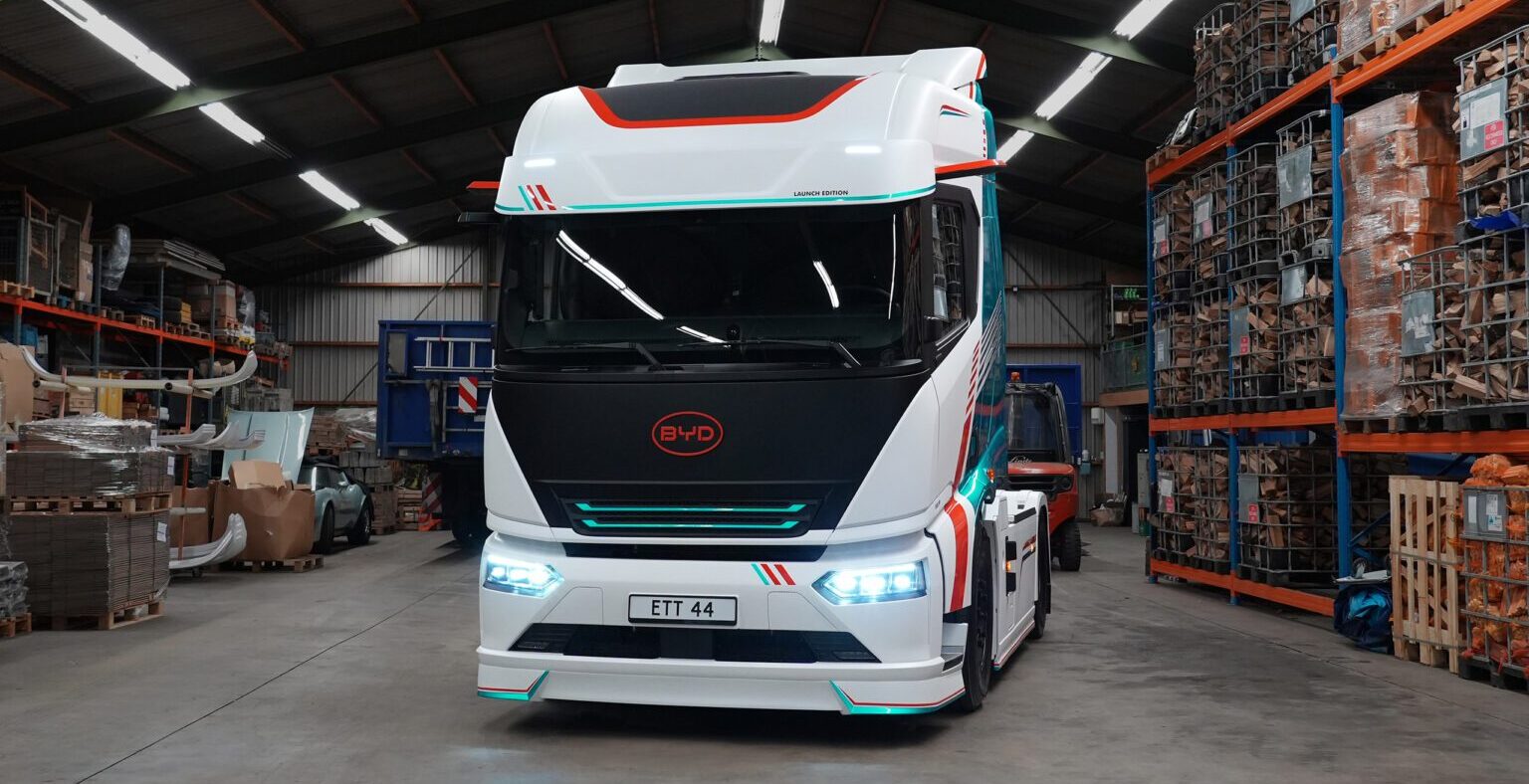
BYD’s ambition to establish itself as a prominent player in the European market is evident in its plans to launch its first heavy-duty truck, the ETT 44, next year. Executive Vice President Stella Li emphasized the company’s commitment to local production, stating that BYD aims to manufacture everything it sells in Europe. This strategy not only caters to market demands but also positions BYD in anticipation of potential tariffs, thus reinforcing its alignment with European operations.
Key Features of the ETT 44
The ETT 44 is a robust 4×2 tractor designed to handle combinations up to 44 tonnes. Key specifications include:
- Battery: 651 kWh Blade Battery
- Architecture: 851 V rated at 743 PS, with peak output reaching 1,000 PS
- Range: Claimed range of up to 600 km, though it remains unclear if this is based on China’s CLTC standard
- Charging: Roughly one hour for a 20% to 80% charge on a CCS2 charger, significantly expedited to about 20 minutes with BYD’s Megawatt Charging System.
Expanding Product Line
Alongside the ETT 44, BYD introduced a comprehensive range of commercial vehicles, including various truck configurations and an electric yard tractor. This “Total Cost of Mobility” package encapsulates financing, solar-powered charging solutions, and maintenance assistance, reinforcing BYD’s commitment to sustainability and cost-effectiveness in transportation solutions.
Navigating Tariff Challenges
Li acknowledged the apprehension around tariffs that may impact Chinese truckmakers in Europe, particularly with competitors lobbying for such measures. By pre-empting potential tariffs through local manufacturing initiatives, BYD aims to solidify its standing as a European entity.
Manufacturing Strategy
BYD’s plans for a passenger-car plant in Szeged, Hungary, further illustrate its resolve for local production, with mass production anticipated to start in 2027. The status of a second potential plant in Turkey has been delayed due to new local content regulations, while discussions about acquiring a Stellantis facility in Southern Europe are ongoing.
Competitive Landscape
The European electric heavy-duty truck market is burgeoning, with established players like Daimler, Volvo, and Scania already testing the waters. The competitive edge for BYD may lie in its charging infrastructure capabilities, having rapidly installed thousands of charging units in China, contrasting with other manufacturers who depend on third-party setups.
Conclusion
BYD’s approach to local production and robust product offerings positions it as a forward-thinking competitor in the European heavy-duty truck market. As the industry evolves, BYD’s commitment to charging infrastructure and local manufacturing is likely to offer significant advantages, even amidst potential regulatory pressures from the EU.

