The truly astonishing aspect is that the discontent is not greater.
There’s a growing distrust among people in Europe regarding the European Union’s capacity to fulfill its promises. This is one of the key insights from a survey conducted by the European Council on Foreign Relations. The study, which involved nearly 6,000 interviews across Germany, France, Italy, Poland, the Netherlands, and the United Kingdom, highlights worrying trends, especially in the context of the UK no longer being part of the EU.
“For many participants, the issue isn’t that there’s a waning desire for a more robust Europe, but rather a disbelief in its attainability,” remarks Pawel Zerka, who authored the study. “There’s a significant disconnect in visions for Europe, coupled with a leadership gap.”
The report indicates that skepticism is notably prevalent in France, Germany, and Italy, with only twelve percent of respondents perceiving any signs of a “European renewal” or “awakening.” The survey reveals that concerns about war and security dominate opinions — a result not surprising given the ongoing fears surrounding the Russian threat.
The economic repercussions of conflict in Europe are also escalating, exacerbated by the loss of affordable Russian energy and increased defense spending that diverts funds away from vital social services like health care, education, and infrastructure.
The recent enthusiasm among European governments for military conscription, amidst a war with Russia that they may not be equipped to win, is also noteworthy. However, EU citizens can be assured that the offspring of Europe’s political elite are unlikely to be on the front lines.
So Ursula von der Leyen is asking Finland to prepare for war, meanwhile during an interview Ursula is asked,
“Are your own children in the military?”Ursula, “No, ha ha ha”
Do as I say, not as I do… https://t.co/54Je1ivB8m pic.twitter.com/pmen6NF3Ke
— Richard (@ricwe123) March 21, 2024
Across the diverse nations involved in the interviews, conversations followed a similar trajectory, as highlighted by the report:
Each interview begins with an icebreaker question: “Let’s imagine you have a friend who fell asleep five years ago and has just woken up. This friend asks you: ‘How is Europe doing at the moment?’ How would you describe Europe today—what would you tell them?”
In response, a significant majority (an average of 68% across the six countries) conveyed a sense of deterioration or a loss of normalcy. Merely 12% framed their responses positively, highlighting opportunities for renewal amidst the current crises.
People recognize the value of Europe, yet they’re acutely aware of its present challenges, expressing little faith in its collective strength to confront them. Even those who harbor ambitious visions for Europe often frame these as mere hopes, unlikely to materialize into action.
Thus, it appears that simply distinguishing between pro-European and eurosceptic sentiments is no longer sufficient. An equally significant divide has emerged: do people believe that European leaders, both at the EU and national levels, can transform their aspirations into reality?
The second greatest concern among participants relates to the economic situation. In Italy alone, over 40% of citizens are anxious about potential declines in prosperity. While the report skims over the root causes of this trend, Spanish economist Eduardo Garzon has insightful observations shared in a Twitter thread regarding how increasingly aggressive welfare state dismantling by European governments has contributed to the rise of far-right movements across the continent.
Though the primary focus of Garzon’s thread is the UK government’s detrimental cuts to the NHS, its implications resonate throughout other European nations experiencing similar austerity measures that have severely impacted welfare spending. A brief English translation of pivotal points follows:
The far-right has steadily gained traction across Europe, with numerous explanations offered: immigration, social media, globalization… Each likely containing an element of truth. Yet, there’s a less-discussed factor that studies are beginning to unveil: the dismantling of the welfare state.
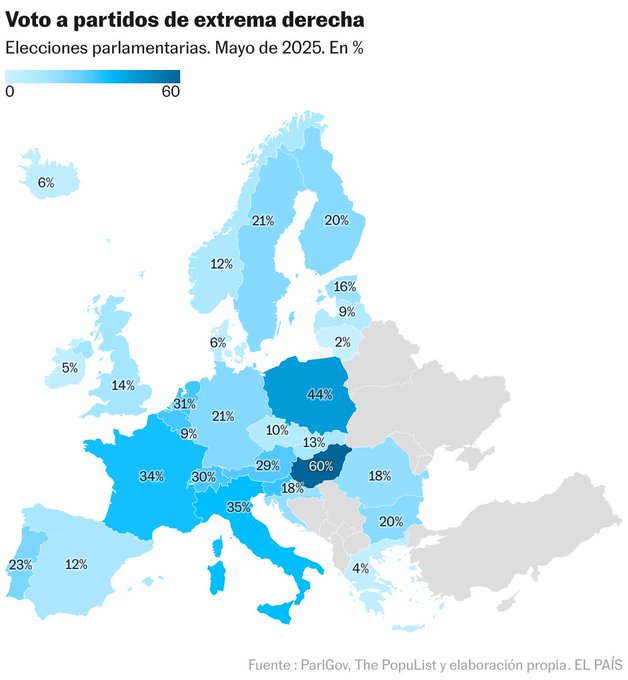
A map illustrating the percentage vote share of far-right parties, from May 2025:
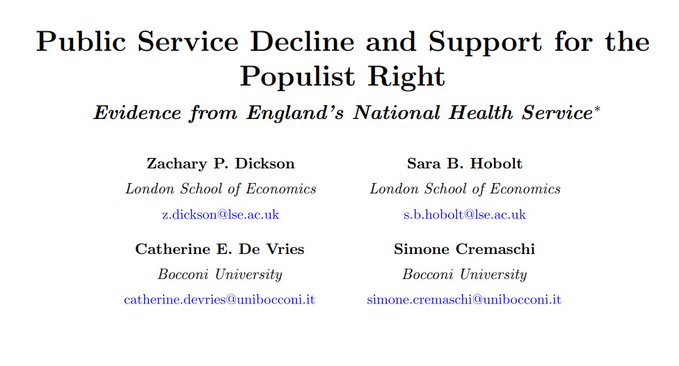
A study published in 2024 investigates the UK case, aiming to establish a causal link between public health system reductions and the growing far-right votes. The findings are revealing.
The NHS (National Health Service) stands as the largest publicly funded health service globally, benefiting over 63 million people. It allocates 11% of GDP for its operations and garners support across the political spectrum, acting as a source of national pride.
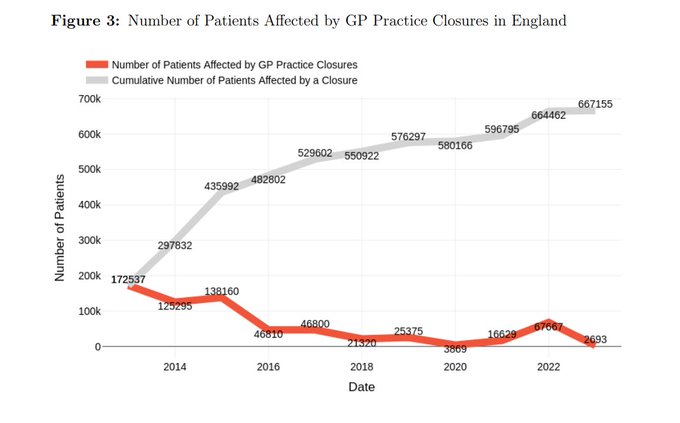
Yet, between 2013 and 2023, over 3,000 health centers closed down, with nearly 1,700 of those being primary care facilities — a staggering 25% loss. Over 667,000 individuals have lost their local health center.
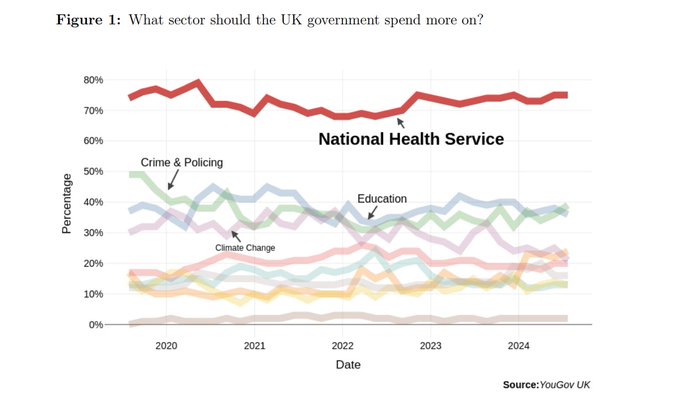
The ramifications extend far beyond mere statistics: patients from closed centers are funneled into still-operating facilities, overwhelming them and leading to longer wait times, reduced quality of care, and delayed diagnoses. Public satisfaction with the NHS has plummeted to its lowest levels in three decades. When surveyed regarding public funding priorities, over 70% stipulated that health should be the primary focus.
The study’s first significant finding reveals that closing a health center triggers an increase in citizen unrest by between 5 and 10%. This discontent doesn’t dissipate over time; its effects compound. By three years following a closure, dissatisfaction surges compared to the initial reactions. People do not forget.
The second notable finding suggests that instances of closures elevate the intent to vote for extreme-right parties by 2 to 5 percentage points. While this may seem modest, within the first-past-the-post system of the UK, support for a third party is uncommon. This influence lingers for a minimum of five years.
Lastly, the report indicates that the adverse effects intensify in areas with higher immigration. This aspect sheds light on the underlying mechanism: while cuts and closures foster resentment, the extent of anger directed towards the far right hinges on the immigrant presence in the locale.
But why is this the case? Primarily because the far-right has adeptly framed the causes of discontent. They assert, “Your health center shut down due to the influx of immigrants.” Though this reasoning is fundamentally flawed — the decisions rest with ruling authorities, not migrants — it’s easily comprehensible, visible, and emotionally potent.

Similar sentiments have been echoed by Tariq Ali in discussions around Germany. The recent victory of the Alternative for Germany (AfD) in the eastern state of Saxony-Anhalt has intensified anxieties about a potential far-right resurgence across Europe.
The situation in Germany mirrors the overall state of Europe: disintegrating extreme centre parties, budgets tailored for the ultra-rich, eroding social infrastructure, and a substantial decline in educational standards. This is a recurring theme I explore in greater detail on my Substack.
— Tariq Ali (@TariqAli_News) September 8, 2026
It’s important to recognize that participants in the ECFR’s survey are not alone in their pessimism about their countries’ futures. Similar feelings have also arisen in populations of the US and Turkey, as indicated by previous surveys. However, the authors caution that rising pessimism carries particular political implications in Europe:
While Americans feeling disillusioned about their future lack the means to call for the dismantling of the US, Europeans losing confidence in the EU can realistically demand “less Europe” or even propose a possible exit from their respective countries. The foundation of European integration has always relied on a promise of a hopeful future: the concept of an “ever closer union” compels individuals to envision both the current realities of Europe and its potential for growth.
This sense of belief is deteriorating. The report identifies war, security issues, and mounting economic pressures as the two main catalysts behind the loss of faith in the EU. However, additional factors contributing to this sentiment, often explored on platforms such as Naked Capitalism, include:
- The EU’s unwavering commitment to neoliberal principles, often prioritizing corporate interests above all else.
- Brussels’ pronounced democratic deficit paired with a troubling inclination towards authoritarian remedies, particularly in digital governance. The EU is increasingly seen as anti-democratic, impinging on free speech and privacy.
- The growing chasm between the bloc’s leaders — comprising specially authorized Commissioners and 720 MEPs relishing luxury — and everyday citizens.
- Establishing a monetary union without holistic fiscal or political frameworks: As Wynne Godley cautioned post-Maastricht Treaty in 1992, a single currency lacking a consolidated fiscal structure, central budget, and regional economic transfer mechanisms inevitably sows discord.
- The EU’s prevailing culture of corruption and impunity, highlighted by controversies surrounding EU Commission President Ursula von der Leyen.
- The EU’s obsessive focus on the conflict in Ukraine, which has significantly diminished the bloc’s economic competitiveness.
- The subservient mindset of EU leaders, institutions, and national governments towards the US, which played a pivotal role in facilitating European integration during the late 20th century, while simultaneously backing Israel amid its campaigns of atrocities in Gaza, the West Bank, and southern Lebanon.
Leadership Crisis
This topic has been explored thoroughly in prior discussions on Naked Capitalism, especially highlighting the pressing need for capable leadership in Europe, which seems almost absent amid inadequately qualified individuals like Ursula von der Leyen and Kaja Kallas holding key positions.
It’s hardly surprising that many respondents from the survey struggled to identify politicians embodying “positive examples of European action.” Nearly half of them drew a blank, while those who did often cited figures from their respective countries or favored political parties. The EU’s prominent figure, Ursula von der Leyen, was barely mentioned.
In the countries surveyed, only four percent identified French President Emmanuel Macron as an inspirational leader; in contrast, eight percent cited Spanish Prime Minister Pedro Sánchez as the most favorable representative.
“No other country or leader inspires comparable admiration,” notes ECFR’s Zerka.
Interestingly, Sánchez is popular even beyond the six surveyed nations, particularly in Italy where one in four voters view him positively. Meanwhile, in France, the number stands at ten percent. He has garnered some appreciation in Germany too, with a Green Party voter asserting, “It’s commendable how Mr. Sánchez challenges the USA.”
However, an article in Welt reveals an ironic twist: Sánchez’s popularity is not reciprocated among his European counterparts.
Many leaders criticize him for inadequate defense spending, angering US President Trump. Others, including Denmark’s Social Democratic Prime Minister Mette Frederiksen, rebuke Madrid’s lenient immigration policies. Yet a substantial segment of citizens admire Sánchez, largely due to his opposition to Trump.
It’s noted that there exists a strong desire amongst citizens for Brussels to adopt a more assertive stance towards other governments. As one Macron supporter articulated, Europe must no longer “allow itself to be led around by the nose by a madman.”
The “madman” in question refers to Trump, yet the Welt article strangely overlooks mentioning Netanyahu, potentially another equally dangerous figure. This omission is noteworthy as one of Sánchez’s unique selling points among EU citizens is his comparatively tougher position on Israel’s actions against Palestine — albeit not entirely assertive, it stands out against his peers.
This explains why Sánchez enjoys limited camaraderie among European heads of government. Across the continent, there’s a stark contrast between how the general populace perceives Israel and its treatment by the EU and national leaders. A perfect illustration lies in the recent Greek government’s significant military technology procurement from Israel, even as public sentiment against Israel within Greece intensifies.
76% of young Greeks hold negative views of Israel due to its actions in Gaza.
Yet their government has just finalized a $3.6 billion deal to acquire Israeli military technology – the largest such sale in Israeli history. pic.twitter.com/Bi1yRYuJ9c
— AJ+ (@ajplus) September 9, 2026
Meanwhile, the Israeli chargé d’affaires, Dana Elrich, recently addressed an event hosted by former Spanish Prime Minister José Maria Aznar’s think tank, FAES. During her presentation, while she denied any involvement of Israel in the recent migration “invasion” of the Spanish enclave of Ceuta, she also cautioned Madrid that “not collaborating with Israel on our defense incurs consequences for Spanish citizens.”
Aznar himself, a staunch Zionist and Atlanticist, openly emphasized the necessity of re-establishing ties with Israel. Commenting on the Ceuta situation, he remarked:
“The recent events in Ceuta demonstrate the repercussions of distancing ourselves from crucial allies. Spain must urgently restore normal relations with Israel.”
Such statements hint at an implicit admission from high-ranking officials about the fallout from Spain’s aligning its support with Palestine, suggesting a complicated geopolitical dynamic.
Aznar further claimed that “Israel is engaged in an asymmetrical warfare characterized by clear moral asymmetry. Accusing Israel of being genocidal is sheer anti-Semitism.”
Many senior EU politicians, including Ursula von der Leyen, would likely endorse this notion, explaining why a significant portion of EU citizens maintains a highly critical perspective of the EU.