U.S. Space Command Advances Maneuver Warfare Techniques
U.S. Space Command (SPACECOM) recently completed the Apollo Maneuvers 2026 exercise, furthering its aim to enhance dynamic operations in space. This exercise, conducted earlier this month, involved maneuvering satellites across a variety of orbits, from low-Earth orbit (approximately 100 miles above the Earth’s surface) to geosynchronous orbit (over 22,000 miles out).
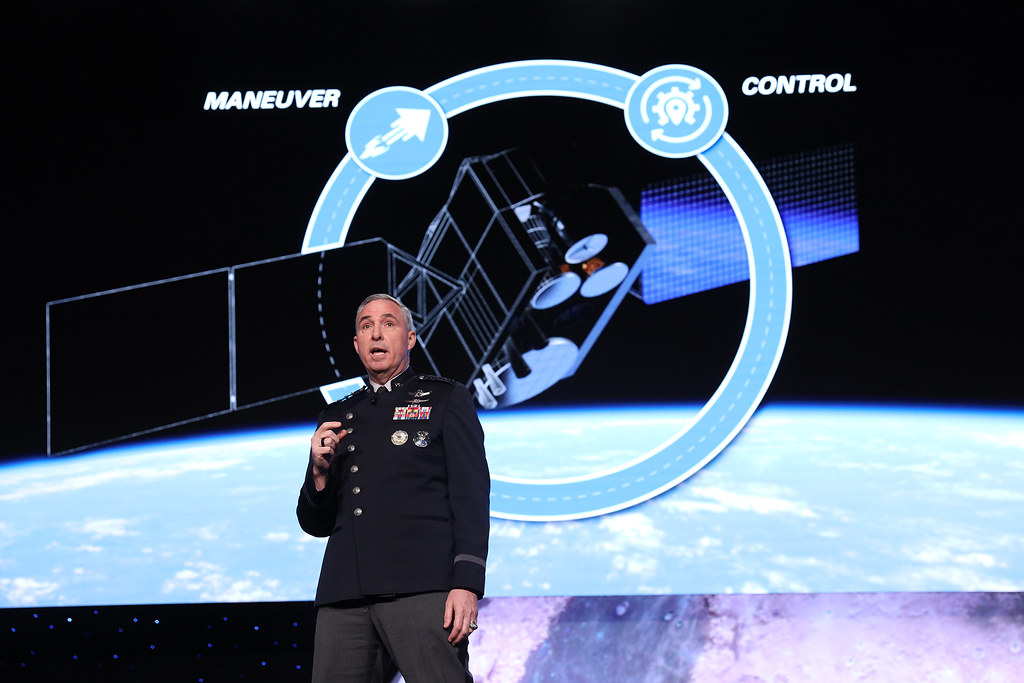
The announcement was made on September 8, following comments from SPACECOM Commander Gen. Stephen Whiting, who indicated that the live-fly exercise was part of efforts to refine tactics and inform future maneuver warfare doctrine.
While specific assets and distances maneuvered weren’t disclosed, Gen. Whiting has emphasized the need for satellites to demonstrate tactical advantages through maneuverability, rather than limiting movements to mere orbital maintenance. Traditionally, operators prefer conserving fuel for extended satellite life, but advancements in launch costs, satellite refueling technologies, and propulsion systems are prompting a reassessment of this approach.
Military officials have acknowledged that static satellites are vulnerable targets. Whiting has advocated for capabilities that not only enhance survivability but also enable the ability to threaten adversaries’ systems effectively. He stated, “To perform, survive, and gain advantage in the space domain, we need maneuverability and survivability in our capabilities.”
The name “Apollo Maneuvers” references the 1941 Louisiana Maneuvers, which tested ground tactics during World War II. Importantly, this exercise integrated allies from the multinational Operation Olympic Defender and involved collaboration with industry players through the Commercial Integration Cell. The joint effort enhances combined operations and validates shared tactics, techniques, and procedures, according to SPACECOM’s statement.