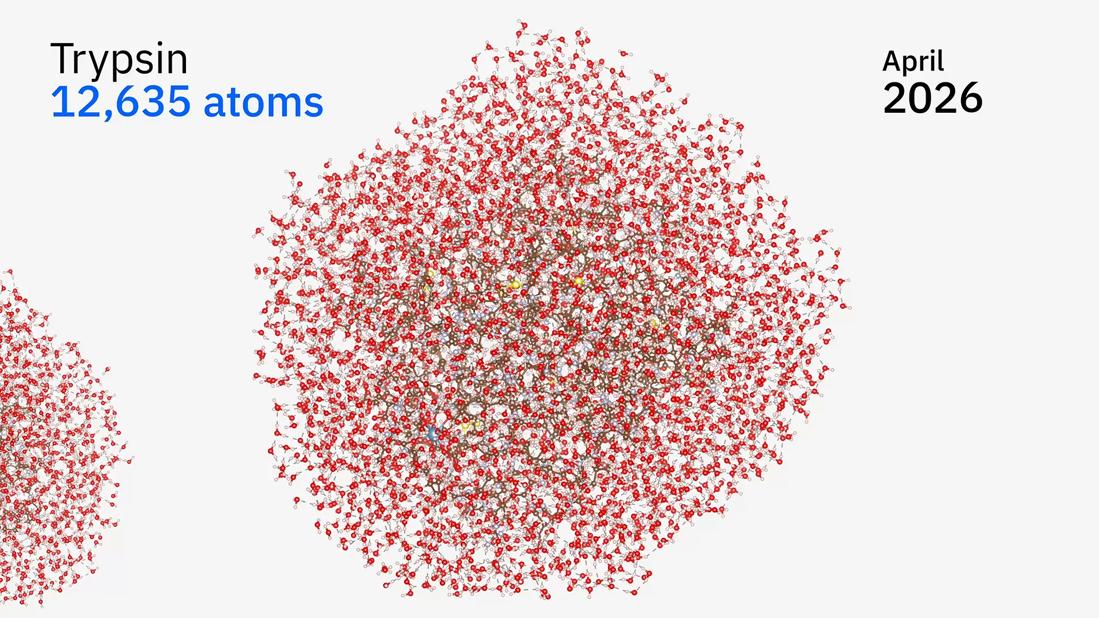
A multidisciplinary team from Cleveland Clinic, RIKEN, and IBM has been named a finalist for the 2026 ACM Gordon Bell Prize. They achieved groundbreaking results by simulating biologically meaningful molecules—specifically, a scale of 12,635 atoms—using a method called quantum-centric supercomputing, which integrates quantum and classical computing.
The Gordon Bell Prize honors significant achievements in high-performance computing, and the winner will be announced at the SC26 conference in November 2026. The team’s work stems from efforts to enhance drug discovery computations, addressing challenges in simulating atomic movements and accurately calculating energies—a task well-suited for quantum computers.
Their findings, initially published in May 2026, involved using IBM Quantum Heron processors at facilities in the U.S. and Japan, alongside supercomputers like Fugaku and Miyabi-G. They executed nearly 6,000 quantum operations and demonstrated a significant improvement in accuracy and scale—marking the first simulation of a 303-atom protein achieved with quantum technology.
The project also involved validating the workflow on RIKEN’s ROQUO supercomputer, optimizing processes to eliminate manual operations. These advancements in quantum-classical techniques are paving the way for improved accuracy in molecular system calculations and have implications for predicting drug interactions.
Key researchers include Kenneth Merz Jr., Akhil Shajan, and others, supported by NEDO under a project focused on developing quantum-supercomputing hybrid platforms.
For more details, you can read the full study here.