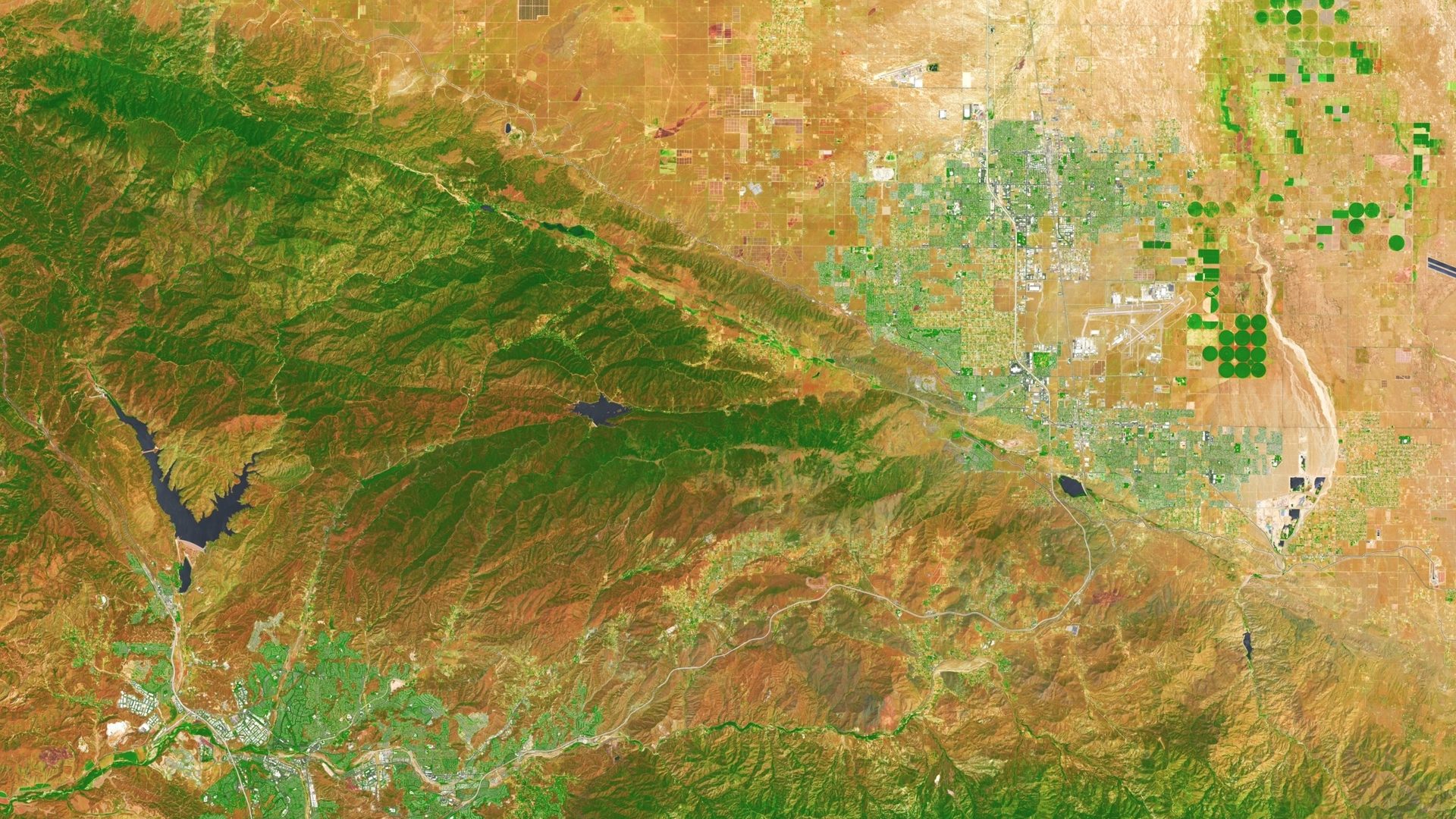
Vasquez Rocks: A Natural Marvel Visible from Space
California’s Vasquez Rocks have served as a cinematic backdrop for alien worlds for decades, and a recent NASA satellite image showcases this iconic landscape from a fresh perspective.
Unique Landscape of Vasquez Rocks
Located in Southern California, Vasquez Rocks Natural Area features striking formations that rise dramatically from the Soledad Basin, north of Los Angeles. The area is known for its massive slabs of sedimentary rock, many of which tilt at angles approaching 50 degrees, giving the rocks their distinctive jagged look.
NASA’s Earth Observatory recently captured an image of Vasquez Rocks using the Landsat 9 satellite’s Operational Land Imager (OLI). This image, taken from hundreds of miles above, reveals the landscape in vivid false colors created by combining shortwave-infrared, near-infrared, and visible wavelengths. These colors help distinguish areas of vegetation, which appear in vibrant greens, from the surrounding arid landscape.
Insights from Satellite Imagery
From space, the rock formations are less prominent than they appear from ground level. Instead, they blend into bands of gray within a broader, rugged mountain landscape shaped by geological forces over millions of years. The false-color imagery allows scientists to identify features that might not be visible to the naked eye and highlights the intricate interplay between mountains, valleys, agriculture, and urban development.
One notable feature in the satellite image is the circular green fields created by center-pivot irrigation, starkly contrasting with the irregular mountainous ridges formed by erosion and geological changes.
Geological History
The formation of Vasquez Rocks is a tale of sedimentation and tectonic forces. Initially, sediment from nearby uplands accumulated across alluvial fans. Over time, layers of sediment became buried, cemented into thick deposits of sandstone and conglomerate. Tectonic activities associated with the San Andreas Fault system later uplifted and deformed these layers, resulting in the tilted formations visible today.
Once exposed through erosion, harder sandstone and conglomerate remained, while softer materials were worn away, creating the steep fins and ridges characteristic of Vasquez Rocks.
A Hollywood Icon
Vasquez Rocks’ extraordinary geology has established it as a go-to location for movie and television production, particularly for sci-fi narratives. It gained significant fame as a backdrop in Star Trek, notably during the original series when Captain James T. Kirk confronted a reptilian foe across the rocky terrain. The formation has since represented various alien landscapes, appearing in shows like Westworld and Battlestar Galactica.
From a ground-level view, Vasquez Rocks appear as towering formations, but from the vantage point of space, they become part of a more extensive ecosystem shaped by water, erosion, and the immense forces of the earth’s tectonic activity.
Conclusion
The juxtaposition of Vasquez Rocks’ unique geological features and their cinematic portrayal highlights the incredible stories that both nature and humanity can tell. The insights gained through satellite imagery enrich our understanding of this stunning Southern California landmark.
Image Credit: NASA Earth Observatory using Landsat data from the U.S. Geological Survey.
Explore more about Vasquez Rocks and other natural wonders by subscribing to our newsletter for insightful articles and updated content!