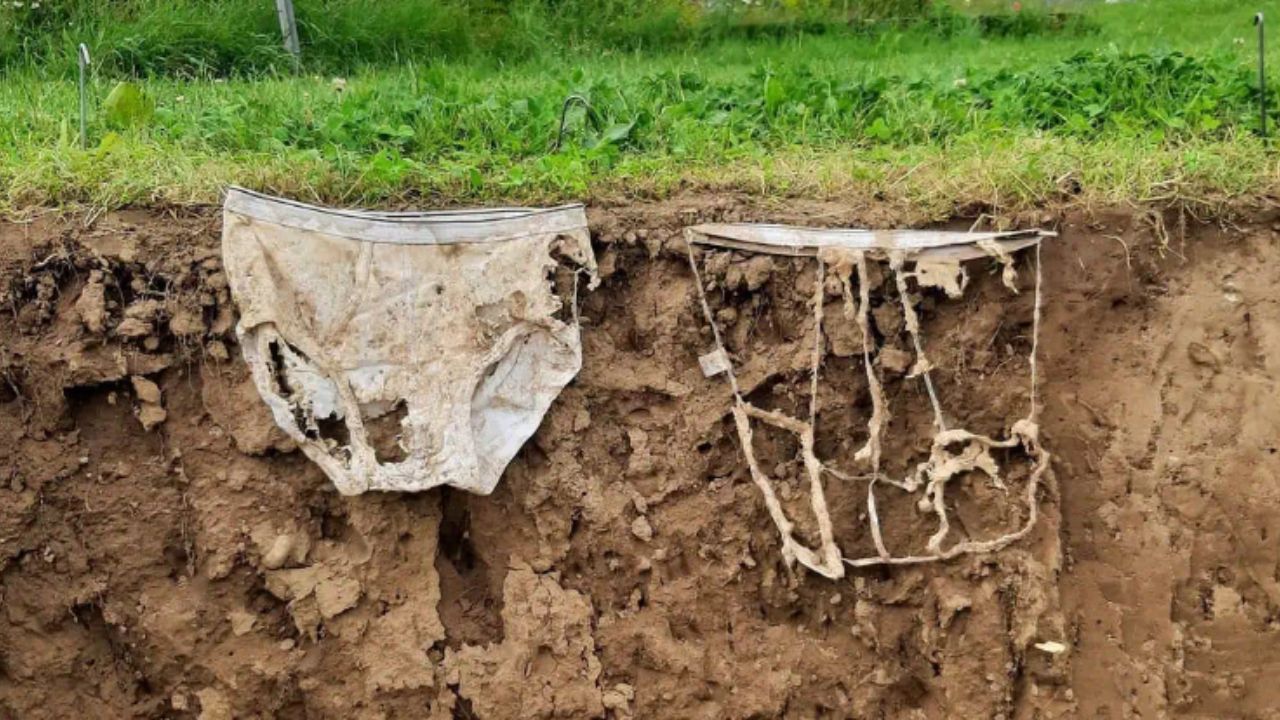
This article discusses a unique citizen-science project conducted in Switzerland, where over 1,000 volunteers buried cotton underwear to study soil health and biological activity. The experiment, led by the University of Zurich and Agroscope, involved burying more than 2,000 pairs of underwear at around 1,000 different sites for two months. After this period, participants dug them up to assess the extent of decomposition, providing a tangible way to measure biological activity across various soil types like gardens, lawns, agricultural fields, and meadows.
Key findings indicate that garden soils typically showed faster decomposition rates compared to lawns, suggesting that land management significantly impacts underground biological activity. However, rapid decomposition isn’t always synonymous with soil health, as other factors like temperature, moisture, and nutrient levels also play crucial roles in soil ecosystems.
The project highlighted the importance of citizen engagement in scientific research, with many participants becoming co-authors of the study, which allowed for a broader examination of soil conditions across Switzerland. The simplicity of using cotton underwear as a measuring tool makes this research accessible and memorable, potentially leading to the establishment of an “underwear index” as a standard for assessing soil biological activity.