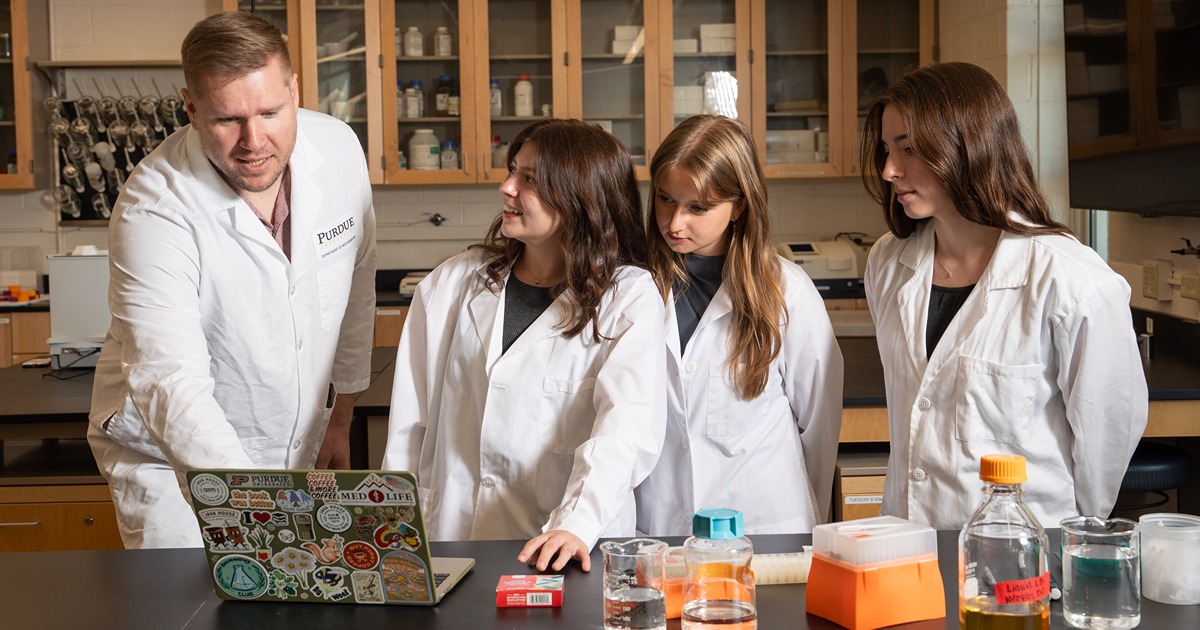
Purdue University’s College of Agriculture has introduced an innovative course in molecular genetics for freshman and sophomore biochemistry majors. This hands-on learning experience allows students to emulate the work of graduate students and professional scientists, focusing on genetic inheritance and molecular mechanisms.
Course Structure
The course consists of three main lab modules:
-
Classical Genetics: Students breed Arabidopsis, a commonly used model plant, to understand the inheritance of physical traits across generations.
-
CRISPR Gene Editing: Participants select a gene from a list to “knock out” in yeast, a model organism in research. They develop hypotheses based on scientific literature, grow the yeast, and observe any transformations.
-
Gene Function Testing: Students reintroduce a removed DNA sequence into a circular DNA plasmid to verify the gene’s function by checking if physical traits return to normal.
Instructor’s Philosophy
Carter, the course creator, emphasizes the reality of scientific research, recognizing that setbacks are part of the process. He prepares for potential failures and encourages students to view challenges as learning opportunities.
Collaboration with Upperclassmen
The course was developed with the help of upperclassmen Elysia Uggen, Maren Eaton, and Elise Denger, who provided invaluable insights and served as teaching assistants. They aim to build students’ familiarity and confidence in molecular genetics early in their academic journey, enhancing readiness for future coursework and research opportunities.
This new course not only enriches the students’ educational experience but also prepares them for advanced studies in science, making them competitive candidates for graduate programs.