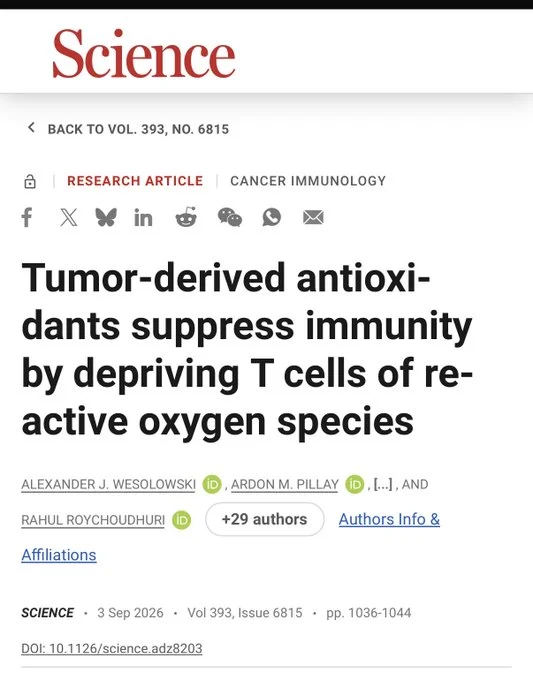
Title: Tumor-derived Antioxidants Suppress Immunity by Depriving T Cells of Reactive Oxygen Species
Summary from Ilyas Sahin, Assistant Professor of Medicine at Harvard Medical School:
Recent research published in Science reveals that tumors can exploit antioxidants to suppress T-cell activation crucial for immune response. Here’s a brief breakdown of the study findings:
-
Mechanism: T cells require a short surge of reactive oxygen species (ROS) for activation. Tumors release PRDX1, an antioxidant enzyme, into the surrounding environment, neutralizing this necessary signal.
-
Experimental Insights: When PRDX1 was deleted from mouse tumors, T-cell activity was restored, leading to rejection of some tumors and increased sensitivity of otherwise resistant melanomas to immunotherapy.
-
Human Data: While findings in humans were supportive, the data is limited.
-
Redox Checkpoint: The study raises important questions regarding the role of antioxidants in cancer therapy and refers to past clinical trials showing adverse effects of antioxidants like beta-carotene and vitamin E.
Clinical Trials Noted:
- ATBC: Beta-carotene associated with increased lung cancer in smokers.
- CARET: Beta-carotene and vitamin A led to a significant increase in lung cancers.
- SELECT: Vitamin E linked to a rise in prostate cancer cases.
- Radiotherapy Impact: Vitamin E during head and neck radiotherapy showed fewer acute toxicities but increased recurrence rates.
Conclusion: The study emphasizes that the relationship between antioxidants and cancer is complex. High-dose antioxidant supplements may not be safe during cancer treatment, and it is advisable for patients to discuss any supplement use with their oncology team.
Authors of the Study: Alexander J. Wesolowski et al.
For further exploration, you can read the full article here.
More Articles: Ilyas Sahin on OncoDaily