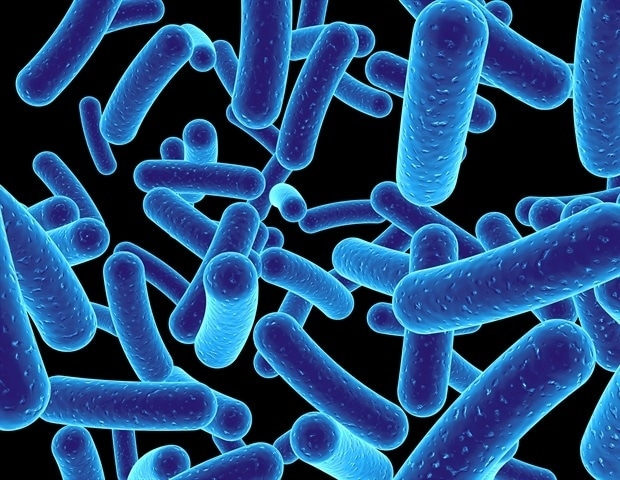
Gram-negative bacteria pose significant treatment challenges due to their antibiotic resistance, largely stemming from their protective outer membrane. This membrane contains specialized proteins for nutrient transport and environmental sensing, with the SurA chaperone and the β-barrel assembly machinery (BAM) complex being crucial for the localization and insertion of outer membrane proteins (OMPs).
A recent study by Assistant Professor Ryoji Miyazaki and colleagues from the Nara Institute of Science and Technology (NAIST), Japan, focuses on the mechanisms by which SurA transfers OMPs to BAM. Despite the known role of BAM in OMP assembly, the physical transfer process by SurA remained uncertain.
Using cryo-electron microscopy (cryo-EM), the researchers visualized the SurA–BAM complex, identifying various structural conformations of SurA. They discovered that SurA undergoes significant conformational changes to effectively deliver OMPs to BAM, emphasizing the interaction between SurA’s domains and BAM components.
Insights from this research could guide the development of new antibacterial strategies, exploiting the outer membrane’s role in Gram-negative bacteria’s antibiotic resistance. Understanding OMP assembly mechanisms may reveal new approaches to disrupt this protective barrier.
For further reading, see the publication in Nature Communications DOI: 10.1038/s41467-026-76843-3.