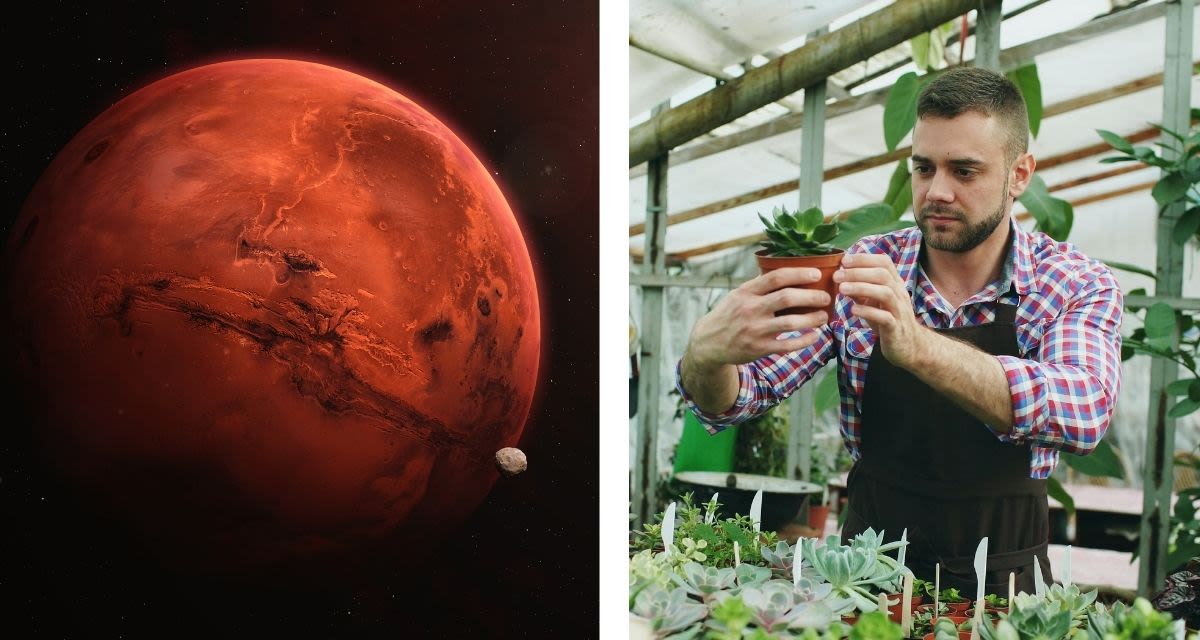
In 2013, botanist Wieger Wamelink wondered if Mars’s soil could support plant life. To explore this, he created a simulated Martian soil in a lab and planted seeds in it. Despite initial challenges, such as the soil’s lack of organic material and repelling moisture, Wamelink’s team achieved impressive results.
They planted 4,200 seeds of 14 species, discovering that most germinated, with some sprouting within 24 hours. Notably, plants like kale thrived better in this simulated soil than in Earth soil. Over time, Wamelink experimented with enriching the soil using manure and specialized bacteria, ultimately growing crops including tomatoes, spinach, and garlic.
In 2016, he even hosted a dinner featuring these Martian crops, demonstrating their edibility and nutritional value. Wamelink’s work highlights the possibility of sustaining life beyond Earth, moving closer to answering whether life can thrive anywhere else in the universe.