Evidence of Complex Geology on Mars
Researchers from the University of Oxford have discovered strong indications that Mars may have harbored large, Earth-like magmatic systems deep beneath its surface, despite the planet’s lack of plate tectonics. This groundbreaking study, published in Nature Astronomy, indicates that rocky planets can evolve in ways that support possibilities for habitability.
Mars: A Stagnant Lid Planet
Mars is traditionally characterized as a “stagnant lid” planet, in contrast to Earth’s dynamic tectonic plates that contribute significantly to volcanism and crust recycling. For a long time, it was presumed that Mars’s crust formed through simpler processes due to the absence of plate tectonics.
New Insights from Seismic Data
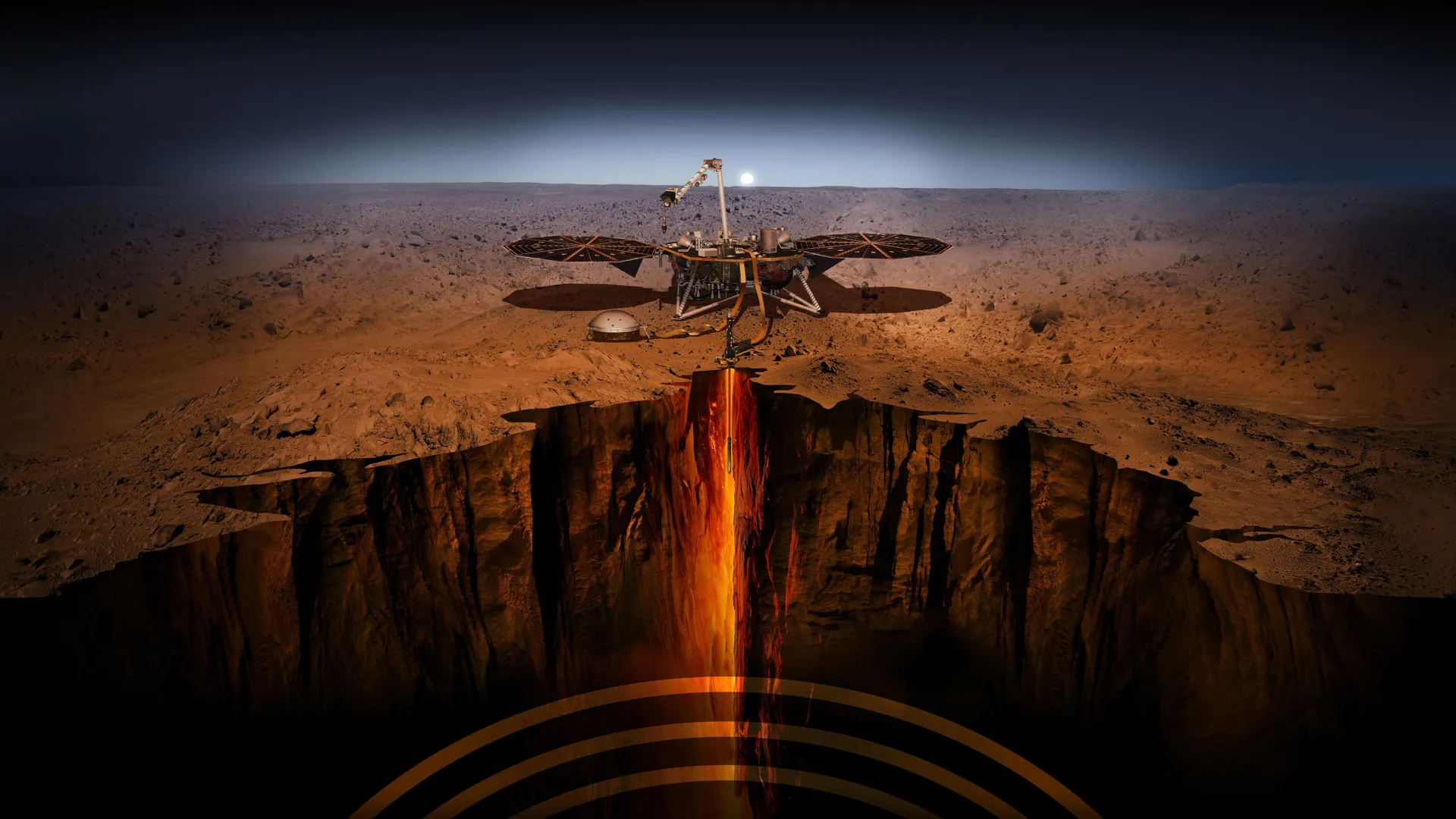
The recent study challenges this assumption by analyzing seismic data from NASA’s InSight mission, which collected information on meteoroid impacts and marsquakes. The research team focused on a previously identified but poorly understood boundary lying 24 kilometers beneath the surface.
Rock Composition Analysis
By comparing seismic observations to various rock compositions, researchers used thermodynamic modeling to ascertain the material properties at different depths. The analysis indicated that the rocks below the 24 km boundary were primarily “ultramafic” (rich in iron and magnesium) while the rocks above contained “mafic” components (higher in silica).
Implications of a Vast Magma System
The researchers propose that this underground layer formed through the accumulation of molten rock, segregating into various materials over time. They suggest that similar processes observed on Earth could have occurred on Mars, potentially leading to large, interconnected magmatic systems rather than isolated volcanoes.
Lead author Dr. Tobermory Mackay-Champion expressed that prior beliefs about Martian volcanism being simplistic may need reevaluation, as these findings suggest the potential for complex, long-lived magmatic systems on Mars.
Broader Implications for Habitability
The discovery raises interesting questions about the habitability of rocky planets. Geological recycling plays a vital role in developing atmospheres and environments conducive to life. Since Earth’s recycling is largely driven by plate tectonics, the findings imply that similar processes could occur on other planets, even those lacking such tectonic activity.
Co-author Professor Jon Wade emphasized that this research may broaden the understanding of habitable conditions across the universe, indicating that more planets could meet the necessary criteria than previously thought.
Conclusion
This study not only sheds light on Mars’s geological history but also alters our perspective on the potential for life-supporting conditions on other rocky planets. The insights from NASA’s InSight mission have provided a treasure trove of data, enhancing our understanding of planetary evolution beyond Earth.