8 Lakes Visible From Space
Earth has roughly 117 million lakes, yet fewer than twenty of those can be easily spotted from orbit. Here are the most prominent lakes that astronauts can identify, and what makes them stand out.
1. The Caspian Sea
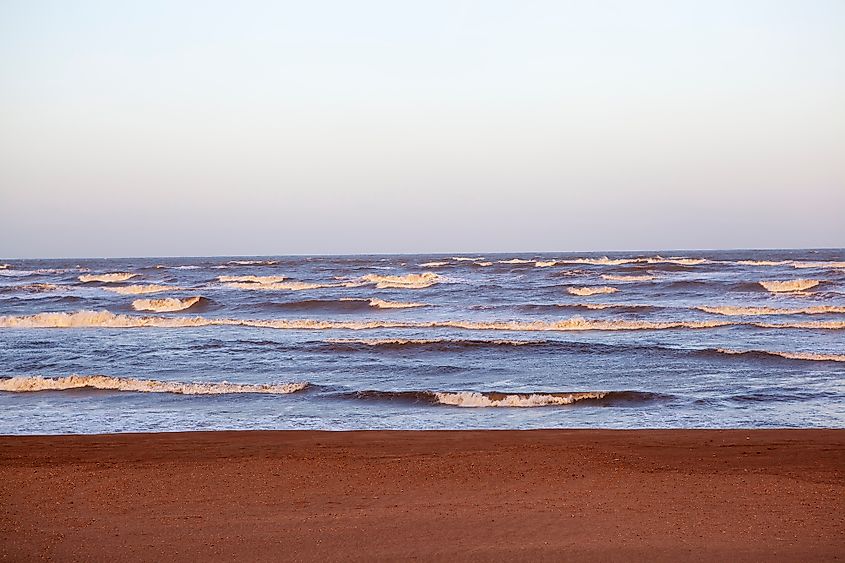
Waves along the shore of the Caspian Sea.
The Caspian Sea is the largest lake on Earth, covering approximately 143,000 square miles (371,000 sq km). Seen from space, it appears as a distinct blue patch, with its brackish waters darkening in the south and lighter hues in the north. Formed as a remnant of the ancient Tethys Sea, it is bordered by five countries: Russia, Kazakhstan, Turkmenistan, Iran, and Azerbaijan.
2. The Great Lakes
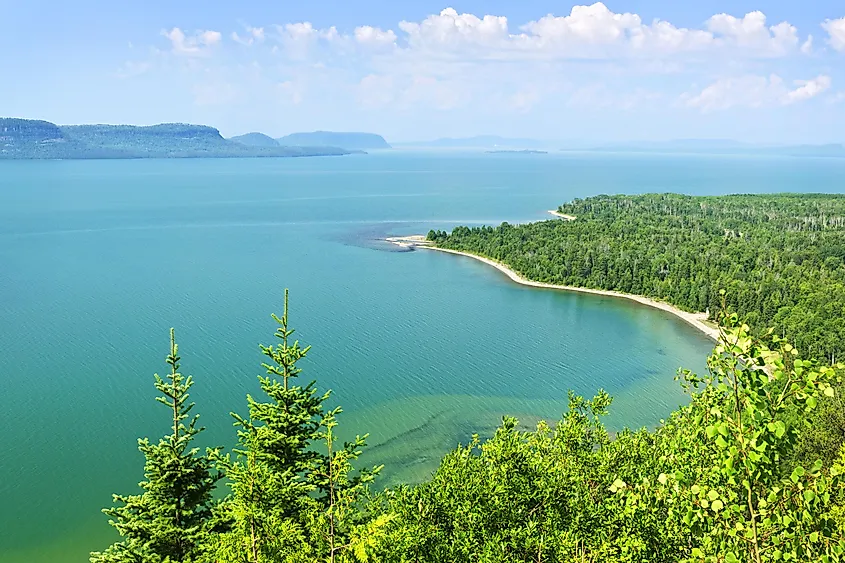
Lake Superior seen from Ontario, Canada.
The Great Lakes consist of five interconnected freshwater lakes: Superior, Michigan, Huron, Erie, and Ontario. Their collective surface area is 94,250 square miles (244,106 sq km)—larger than the United Kingdom. They shine against the landscape, particularly from the ISS or even the Moon, thanks to their size and reflective surfaces.
3. The Finger Lakes

Seneca Lake, the largest and deepest of the Finger Lakes.
Despite their smaller size, the Finger Lakes in New York are long and narrow, allowing them to catch sunlight, especially during sunglint, making them conspicuous. Their lakes were sculpted by glaciation, leading to a unique shape that can be observed from low Earth orbit.
4. Lake Victoria
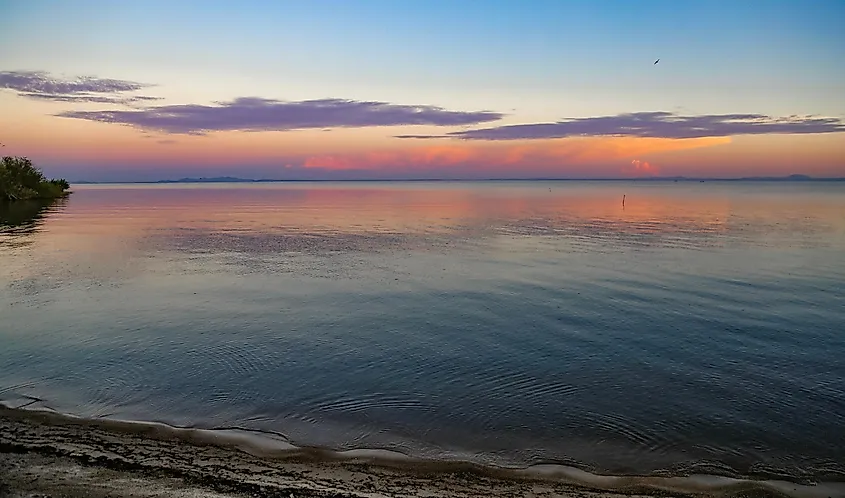
Speke Bay, Lake Victoria, Tanzania.
Lake Victoria is the largest lake in Africa and the largest tropical lake on Earth. With a surface area of about 26,600 square miles (68,800 sq km), it’s easily identifiable from orbit and features year-round open water due to its equatorial climate.
5. Lake Tanganyika
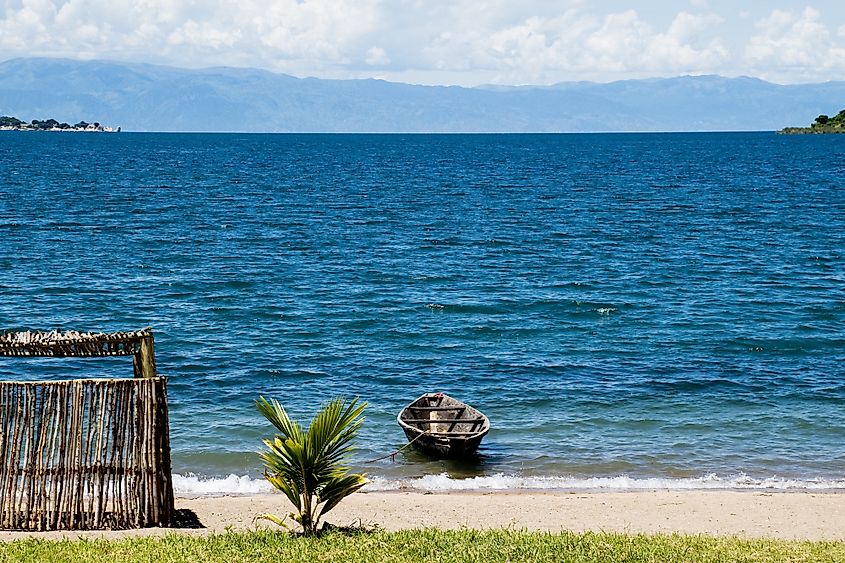
Lake Tanganyika, Tanzania.
Stretching 418 miles (673 km) long, Lake Tanganyika is the longest freshwater lake globally. Its narrow, elongated shape makes it distinct from space, as does its depth of 4,820 feet (1,470 m)—making it the second deepest lake in the world.
6. Lake Malawi

Lake Malawi.
Covering 11,400 square miles (29,600 sq km), Lake Malawi is notable for its rich biodiversity. Its long and narrow shape resembles that of Tanganyika, making it easily distinguished in satellite imagery.
7. Lake Baikal
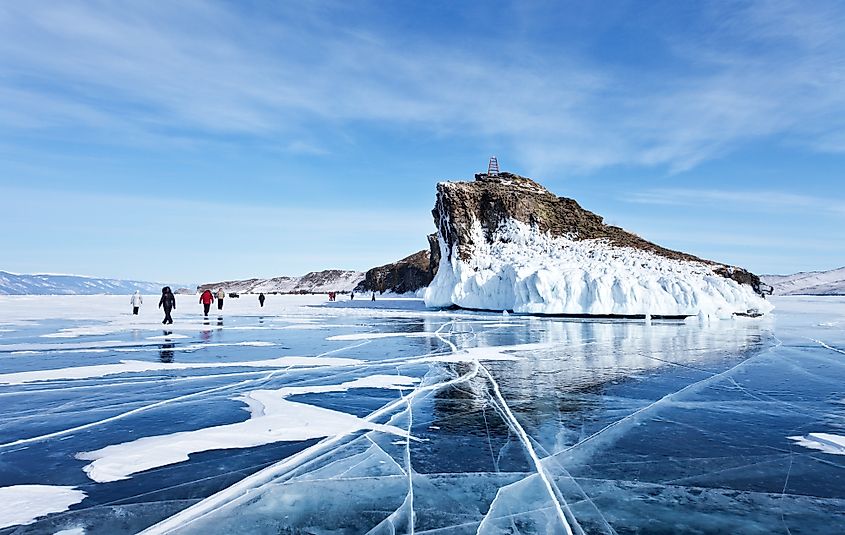
Frozen Lake Baikal, Siberia.
Lake Baikal is the world’s largest freshwater lake by volume, containing around 20% of the unfrozen surface fresh water on the planet. Its icy surface in winter gives it a striking contrast from orbit, making it identifiable.
8. Great Bear Lake
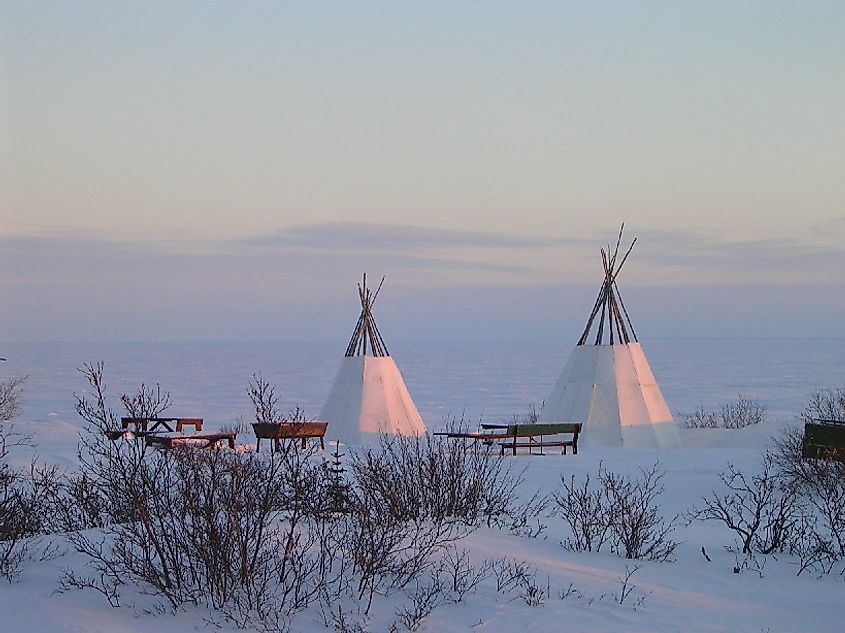
A frozen Great Bear Lake, Northwest Territories, Canada.
Great Bear Lake is the largest lake entirely within Canada and the eighth largest in the world. Its pristine waters and snowy landscape make it a clear landmark in satellite views.
9. Great Slave Lake
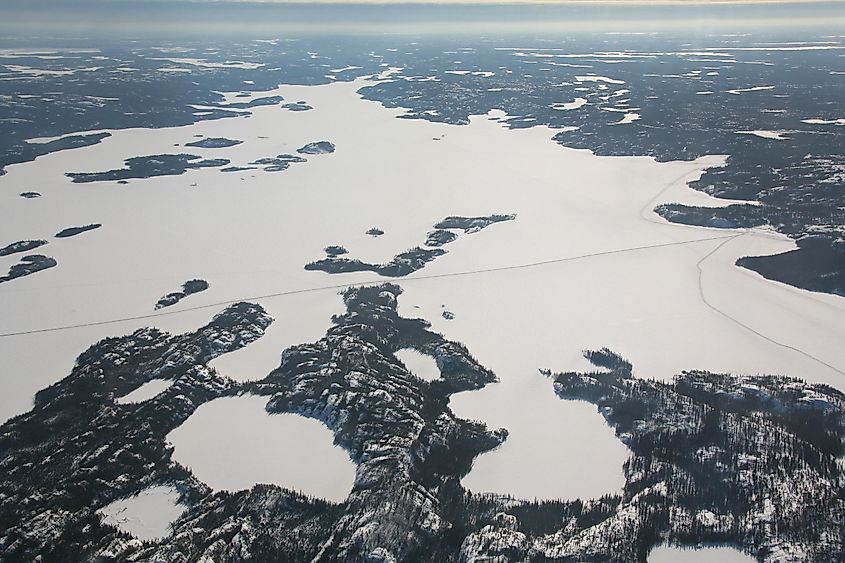
Frozen Great Slave Lake, Northwest Territories, Canada.
The Great Slave Lake, with a surface area of 10,500 square miles (27,200 sq km), is the deepest lake in North America. Its significant depth and expansive surface make it visible from low orbit.
A Short List Among Millions
These lakes represent only a small selection of the countless bodies of water on Earth visible from space. Their size, shape, and environmental contexts allow them to stand out against the terrestrial backdrop, providing a glimpse into Earth’s remarkable water features.