C-HAWQ Holds Canal Science Symposium
The Coastal Habitat and Water Quality Initiative (C-HAWQ) hosted a highly anticipated symposium focused on canal science at the Collier County Public Library’s Marco Island Branch on August 28.
Event Highlights
- Over 200 guests pre-registered for the event, quickly filling the Rose Hall room. Additional attendees were directed to the Marco Island Center for the Arts for a live stream of the program.
- Attendees enjoyed a variety of refreshments, featuring freshly roasted coffee from MICRo.
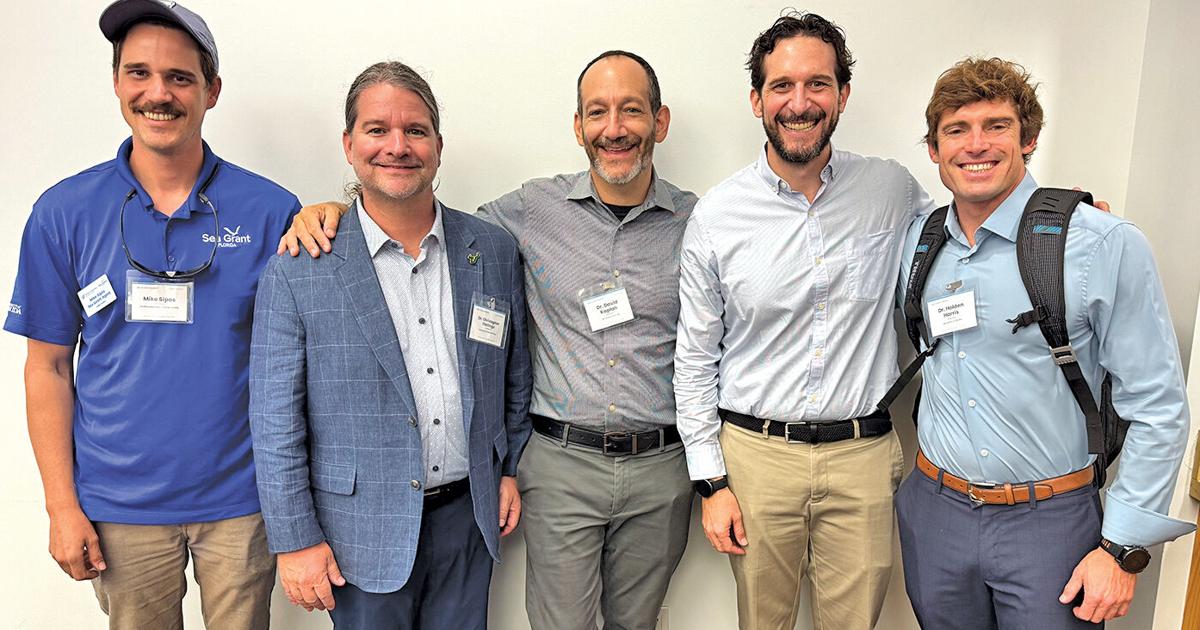
- The symposium featured seven speakers and panelists who are experts in their respective fields, including:
- Dr. Holden Harris (University of Florida)
- Dr. Christopher Stallings (University of South Florida)
- Dr. Mauricio Arias (USF Department of Civil and Environmental Engineering)
- Dr. David Kaplan (UF Department of Environmental Engineering Sciences)
- Logan Davies (C-HAWQ team)
- TJ Snopkowski (Friends of Rookery Bay)
- Mike Sipos (Florida Sea Grant)
Opening Remarks
The event began at 2:00 PM with Emily Begin, C-HAWQ’s Vice Executive Director, providing an overview of the organization and the day’s agenda. She shared key facts about residential canals in Southwest Florida:
- It has the highest concentration of residential canals on Earth.
- Florida boasts 4,500 miles of residential canal shoreline.
- Marco Island has 119.6 miles of residential canal shoreline and over 70 miles of waterways.
Symposium Goals
Begin emphasized the purpose of the symposium, which is to educate the community about canal science, address knowledge gaps, and promote research and nature-based solutions for improving water quality.
C-HAWQ operates on four key pillars:
- Research: Comprehensive mapping and exploration of Florida’s residential canals.
- Non-Profit Access: Making research and resources freely available to the public.
- Technical Assistance: Helping local governments find science-based solutions to community challenges.
- Community Education: Directly engaging residents with scientific insights relevant to their experiences.
Presentations
The program included presentations on:
- The history of Marco Island canals
- Current water quality conditions in residential canals
- Nature-based solutions for improving canal ecosystems
A Q&A segment allowed community members to engage with speakers and express their concerns and insights.
Looking Ahead
The event concluded with a moderated panel discussion featuring scientists and local experts, providing further insights into their research and community engagement. C-HAWQ plans to offer additional educational opportunities, including Wednesday Night Workshops throughout September on topics like Citizen Science and Fisheries and Habitat.
A full recording of the symposium and further resources are available on C-HAWQ’s website: www.chawq.org. Registration for FREE workshops and water quality testing is also open on the site.
About the Author
Brittany Richards is a resident of Marco Island with a passion for literature and storytelling. She aims to inspire the next generation of readers and is excited to merge her interests in writing and education. In her leisure time, she enjoys traveling, boating, and spending quality time with her dogs.