Dive Brief:
-
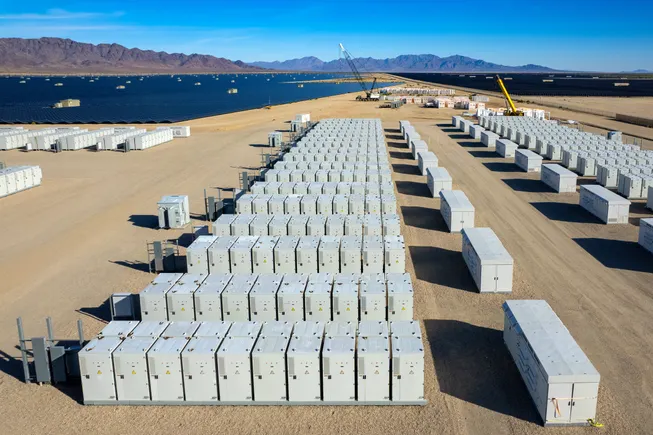
The U.S. battery energy storage sector faces significant near-term risks due to President Donald Trump’s recent executive order that restricts foreign-produced bulk power components. BloombergNEF analysts have pointed out that developers will likely experience deployment delays for grid-scale battery projects while awaiting further guidance or looking for alternative suppliers.
-
Battery project developers are advised to assess their existing and planned assets, review supply contracts for regulatory risks, and prepare to mitigate impacts on equipment already installed.
Dive Insight:
Trump’s executive order aims to block certain foreign-made batteries, transformers, inverters, and related products from connecting to the U.S. power grid effective August 26. The Energy Secretary will have discretion over the usage of equipment installed before this date.
This move is a follow-up to a prior order blocking installations tied to “foreign adversaries,” particularly targeting China, which accounts for 80% of global lithium-ion battery supply chain capacity. A considerable portion of U.S. battery deployments depends on inverters manufactured by Chinese companies.
The new order, coupled with existing Foreign Entity of Concern rules, creates additional challenges for the energy sector, making compliance with federal manufacturing incentives more complex. Analysts warn that the order could severely limit opportunities for Chinese battery and inverter manufacturers within the U.S. market.
There is uncertainty among electrical equipment manufacturers regarding the order’s specific implications, particularly for software products. It is anticipated that developers with procured, but uninstalled equipment may hold off on installation until clearer guidance is issued.
The long-term effects of the executive order could be mitigated by increasing domestic manufacturing capacity, with several battery plants already coming online in the U.S. this year and more expected in the near future.