Today’s update on the situation in Iran is largely comprehensive. However, I will provide any significant updates by 8:00 PM EDT if needed.
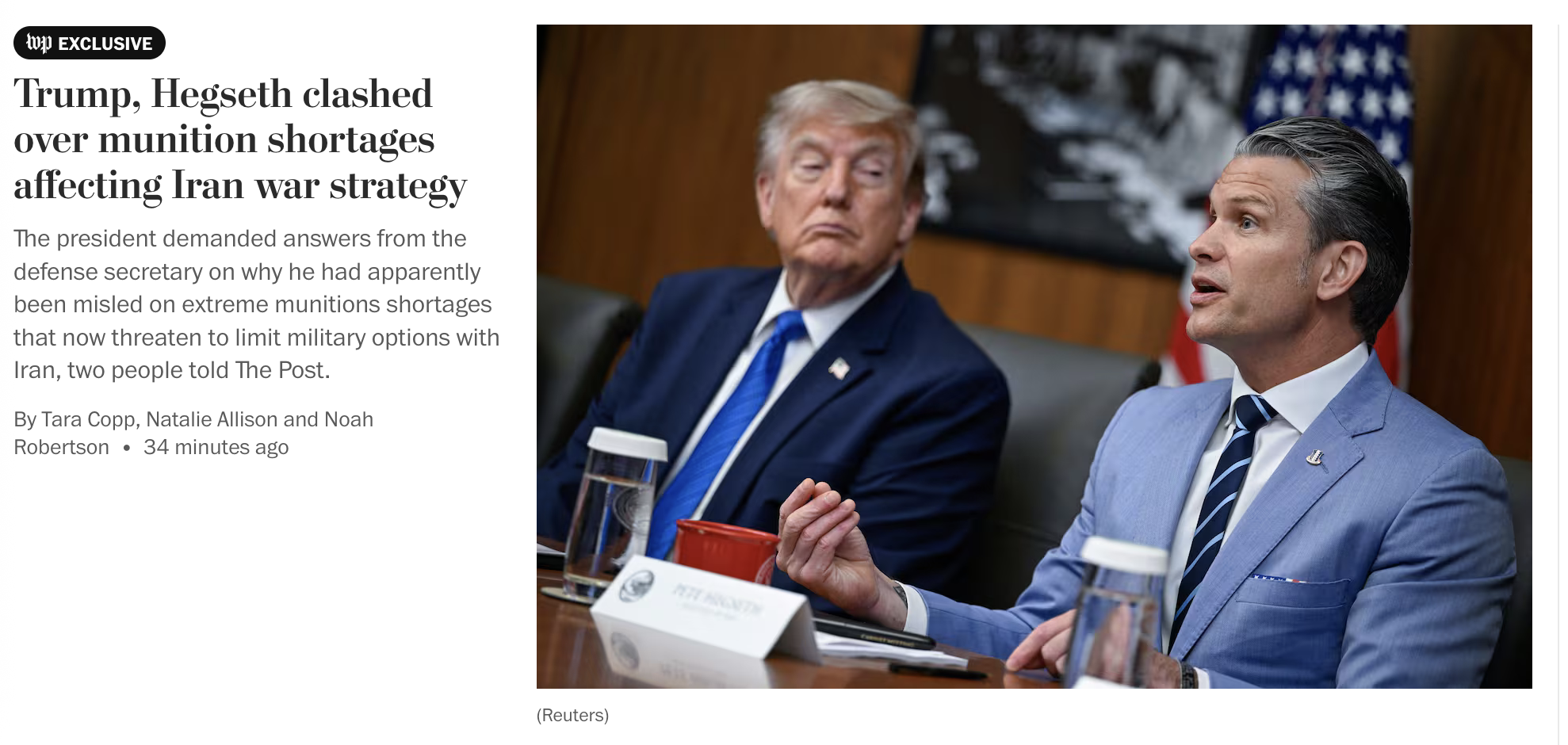
Today’s coverage of the Iran conflict predominantly revolves around the inaccuracies in Western media’s reports regarding negotiations with Iran. Since this is a quieter day in the conflict, we’ll tackle several secondary yet relevant topics. These include the performance of Iran’s hypersonic Fatah missile, Scott Ritter’s unsettling warning about the U.S. pivoting to an aggressive nuclear doctrine, and a contentious exchange between Trump and Hegseth regarding military assets. Additionally, I’ll touch on signs of an internal power maneuvering that may indicate a decrease in President Pezeshkian’s influence, as well as the deteriorating conditions of U.S. military rations in the Iran theater.
Iran-Oman Agreement Status
First, let’s examine the Iran-Oman agreement. The discussions are reportedly nearing completion, and an official announcement is anticipated soon. Still, the agreement is subject to approval from Iran’s Supreme National Security Council before it can take effect.
Despite this progress, even reputable sources like Al Jazeera have propagated the misleading narrative, originally put forth by the Trump administration, that these negotiations are aimed at reopening the Strait of Hormuz. This notion is fundamentally incorrect, as reiterated by Iranian state media, yet it continues to circulate unchecked. Nevertheless, CNN captures some essential truths about the situation, although it may not be the first choice for potential investors.
Iran understands the urgency of establishing a long-term management strategy for the Strait of Hormuz. Even if it could assert its dominance over the strait, doing so would infringe upon Oman’s territorial sovereignty and could lead to broader conflict. Therefore, working out protocols and conditions is just a preliminary measure—akin to high school students needing to pass standardized tests like the SAT before they can actually enroll in a college like MIT.
Interestingly, Trump still insists that Iran is engaged in talks with the U.S., dismissing Iranian denials as fabrications. So what unfolds if there is no agreement? Trump had threatened severe retaliatory actions unless a deal was struck by Wednesday, but now that the deadline has passed without incident, what’s his next move? Likely, he’ll embellish claims of progress while expressing frustration over the slow pace of negotiations, underlining his view that without decisive action, he would resort to overwhelming force.
Regardless of Trump’s efforts to prolong the situation, the negative impact on the economy continues to escalate. Indicators such as Japan’s yen and bond markets reflect a heightened vulnerability related to energy and food imports. Ansar Allah is also intensifying its activities, while the Saudis remain adamantly unwilling to negotiate. This squeeze is intensifying due to depleting stockpiles.
Details of the Iran-Oman Agreement
Listeners may find the following tweet consistent with reports from both Reuters and Al Mayadeen:
Deputy Foreign Minister Gharibabadi clarifies that the forthcoming Iran-Oman agreement isn’t about implementing Paragraph 5 of the Islamabad Memorandum of Understanding (MoU), but entails a separate arrangement.
- Currently, the northern route close to Larak Island and the southern corridor in Omani waters will be closed and replaced with a new temporary shipping route, with a substantial share of commercial traffic moving through Iranian territorial waters.
- Regional countries have accepted that Iran and Oman will jointly establish future protocols for the Strait. This temporary route could remain in effect for 2-4 months, extending beyond the one month initially envisioned in the Islamabad MoU.
- Any transition to Phase 2—including the standard reopening of Hormuz and the topic of transit fees—will require a fresh political decision and depends on whether the U.S. genuinely meets its obligations.
My analysis indicates that this represents more than just a technical update; Tehran seeks to redefine operational norms in the post-conflict landscape, rather than simply restoring the status quo.
PressTV has reiterated that this agreement does not equate to opening the Strait of Hormuz. Further comments from Gharibabadi highlight that U.S. actions remain a prime source of security concerns in this region. He emphasizes that any reopening of the Strait is contingent upon the U.S. adhering to its commitments.
Sanctions Relief Discussions
In a brief digression regarding sanctions relief, the U.S. retracted some minor sanctions recently, leading to widespread misinterpretations that these changes were more widespread than they were. To clarify, the U.S. lifted sanctions only on specific Iraqi entities, not on Iran as a whole, highlighting the performative nature of these actions.
Just to be ABUNDANTLY clear after a slew of misreporting on X… the United States DID NOT remove sanctions “on Iran”, nor their oil.
- They lifted sanctions on: Fly Baghdad Airlines, Iraq Express, Fly Baghdad, Yi-Baf, Yi-Ban.
Moreover, experts highlight that temporary waivers of oil sanctions have eroded trust in U.S. commitments, prompting Iran to advocate not merely for temporary relief but for a full unwinding of the sanctions regime.
Reporting on Iran-Oman Negotiations
Many inaccuracies have emerged in the media regarding the Iran-Oman negotiations. For instance, even Al Jazeera’s live updates mischaracterized the situation:
- U.S. President Trump asserts the Pentagon possesses extensive munitions while vowing to identify leakers responsible for reports of shortages.
- Iran claims its agreement with Oman is close to being finalized as both countries have reportedly agreed on shipping coordinates.
Bloomberg’s assessment appears to have adjusted following an evaluation of statements from Iranian officials, even though its headline seems to misrepresent the mood surrounding the agreement. According to the text:
- Iran confirmed it reached an agreement with Oman regarding a maritime route through the Strait of Hormuz, potentially paving the way for renewed energy supply routes.
- Negotiations are reported to be progressive, although contingent on the actions of external actors.
- Gharibabadi elaborated that the route would operate for a temporary duration, with significant amounts of traffic passing through Iranian waters.
CNN, conversely, has successfully conveyed the complexities of the situation:
Iran has consistently stated that discussions are solely with Oman pertaining to a temporary arrangement for the significant waterway. Others express skepticism about the imminence of a deal, questioning its long-term viability.
The looming question remains how such agreements will affect the geopolitical landscape, notably in regards to oil reserves amid ongoing depletion, influencing the global market’s stability.
Rising Tensions in the Red Sea
As we pivot to the Red Sea, Ansar Allah’s targeting of vessels continues:
UKMTO reports an incident involving a tanker near Aden, highlighting vessel safety concerns amid rising tensions.
Internal Struggles and Military Morale
The situation also contains elements of internal struggle, evidenced by recent discord between Trump and Defense Secretary Hegseth over unanticipated munitions shortages that threaten operational capabilities against Iran. Sources indicate that Hegseth has faced criticism, even as the White House denies these claims.
Conclusion
The complexities within the Iranian conflict are deepening. As the geopolitical landscape shifts, concerns over military strength, negotiation outcomes, and the overall state of affairs present a multifaceted challenge. With ongoing tensions both at sea and in governmental corridors, the situation remains volatile, requiring close attention in the coming days.


