The Perils of Military Secrecy
The concept of secrecy in military operations is often a double-edged sword. While protecting sensitive information is crucial for national security, an overreliance on secrecy can lead to a decline in institutional integrity and effectiveness. This article explores the nuances of this phenomenon through the lens of historical and contemporary military technologies, revealing how secrecy can inadvertently hamper performance and learning.
The Historical Context of the Petard
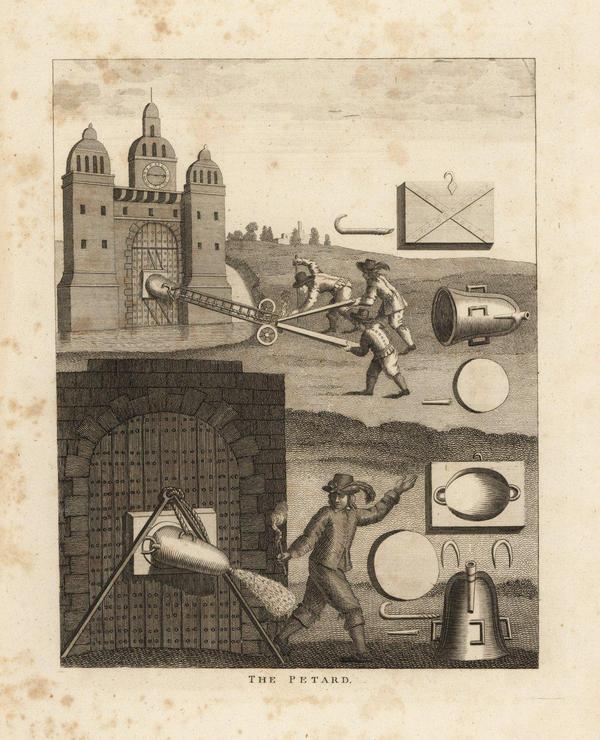
A petard was a small explosive charge utilized in Medieval and Renaissance warfare to breach fortified gates. Its deployment was fraught with risk, often putting the engineer in as much danger as the intended target. This concept was immortalized by Shakespeare in Hamlet, where he noted the idea of being “hoist with his own petard,” signifying the potential for one’s own tools or strategies to become their undoing.
Modern Military Secrecy
In today’s military landscape, secrecy serves a dual role. On one hand, it safeguards intelligence and operational tactics from adversarial forces; on the other, it risks transforming into a means of protecting institutions rather than capabilities. Over time, the original intent of secrecy can become obscured, leading to an environment where information is withheld not for security but to avoid embarrassment or scrutiny of failures.
This drift in purpose can have significant repercussions. The development of new military technologies relies heavily on feedback and improvement derived from testing and real-world experiences. When secrecy stifles honest evaluations, organizations can lose their ability to learn from mistakes, resulting in decisions made on incomplete information and persistent deficiencies that are left unaddressed.
Case Studies in Secrecy Degeneration
This discussion examines three key U.S. defense programs: the Patriot PAC-3 missile defense system, the F-35 fighter aircraft, and the Ford-class aircraft carrier. Although they differ in their functions and technologies, they exhibit a shared tendency toward the diminishing returns of secrecy. The focus here is not solely on individual system success or failure, but rather on how a lack of transparency can turn into a liability, echoing Shakespeare’s metaphor of being hoisted by one’s own petard.
The Secrecy Degeneration Model
Institutional mechanisms that depend on secrecy rarely become ineffective overnight; they often undergo a gradual transformation. Decisions to withhold information may seem justifiable in isolation, but cumulatively, they can shift the mechanism’s purpose. Given that secrecy is often shielded from public scrutiny, it can gradually morph from protecting legitimate military capabilities to concealing institutional failures.
As major weapon systems evolve, the scope of secrecy often expands beyond what is necessary for operational security. Issues such as cost overruns and performance deficiencies become enmeshed in the same classified environment that rightly protects sensitive information. The lines between necessary operational security and protection of institutional reputation can become blurred.
In this ambiguous space, various pressures come into play. Program managers aim to safeguard programs in which significant investments have been made. Agencies seek to defend budgets and maintain political backing, while contractors wish to secure future contracts. These motivations do not necessarily stem from deceit but can encourage a broadening application of secrecy that veils the very program it was meant to protect.
The most significant casualty of this phenomenon is the integrity of feedback. Effective engineering relies on identifying and rectifying flaws in a timely manner. Military systems improve when testing reveals weaknesses that can be addressed. When secrecy limits the scope of criticism or transparency regarding unfavorable testing results, organizations’ capacity for adaptation begins to weaken. The result is a cycle where errors linger longer, optimistic assumptions replace empirical evidence, and a growing chasm appears between claimed and actual performance.
Secrecy degeneration is not an unavoidable outcome, nor does every classified initiative follow this path. However, its recurrence warrants acknowledgment as an institutional risk. The following table encapsulates the transition from secrecy focused on mission to secrecy that increasingly shields institutional errors.
What Secrecy Protects
The vital question surrounding military secrecy is what it aims to protect. While the classification system is initially designed to secure national safety, it can gradually transform into an obstruction to institutional learning. When that shift happens, secrecy transitions from being a strategic advantage to a petard that endangers the very entity it was intended to safeguard.
Patriot PAC-3: Kinematic Limits and the Cost of Secrecy
Missile defense technologies epitomize the intricacies of modern warfare, and the Patriot PAC-3 system exemplifies years of engineering aimed at addressing the formidable task of intercepting high-speed ballistic missiles. Each successful interception relies on a delicate orchestration of advanced radar, command-and-control software, and interception strategies—all of which are often classified to thwart potential adversaries from developing countermeasures.
However, kinematic limitations dictate every terminal missile defense system. A PAC-3 interceptor aims to strike a target moving at several kilometers per second, and success hinges on predicting the incoming warhead’s position. Factors such as an interceptor’s maximum speed and maneuverability dictate its engagement capabilities. Should a target execute unexpected maneuvers, the interceptor may face insurmountable challenges in successfully achieving its objective.
The ability to evaluate the Patriot system’s operational effectiveness is further clouded by classification protocols. Thorough engagement data that could provide insights into performance is typically classified, restricting independent analysis. Consequently, public understanding of the system’s efficacy often relies heavily on official narratives rather than empirical assessments.
Recent developments in Iran have highlighted that adversaries may be honing their offensive missile capabilities to exploit the limits of modern defense systems, including the Patriot. However, without access to rich engagement data, analysts are left to assess performance gaps or successes based solely on incomplete information. This disconnection has resulted in widening discrepancies between official reports and independent findings regarding the system’s defensive capabilities.
Such a disconnect holds broader implications for strategic decision-making. If civilian leaders base their assessments on inflated perceptions of defensive capabilities, it can lead to miscalculations in military posture, alliances, and planning. Hence, preserving the accuracy of feedback isn’t merely an engineering necessity; it is critical for safeguarding national security.
The F-35: Combat Performance Without Clear Validation
The F-35 fighter aircraft embodies the challenges of evaluating highly classified military capabilities. With its inherent design focused on features intended to remain classified, such as stealth technology and advanced sensor integration, many pivotal elements influencing its combat effectiveness are inaccessible for independent review.
Reports suggest that Israeli F-35I jets played a significant role in operations against Iran, yet essential operational details remain classified. While reports might highlight the aircraft’s deployment and targets engaged, crucial metrics such as operational range, low observability, and successful electronic warfare interactions are largely veiled from scrutiny. This lack of clarity complicates the assessment of mission success rates and the effectiveness of individual capabilities.
This opaqueness extends beyond foreign operations. Despite the visible U.S. naval involvement in these initiatives, little verifiable information about the performance of U.S. Navy F-35C aircraft has emerged. Independent analysts find it difficult to gauge their contributions to these military campaigns due to the scarcity of detailed reports.
Such ambiguity raises significant questions about the F-35’s survivability against sophisticated threats. Despite its design focusing on advanced operational capabilities, the absence of publicly verifiable evidence leaves its true effectiveness largely unsubstantiated. Moreover, readiness statistics demonstrate persistent issues within the fleet, indicating that important operational performance metrics remain sources of concern.
Consequently, many congressional members and the public lack adequate information to conduct independent assessments of the F-35’s operational efficacy. Evaluations hinge on classified briefings rather than publicly verifiable evidence, illustrating how modern military secrecy complicates accountability and transparency.
USS Gerald R. Ford — Secrecy Degeneration and Accountability Issues
The USS Gerald R. Ford (CVN-78) was envisioned as an advanced aircraft carrier featuring groundbreaking technologies, yet it has faced significant challenges. Innovations like the Electromagnetic Aircraft Launch System (EMALS) and the Advanced Arresting Gear (AAG) promised enhanced performance, but developmental delays and systemic issues plagued the lead ship. The Navy invested years into resolving these problems before declaring it operational.
The complications are not confined to the Ford alone but have influenced subsequent vessels in the class. As deficiencies appeared, they necessitated modifications and reworks, suggesting that the engineering difficulties extend beyond initial operational challenges. Despite various reports documenting significant technical and scheduling issues, much of the detailed information remains restricted from public access.
During its deployment in support of operations against Iran, a fire incident aboard the Ford raised critical questions about its safety systems. While the Navy acknowledged the fire, reports emerged suggesting that the ship’s fire suppression systems may not have functioned adequately. Without confirmed details, it remains impossible for independent observers to ascertain the cause—whether it was an equipment failure or an isolated incident. This lack of transparency shifts the burden of trust onto institutional assurances rather than empirical evaluation.
The information void extends to operational assessments as well. Following rigorous testing and remediation, little has emerged regarding the operational capabilities of the Ford. Independent observers cannot reliably evaluate factors such as sortie generation rates or the reliability of critical systems, leading to a reliance on official claims that may not reflect reality.
The cumulative impact of secrecy is that technical discussions become a matter of institutional trust rather than transparent evaluation. As empirical evidence becomes increasingly hidden, the reliance on institutional assurances may lead to misplaced confidence in a system that requires thorough scrutiny. The Ford thus exemplifies how such processes can invert accountability; what should be a robust defense system becomes one that necessitates defending itself against public skepticism.
Conclusion
The case studies highlight that Secrecy Degeneration is a persisting issue in modern U.S. defense acquisition. Though the Patriot PAC-3, the F-35, and the Ford-class carrier vary significantly in purpose and technology, all demonstrate the same troubling pattern. As secrecy expands, the vital evidence need for independent evaluation vanishes, replaced by institutional claims that are often unverified.
This dilemma extends beyond existing systems to upcoming major investments in strategic initiatives such as the Sentinel missile system and the B-21 Raider bomber, which will be even more complex and classified. Without new safeguards, these programs may succumb to the same pitfalls of Secrecy Degeneration observed in past cases.
The goal is not to eliminate crucial military secrecy but to establish mechanisms that maintain stringent engineering accountability in tandem with necessary security measures. Legitimate military secrets must be protected, but it is imperative for democratic systems to ensure that they simultaneously foster rigorous verification and feedback. Effective engineering and innovation rely on scrutiny and empirical assessment, not just institutional trust.
Ultimately, the preservation of military advantages depends not only on technological advancements but also on the integrity of the feedback mechanisms that identify successes and failures. Therefore, the challenge for democratic nations is to safeguard military secrets without undermining the empirical foundations essential for technological excellence and public confidence. In this way, the modern equivalent of the petard, the weapon of secrecy, must be handled with care to avoid becoming a hazard that backfires on the very institution it is meant to protect.

