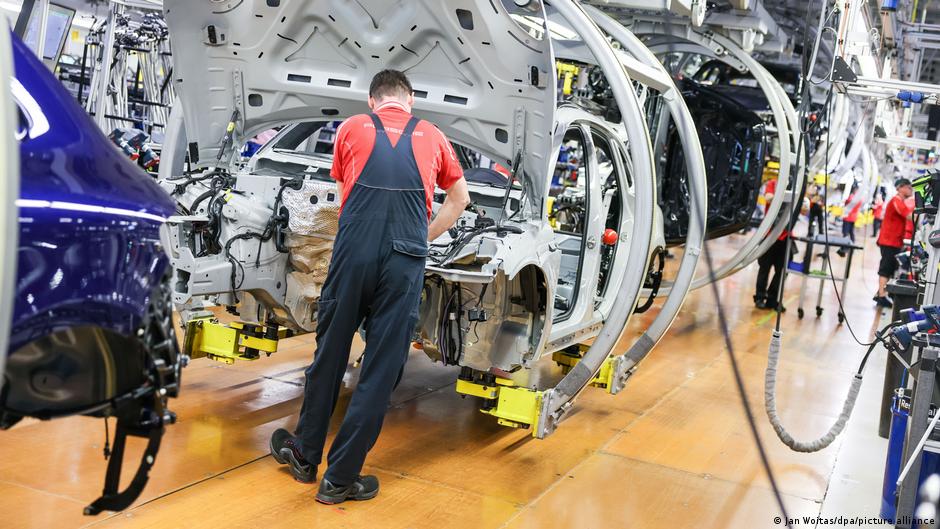
Germany’s automotive sector is facing significant challenges due to rising manufacturing costs, competitive pressure from China, punitive tariffs from the US, and a shift toward electric vehicle production. Major companies like Volkswagen, Mercedes-Benz, and BMW are scaling back production and cutting jobs—a trend affecting over 130,000 positions across the industry.
Analysts, such as Ferdinand Dudenhöffer, predict that employment in the sector could fall from about 700,000 to 500,000 by 2030 if current trends continue. High labor costs in Germany, averaging $3,307 per vehicle, further complicate the situation, as manufacturers suggest extending the workweek from 35 to 40 hours without increasing wages to lower expenses.
However, labor unions, such as IG Metall, oppose this idea, emphasizing that the sector struggles with demand rather than a shortage of working hours. Experts argue that merely increasing working hours won’t solve deeper structural issues, urging manufacturers to innovate and improve efficiency in order to compete internationally.
The path forward requires multi-faceted reforms, including reductions in production costs, tax adjustments, and improvements in logistics infrastructure, to restore competitiveness in the German automotive industry.

