In November of the previous year, two politically aligned figures with ties to the CIA secured governorships in eastern states—Abigail Spanberger in Virginia and Mikie Sherrill in New Jersey. Their victories added to the increasing number of individuals with intelligence backgrounds in significant roles within the Democratic Party, a trend mirrored in the Republican Party as well.
Both Spanberger and Sherrill, alongside the equally controversial Senator from Michigan, Elissa Slotkin, are being discussed as potential contenders for the 2028 presidential race. They are likely to garner support from their financial backers on Wall Street and within the military-industrial complex, who have helped them significantly outspend their rivals in past electoral battles. While Democratic Socialists have experienced notable successes in recent primaries in New York City, the national Democratic Party continues to be heavily influenced by major financial interests related to warfare.
Following their election wins, Spanberger and Sherrill promoted their focus on the cost-of-living crisis throughout their campaigns. Although they may not have offered substantial solutions, their messaging, including terms like “common sense solutions,” “bipartisan collaboration,” and “access” to healthcare, resonated.
However, it’s important to note that both Spanberger and Sherrill have a history that shows little concern for improving the economic situation of average Americans. During their time in Congress—Sherrill since 2018 and Spanberger as a three-term representative—they displayed a clear disregard for the working class, not advocating for even minimal relief measures.
Given their track records, voters in Virginia and New Jersey had limited expectations, hoping that the two might offer some superficial policies as resume padding for future political aspirations. The reality is unfolding as Sherrill collaborates with state police to suppress protests against ICE, while Spanberger dismisses labor movements, and both promote the expansion of AI-driven data centers.
In late May, Sherrill justified deploying state police to “maintain order” during protests concerning the detainment of individuals at the Delaney Hall ICE detention center in Newark. Her definition of “order” involved restricting demonstrators to designated protest zones, leading to incidents of police violence against those opposing detention practices.
Instead of taking a step back, they facilitated cooperation with ICE, which had recently resorted to using pepper spray against Senator Andy Kim, who attempted to mediate the situation.
Meanwhile, in Virginia, Spanberger vetoed legislation aimed at enhancing labor rights for public workers on May 14. This proposal, which had backing from all labor groups in Virginia, sought to expand a 2020 law allowing local government employees to opt-in to collective bargaining if permitted by their localities. This would have empowered public school teachers, janitorial staff, and firefighters across Virginia, yet Spanberger, who initially supported the bill and joined a SEIU rally in Richmond, ultimately diluted and killed it, citing concerns over the pace of change—ironically, her concern seemed exclusively directed at workers.
In the face of labor issues, Spanberger’s focus shifted to supporting data center development. An article from the Augusta Free Press highlighted her stance, indicating that even if voters show little interest in data centers, they certainly desire the technological conveniences those centers provide.
She emphasized that data centers are crucial to many aspects of the economy, including online shopping and cloud storage solutions. Her administration has faced challenges, such as the near government shutdown resulting from debates over billions in tax incentives for data centers, with Spanberger opposing efforts to lift a $1.9 billion exemption that disproportionately benefits these facilities in Virginia, the state with the highest concentration of such infrastructures.
In stark contrast, Sherrill is proposing a four-part plan for data center regulation, requiring developers to “pay their own way,” disclose energy use, address community concerns regarding noise and light pollution, and utilize union labor. While these proposals sound promising, they raise significant doubts about their efficacy, as transparency might not address the core issues, and community engagement often translates to superficial acknowledgment of concerns.
The idea that data centers will bring lasting employment is misleading; the jobs offered are typically temporary and come with significant long-term detriments. Strikingly, data centers are increasingly planning to bypass traditional energy sources by developing behind-the-meter power installations, which could allow them to escape regulations, undermining the very intent of Sherrill’s so-called “guardrails.”
The Legacy of Trump
This environment positions Spanberger and Sherrill favorably, as they need not feign concern for working-class interests, believing they can secure victories without substantial effort due to the perceived failure of previous administrations. This belief is seemingly validated by the lack of effective action from labor groups, as evidenced by Spanberger’s veto not provoking any significant mobilization among unions or the broader working class.
Chris Townsend, a former Political Action Director for the United Electrical Workers Union, noted the labor movement’s muted response to Spanberger’s decision, highlighting an absence of grassroots mobilization or collaboration with sympathetic lawmakers.
Thus, individuals like Spanberger and Sherrill may inadvertently serve a vital role, underscoring the struggles of labor movements attempting to influence Democrats towards a more leftist agenda. Spanberger has even criticized members of her party advocating for greater assistance to the working class post her narrow 2020 victory, asserting that a more capitalist-focused approach was necessary.
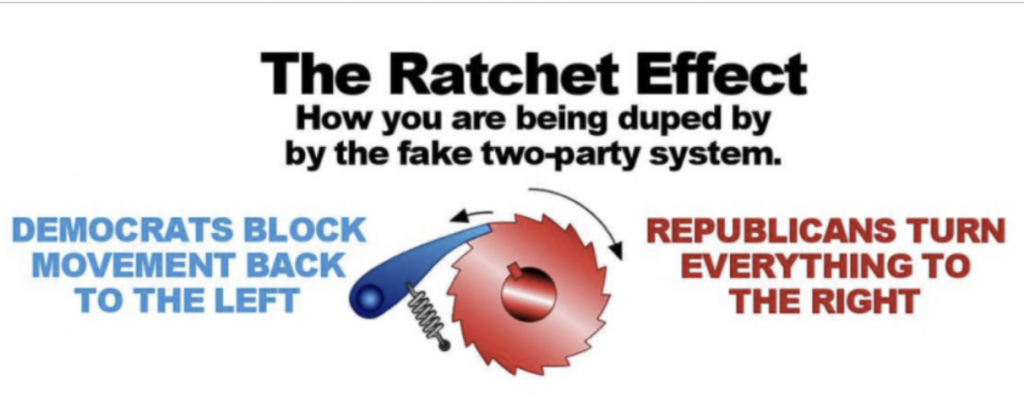
In summary, the landscape they are shaping seems resistant to progressive change, reinforcing the idea that efforts to shift the Democratic Party more leftward are largely futile as long as centrist figures wield power.

Where exactly is “the center” these days?
In conclusion, Spanberger and Sherrill are active participants in redefining the political center during a period where traditional Democratic values have faced significant challenges. Their actions suggest a bipartisan approach that continues to favor entrenched interests, perpetuating cycles of inequity and disengagement from the needs of the working class and broader community.


