Compared to the extensive coverage of Russiagate, the current situation attracts minimal attention from Western mainstream media.
Recall the days when numerous high-ranking U.S. intelligence officials and politicians alleged that Russia interfered in the 2016 U.S. elections, igniting a wave of outrage that significantly influenced Donald Trump’s first term. After years of investigation, the Special Counsel ultimately found no evidence that the Trump campaign or any affiliates conspired with Russia to sway the election.
In the end, Russiagate was largely a tempest in a teacup, yet its consequences were substantial. Renowned scholar Stephen F. Cohen, in his insightful article “The Real Costs of Russiagate,” published in The Nation in March 2019, cautioned:
Nearly three years of Russiagate’s toxic allegations have seeped into the bloodstream of American political and media elites. These charges will likely resurface repeatedly.
This is a severe concern, as the real impact of Russiagate transcends the estimated $25–40 million spent on the Mueller investigation—it has caused corrosive damage to the institutions of American democracy. This harm is not the result of an alleged “Trump-Putin axis,” but rather due to the actions of Russiagate’s creators themselves.
The loud accusations that the Kremlin “attacked our elections” and facilitated Trump’s ascent, despite devoid of evidence, cast shadows of doubt on the legitimacy of American elections at all levels. If such allegations hold any credibility—or even suspicion—how can voters trust the electoral foundations of American democracy? Ongoing calls to “secure our elections from hostile powers”—a profitable political fixation—only serve to further erode public confidence in the entire electoral system.
Moreover, the new Cold War with Russia has become a forcing element in American political, economic, media, and cultural life. Russiagate has intensified the dangers and tensions, making it more perilous than the original Cold War that we endured. It demonized “Putin’s Russia,” hampered Trump’s necessary outreach to Russia, and criminalized any notion of détente, prioritizing policies that historically helped avert nuclear confrontation.
Fast forward to today, seven years post-Cohen’s article, and NATO finds itself embroiled in a protracted proxy war with Russia in Ukraine, potentially escalating into regional or even nuclear conflict. Significantly, it is the U.S. and Israel—not Russia—that openly meddle in the political and electoral processes of other democratic nations. Yet, the response from mainstream media remains muted.
In a mere span of 12 hours on a Sunday night, the Trump administration intervened overtly in the political landscapes of two supposedly sovereign countries: the UK, a fellow Five Eyes intelligence partner, and Colombia, once deemed Washington’s “Israel in South America.”
In the UK, Trump tweeted confirmation of Keir Starmer’s resignation—a revelation that occurred hours before Starmer himself communicated it. Piers Morgan characterized the tweet as the “ultimate humiliation” for Starmer:
BREAKING: President Trump confirms Keir Starmer is resigning as Prime Minister… before Starmer has confirmed it himself. The final humiliation. pic.twitter.com/yz33xD4rPt
— Piers Morgan (@piersmorgan) June 21, 2026
A Nearly Poetic Conclusion
This scenario serves as a fitting end for Starmer, who many believe functioned as a covert operative for U.S. and Zionist interests. As reported by Declassified UK, Starmer was linked to the secretive Trilateral Commission during his time as the shadow Brexit secretary, making him one of only two active British MPs in the organization.
In July 2020, Starmer was seen alongside then-Secretary of State Mike Pompeo, who had previously asserted the Trump administration’s commitment to preventing Jeremy Corbyn from gaining power. Starmer’s performance in this role was viewed as ruthlessly effective, as underscored by subsequent tweets:
Keir Starmer began his ascent as a Zionist sleeper cell agent of the Israel lobby. His job was to stay in Corbyn’s cabinet and sabotage it from within… pic.twitter.com/sisNidMcMr
— ☀️👀 (@zei_squirrel) June 22, 2026
However, the task was incomplete, as noted by other commentators:
Though Corbyn maintained popularity among Labour’s base, Starmer presented himself as a candidate seeking the leadership, pledging ten firm, socialist-inspired commitments that he promptly began to undermine after being elected. He subsequently launched a broad campaign against the socialist left within the party, even expelling Corbyn under the guise of “anti-Semitism”—a move orchestrated by Starmer’s allies within the Israel lobby. His true nature as a neocon, neoliberal, Blairite supporter of Israel has been thoroughly exposed.
Starmer’s brief tenure has proven disastrous for both the British Labour Party and its citizenry. His notable “achievements” include undermining the historic right to a jury trial, attacking protected speech, advancing nationwide facial recognition systems, and unequivocal support for war crimes committed by Israel in Gaza and beyond:
This is all he will be remembered for. A human rights advocate who turned into a genocide advocate… Watch closely where he ends up. https://t.co/vg2CpGjO6h
— liam cunningham (@liamcunningham1) June 21, 2026
Uncontrolled Meddling by Washington
Yet, this does not excuse Trump’s overt interference in British domestic politics at such a critical juncture. The propensity for meddling in foreign affairs by the current U.S. administration has escalated alarmingly, especially in the Americas.
A clear illustration of this is evidenced by Trump’s recent endorsements of the far-right candidate Abelardo de la Espriella leading up to Colombia’s run-off election. On the same Sunday night, U.S. Secretary of State Marco Rubio congratulated de la Espriella on his victory before any formal announcement of results was made.
According to Drop Site News, “Rubio’s early recognition has drawn criticism from observers who argue it seeks to shape international perception and build consensus ahead of official results.”
Marco Rubio congratulating Colombia’s far-right candidate on an election victory before official counts is seen as a concerning trend… https://t.co/rIofBTUmnB
— Drop Site (@DropSiteNews) June 22, 2026
Rubio’s declaration was promptly amplified by Stephen Miller, a key architect of Trump’s Shield of the Americas initiative, sparking comparisons with Operation Condor—the U.S.-coordinated campaign of repression in Latin America in the late 20th century.
The present-day U.S. imperialism, however, differs in its approach: rather than direct intervention alone, it increasingly intertwines with Silicon Valley’s tech giants, aiming for a techno-feudal oversight of these nations, evident in situations like Argentina.
The Shield of the Americas and the ACCC will change the future of the Western Hemisphere. https://t.co/iHy1lzCMOt
— Stephen Miller (@StephenM) June 22, 2026
Claims of Israeli Cyber Interference
Moreover, Colombia’s outgoing President Gustavo Petro also alleged irregularities in the election, contending that only “the state of Israel” could have executed certain technical manipulations:
Petro highlighted that neither candidate, in a tight race showing 49.3% for De la Espriella and 49% for his opponent, can be declared victorious until official scrutiny concludes.
- He pointed to changes in IP addresses within the national registry system as indications of possible cyber interference.
- Petro called for a forensic audit of the electoral software and a recount due to several irregularities he noted.
Gustavo Petro reported that his son encountered discrepancies while voting, which further substantiates claims of irregularities during the electoral process. https://t.co/4MhzfgoHYo
— Fiorella Isabel (@FiorellaIsabel) June 22, 2026
While these allegations remain to be substantiated, they raise significant concerns given the narrow margin of victory for De la Espriella, noted for being one of the tightest in Colombian electoral history:
- Colombia’s Command, Control, Communications & Computing Centre networks have integrated Israeli defense technology and systems, particularly from the Israeli company Elbit Systems.
- The firm responsible for the electoral counting software, Thomas Greg & Sons, has a shady history, previously embroiled in significant electoral controversies.
- The issue of overseas votes played a pivotal role, raising suspicions of electoral fraud, especially among voters based in the U.S.
While it is difficult to ascertain the level of fraud in the elections that ushered candidates such as De la Espriella into office, it’s evident that U.S. political influence has been deeply rooted in these processes, especially as highlighted by Trump’s remarks:
Trump on Colombian elections: El Tigre went from 10th place to winning thanks to my endorsement! https://t.co/MLIa4fi1OU
— Open Source Intel (@Osint613) June 22, 2026
Furthermore, allegations of Israeli tampering with Colombia’s voting registry emerge just as investigations in France have linked Israeli technology firm BlackCore to interference campaigns targeting various elections involving pro-Palestinian candidates.
Given that Gustavo Petro was a vocal critic of Israel’s actions in Gaza, severing ties with Tel Aviv, it stands to reason that those who benefit most from governmental change in Colombia are aligned with Israeli interests. Indeed, De la Espriella has openly expressed his desire to reinstate diplomatic relations with Israel and relocate Colombia’s embassy to Tel Aviv:
Netanyahu extended congratulations to De la Espriella, stating, “I am eager to reinforce ties between Israel and Colombia. The friends of Israel keep prevailing.”
A Longstanding Pattern
Israel’s involvement in foreign elections is not a recent development but rather a deeply entrenched practice. Previously, the Israeli embassy strongly influenced the narrative against Jeremy Corbyn’s Labour Party in the UK, even engaging in covert conversations with British officials about targeted political actions.
Furthermore, a 2023 international investigation uncovered that an Israeli firm boasted about interfering in over 30 elections globally for its clients, employing disinformation and other clandestine tactics.
Israel’s actions also surfaced in the Hondurasgate scandal, despite limited media coverage. Leaked recordings revealed Israel’s financial connections in supporting controversial political maneuvers in Honduras.
Here, former President Juan Orlando Hernandez was reportedly facilitated in resuming power, after previously facing a lengthy prison sentence, contributing to the ongoing narrative of U.S.-Israeli influence over political affairs in Latin America.
These disclosures underscore the reality of a shared history of American interventions throughout Latin America, often dismissed in contemporary discussions but ever-present in the context of shifting power dynamics.
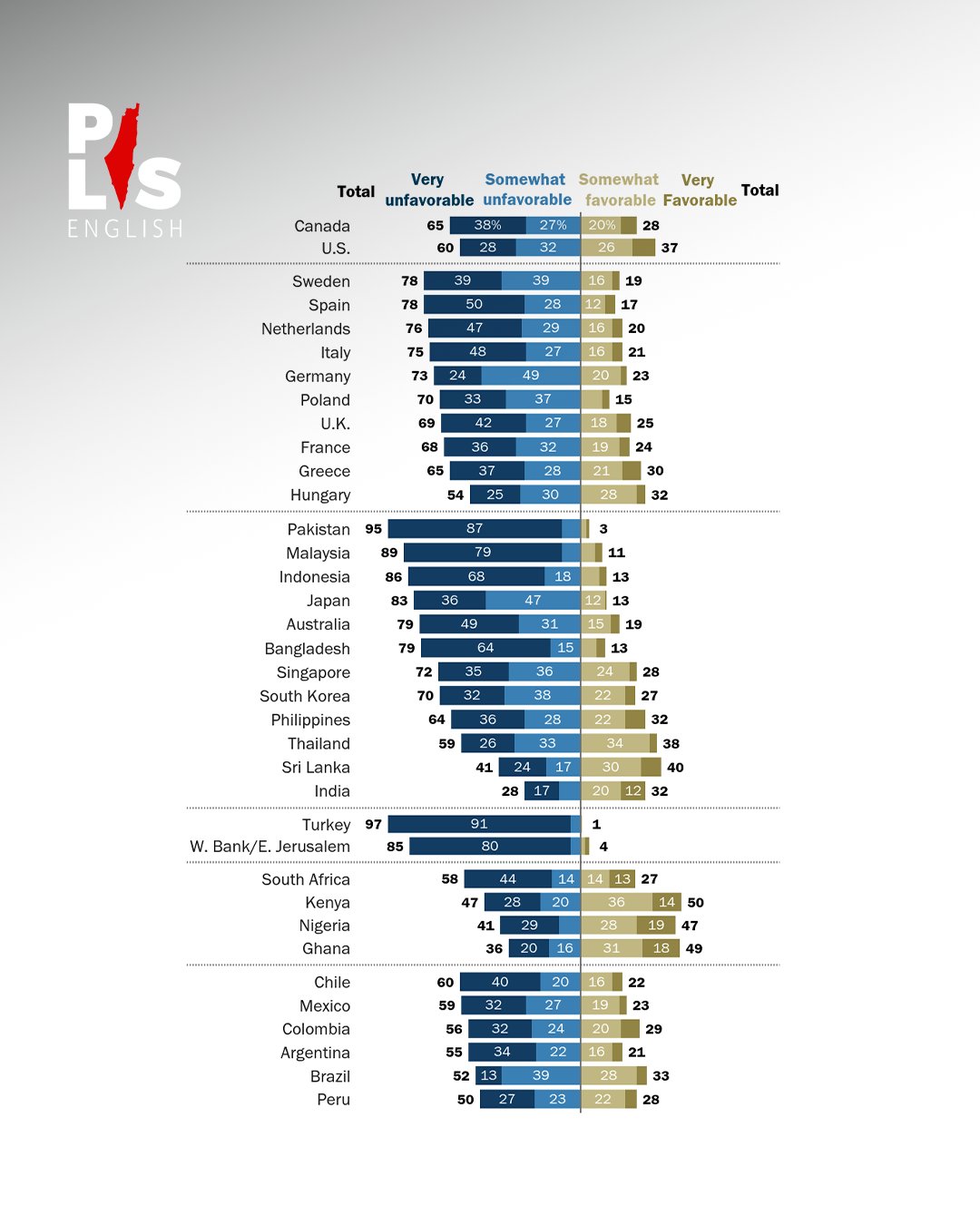
As the global perception of Israel shifts—67% of individuals across 36 nations now hold unfavorable views of the state—its government is increasingly motivated to ensure that friendly ties remain intact through installed leadership in influential nations across Latin America.
A recent Pew survey indicates 67% of respondents view Israel negatively, reflecting a growing global narrative against it. pic.twitter.com/FfFDHZIZAD
— Sahat English 🇵🇸 (@sahatenglish) June 5, 2026
The level of American political meddling, particularly under the Trump administration, is disproportionate and untenable. As the geopolitical landscape shifts, Brazil’s electoral significance grows, with the U.S. already paving the way for potential intervention by designating local gangs as terrorist organizations.

In summary, while allegations of Russian interference have been amplified significantly and led to tremendous fallout, the current instances of U.S. and Israeli meddling in foreign elections seem to go unnoticed by mainstream media. The consequences of this bias in coverage have significant implications for both current geopolitics and the integrity of elections worldwide. As the international community witnesses a trend of increasing interventionist practices from the U.S. and Israel, it’s critical to remain vigilant and foster discussions around these issues to safeguard democratic institutions.
