The beverage industry is witnessing a dynamic transformation, driven by the rapid rise of functional drinks, protein beverages, and clean label formulations. As consumer tastes evolve, beverage manufacturers face heightened pressure to innovate while ensuring product quality and stability.
Yet, John Eaton, managing director of UltraPhil, points out that current aseptic development practices have not kept pace with the rapid advancements in product innovation. This gap presents challenges in effectively commercializing shelf-stable beverages.
Aseptic development processes are essential for testing beverage formulations in sterile environments, focusing on product safety, stability, sensory quality, and shelf life. UltraPhil’s newly launched Aseptic Center of Excellence in Rochester, New York, aims to support beverage brands and ingredient companies by evaluating formulations under realistic aseptic conditions at a pilot scale prior to commercialization.
The center emphasizes understanding how ingredients behave during processing, including their impacts on stability, flavor, texture, shelf life, and overall integrity. This helps developers gain valuable insights before making significant investments in commercial production.
Rising formulation complexity
Eaton notes that the increasing popularity of high-protein beverages, fiber-rich drinks, and dairy alternatives is reshaping the formulation landscape in the industry.
He states in an interview with Food Ingredients First that many popular functional ingredients are sensitive to the heat involved in aseptic processes, potentially degrading their effectiveness or altering their sensory characteristics.
“Many of the trending functional ingredients face issues due to heat treatment in aseptic processes, which can severely reduce their efficacy,” he explains.
“As beverage formulations become more intricate, maintaining batching efficiency and managing foam production pose additional challenges, particularly in facilities lacking vacuum systems. UltraPhil possesses the capabilities to address these concerns.”
Faster innovation cycles
With product development timelines shrinking, beverage companies are striving to keep up with shifting consumer preferences, emerging trends, and retailer expectations.
As experimentation with stock keeping units increases and innovation cycles shorten, manufacturers face intensified pressure to expedite formulation, testing, and validation processes to bring products to market swiftly.
“Unfortunately, adaptation has been minimal apart from the need to achieve more with the same or fewer resources. This is where UltraPhil can play a key role by facilitating earlier and more cost-effective shelf life and organoleptic analyses, thereby accelerating the innovation cycle,” Eaton notes.
“Rather than waiting for costly commercial runs or extensive plant trials, companies can conduct pivotal work at UltraPhil much earlier in the innovation process, shaving weeks or even months off the timeline.”
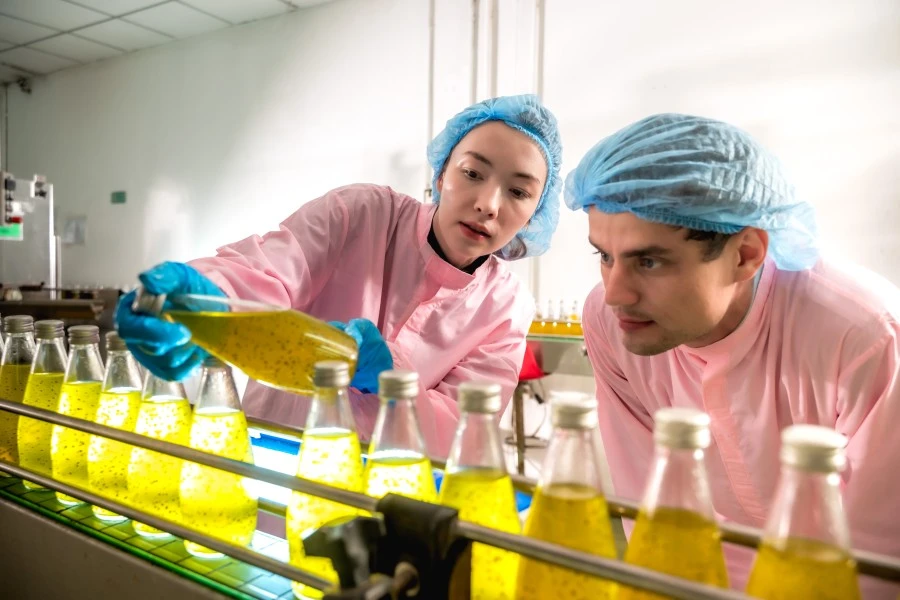
Aseptic development tests beverage formulations under sterile processing and packaging conditions to validate safety, quality, stability, and shelf life for successful commercialization.
Pilot-scale validation
As beverage innovation becomes more intricate — with increasing focus on low-acid formulations, dairy-based drinks, and high-protein beverages — brands prioritize de-risking actions before full-scale production.
Protein continues to lead in exploratory endeavors, with notable developments also seen in fiber-based formulations and enhanced dairy products, including ultrafiltered milk and protein-fortified items.
Pilot-scale production facilitates the validation of formulations, packaging, and operational viability before initiating significant manufacturing expenditures.
“Although this has always been a challenge, the transition towards dairy and low-acid proteins emphasizes the necessity of low-acid aseptic pilot production and addressing gaps in that domain, especially for cost savings, ingredient alternatives, and packaging material adaptations,” Eaton notes.
Early-stage testing
“For startups, entrepreneurs, and small companies lacking manufacturing infrastructure, small-scale pilot production is vital for bringing their product ideas to life,” he continues.
“Plant trials can be prohibitively expensive, costing upwards of US$450,000. Pilot-scale production is their most feasible avenue for realizing their visions.”
Eaton emphasizes that the facility provides manufacturers with a level of predictability in aseptic beverage development that has often been elusive. Obtaining samples that accurately reflect the product’s eventual look, taste, and performance upon scaling is crucial.
“UHT heating technology, along with its hold time and temperature, significantly impacts stability, shelf life, and sensory attributes. UltraPhil’s UHT setup replicates commercial scale processes, ensuring that developments achieved at pilot scale will transition smoothly to larger operations,” he states.
Pilot-scale testing allows companies to validate shelf life and performance earlier in the development stage, thus reducing costs and minimizing sample waste.
Key Takeaways
- Functional beverages are evolving rapidly, prompting manufacturers to innovate faster.
- Current aseptic development processes need to adapt to the complexities of new formulations.
- UltraPhil’s Aseptic Center of Excellence supports early-stage testing for beverage brands.
- Heat-sensitive ingredients pose challenges in traditional aseptic processes.
- Pilot-scale production aids in validating formulations before large-scale investments.
- Smaller companies can leverage pilot production to avoid costly plant trials.
- Timely product testing can enhance market readiness and reduce waste.
FAQ
What is an aseptic development process?
An aseptic development process tests beverage formulations under sterile conditions to ensure safety and stability.
How does UltraPhil support beverage brands?
UltraPhil offers facilities for early-stage testing, allowing for validation under real-world conditions before commercialization.
Why is pilot-scale production important?
It allows for validation of formulations and operational feasibility without significant investment in full-scale manufacturing.
What challenges do heat-sensitive ingredients face?
Heat-based aseptic processes can degrade the effectiveness of heat-sensitive functional ingredients.
How can small companies benefit from UltraPhil’s services?
They can access affordable pilot-scale production, enabling them to test and develop products without high costs associated with large-scale trials.
In conclusion, the demands of the functional beverage market are pushing manufacturers to re-evaluate their development processes. With facilities like UltraPhil’s Aseptic Center of Excellence, beverage brands can refine their formulations more efficiently, ensuring they meet consumer expectations while maintaining quality and safety.