This article examines the escalating tensions between the United States and Iran. As events unfold, we’ll delve into the implications and developments that continue to shape the geopolitical landscape. Please check back for updates.
Familiar Tensions
Haven’t we seen this movie before? Once again, Trump takes a confrontational stance against Iran:
Trump’s brinkmanship poses a grave threat to international peace and security. His bluster appears as an attempt to intimidate, vastly contrasting with the actual situation, where he’s grappling with self-inflicted setbacks masquerading as victories. His policies have reached a… pic.twitter.com/2NSq7xSUkD
— Iran in Japan/ 駐日イラン大使館 (@IraninJapan) May 18, 2026
Trump’s recent statements suggest he is aligning with Israeli interests aimed at balkanizing the region:
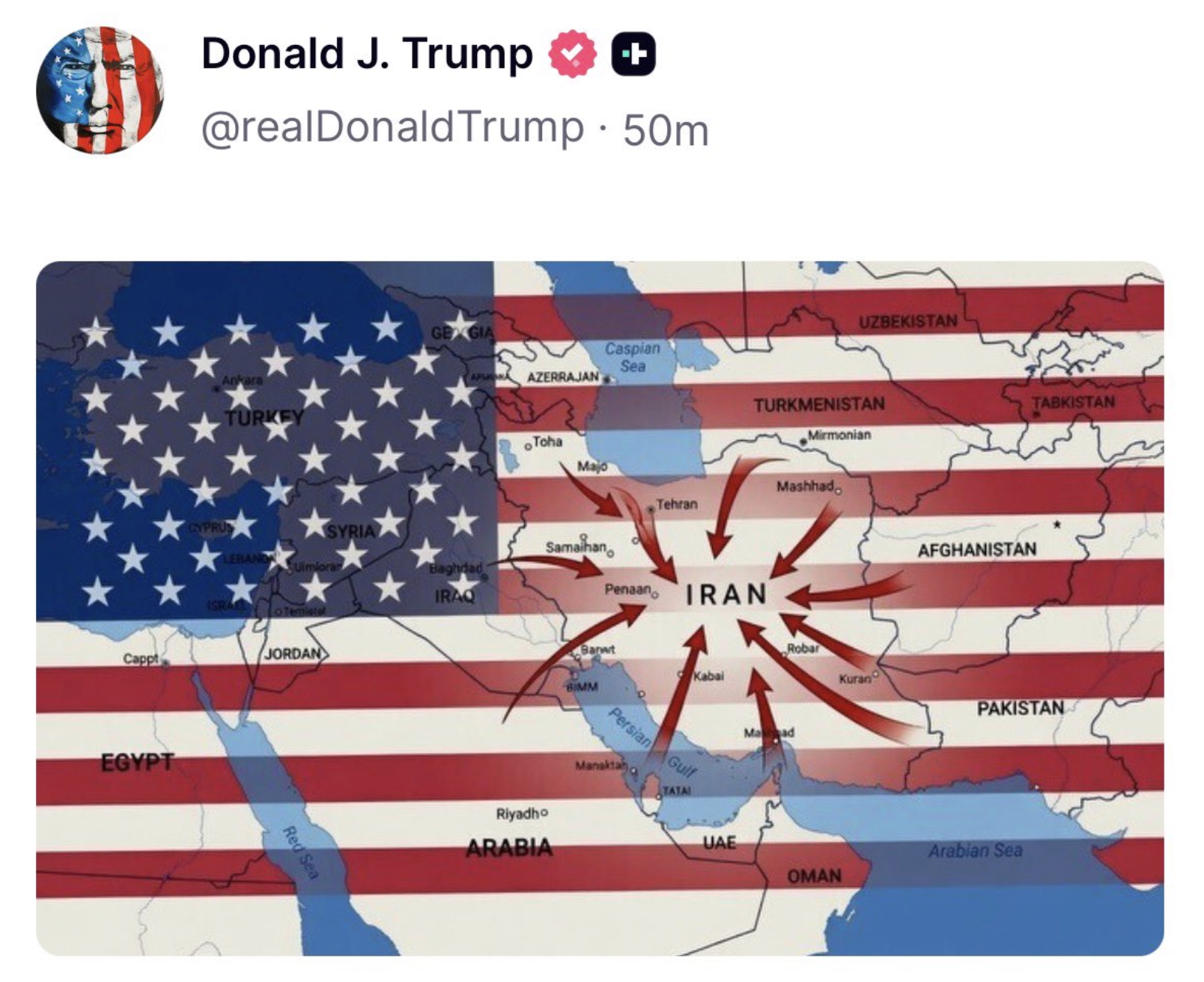
U.S. and Israel’s Strategies
The United States and Israel are demonstrating their intent to take decisive actions. Axios reports on Trump’s warning to Iran, emphasizing that the “clock is ticking” for negotiations:
President Trump conveyed to Axios that “the clock is ticking” for Iran, indicating that failure to present a better deal would result in “harder hits.”
Why it matters: Officials state that while Trump seeks to end the conflict through a deal, Iran’s refusal to compromise on its nuclear program has reintroduced military options into the discussion.
- Trump plans to meet his national security team in the Situation Room this Tuesday to discuss military strategies.
- He also consulted Israeli Prime Minister Benjamin Netanyahu regarding the Iranian situation.
Behind the scenes: Recent gatherings at Trump’s Virginia golf club included discussions on Iran with top national security officials.
- Participants included Vice President JD Vance, envoy Steve Witkoff, Secretary of State Marco Rubio, and CIA Director John Ratcliffe.
Current Situation: Pakistan’s interior minister recently held talks in Tehran regarding peace efforts, acting as the official mediator between the U.S. and Iran.
- Qatari Prime Minister Mohammed bin Abdulrahman Al Thani engaged in discussions with both his Pakistani counterpart and the Iranian foreign minister.
- Trump expressed to Axios that he is awaiting an updated proposal from Iran, hoping that it will be more favorable than previous offers.
- Trump did not specify any deadlines for the negotiations.
Trump’s Stance: “We want to make a deal. They need to meet us halfway, or they will face serious consequences, which they certainly want to avoid,” Trump stated.
Escalating Warnings
🇺🇸 BREAKING: President Donald Trump intensifies his warnings to Iran as speculation grows about further military planning.
Reports indicate that U.S. and Israeli officials are exploring additional options should negotiations fail… pic.twitter.com/IHEcjdvhe6
— And We Know©🇺🇸 (@andweknow) May 18, 2026
BREAKING: Trump and Netanyahu held a 30-minute phone conversation, following which Netanyahu headed into a security cabinet meeting, according to Ynet news. White House reporters have been summoned for an “unknown event” on the South Lawn.
— The Hormuz Letter (@HormuzLetter) May 17, 2026
A significant airlift operation by the United States Air Force is underway at multiple bases in the Middle East.
Get Ready!
— Douglas Macgregor (@DougAMacgregor) May 17, 2026
Expert Insights on Potential Conflict
Analyst Trita Parsi posits that the U.S. appears prepared to reinstate hostilities, believing that further attacks will deter Iran and provide an upper hand in negotiations:
It is disheartening to see informed analysts like Parsi maintaining that negotiations might yield positive outcomes. A negotiated settlement is unlikely.
Several factors support this view:
- The notion of a “deal” remains unacceptable to Israel. Consider how Ukraine, despite its lesser influence compared to Israel, obstructs a resolution to its own conflicts.
- There is a substantial divide between the positions held by the two sides, with Iran adopting a firmer stance as it perceives its conflict strategies benefiting, despite associated costs.
- The United States would have to concede considerably to reach an agreement, which would clearly signify its loss of leverage.
How long will rational individuals in the United States persist in believing repetitious claims—voiced since February—when there is no military capability to substantiate those threats?
The real issue with such hollow threats is that Iran is… pic.twitter.com/wPjBtEnW0t
— Daniel Davis Deep Dive (@DanielLDavis1) May 17, 2026
Iran’s Counteraction
Iran has issued counter-threats to the U.S., which haven’t received adequate coverage:
The segment discusses a drone attack on a nuclear facility in the UAE, which originated from the west towards Saudi Arabia, complicating any narrative that directly implicates Iran. The UAE has not assigned blame, and Iran has not claimed responsibility. Further details can be found in the Financial Times:
The United Arab Emirates confirmed that a drone strike caused a fire at the perimeter of its Barakah nuclear power plant, yet no injuries were reported and radiation levels remained secure.
The state news agency indicated that authorities were managing a fire caused by a drone at an electric generator outside the inner perimeter of the plant.
According to the UAE Ministry of Defense, the drone that struck the generator was one of three that entered the country from the West, while the other two were intercepted.
This plant became operational in 2021 as the first commercial nuclear power station in the Arab world, playing a vital role in the UAE’s energy objectives and its attempt to reduce its carbon emissions.

Reports from NO1 indicate Iran has attributed blame to Saudi Arabia. This perspective gains credibility, especially considering earlier reports suggesting that a drone strike on a UAE oil port was perpetrated by Saudi forces following the UAE’s exit from OPEC.
Three drones entered from the western border; two were intercepted, while one struck an external generator. This marks the first documented breach of an operational Gulf nuclear site. No injuries or radiological release has been reported. Iran has denied any involvement, placing blame on Saudi Arabia instead. On the same day, Saudi Arabia intercepted three drones originating from Iraqi airspace.
Military Vulnerabilities
Former Army Ranger and House candidate Greg Stoker discusses the ramifications of losing data centers in the Middle East or the U.S., emphasizing that such a loss would significantly impact military operations:
We’re witnessing another critical vulnerability. I’ve recently focused on the domestic implications of this conflict for the United States. Specifically, I’m referring to the AWS cloud data centers, which serve both civilian and military functions. If a $3,000 drone can incapacitate a $5 billion data center, it introduces a domestic terrorist threat. We cannot solely talk about conventional warfare; this tech infrastructure is integral to how the Pentagon conducts operations globally.
Impending Economic Shock
Robert Pape’s recent blog post discusses the likelihood of a protracted conflict with Iran. I’ll paraphrase his insights, as they are primarily behind a paywall:
Pape believes that the U.S. and Israel will likely continue their “mow the lawn” tactics against Iran to weaken its government. However, Iran is aware of this strategy and has resolved to avoid becoming a victim to it, aiming to deliver a decisive blow to the U.S. and Israel to dissuade future aggressions.
While I cannot predict how Iran would accomplish this, I do not see a long-term, years-long conflict as feasible. It will still be prolonged compared to U.S. expectations, lasting longer than the U.S. or global economy can withstand.
Pape suggests focusing on energy, yet neglects to recognize a broader global supply crisis encompassing various critical resources. The interdependence of markets today means that disruptions can have cascading effects across the entire system.
Market Reactions and Adjustments
The Financial Times highlights the ongoing struggle to navigate logistical challenges in provisioning the Middle East, revealing a significant impact on global trade:
Shipments toward the Middle East are marooned in ports from as far away as India and Mozambique, with businesses incurring additional costs. Freight rates along the Shanghai to Gulf route have soared to record highs, surpassing even pandemic-era peaks.
Due to escalating fuel prices and the need for trucking solutions, trade flows into the Gulf region have plummeted by 60 to 80 percent.
The Road Ahead
As the situation continues to evolve, the challenges faced by workers, especially migrant laborers who have historically sustained these economies, cannot be overlooked as their circumstances deteriorate due to rising living costs and scarcity:
Market reactions to the unfolding economic crisis have triggered widespread uncertainty, with experts expressing concern about how consumers and the general public are reacting to these developments. Even amid soaring inflation due to the Hormuz supply shock, the real danger stems from potential downturns in demand driven by shortages.
Final Thoughts
The geopolitical landscape surrounding the U.S.-Iran conflict continues to shift, impacting global markets and creating profound implications for future security and economic stability. As analysts and policymakers navigate through these complexities, a deeper understanding of these dynamics will be essential moving forward.
Thank you for following this discussion. We will provide more updates as the situation unfolds.
