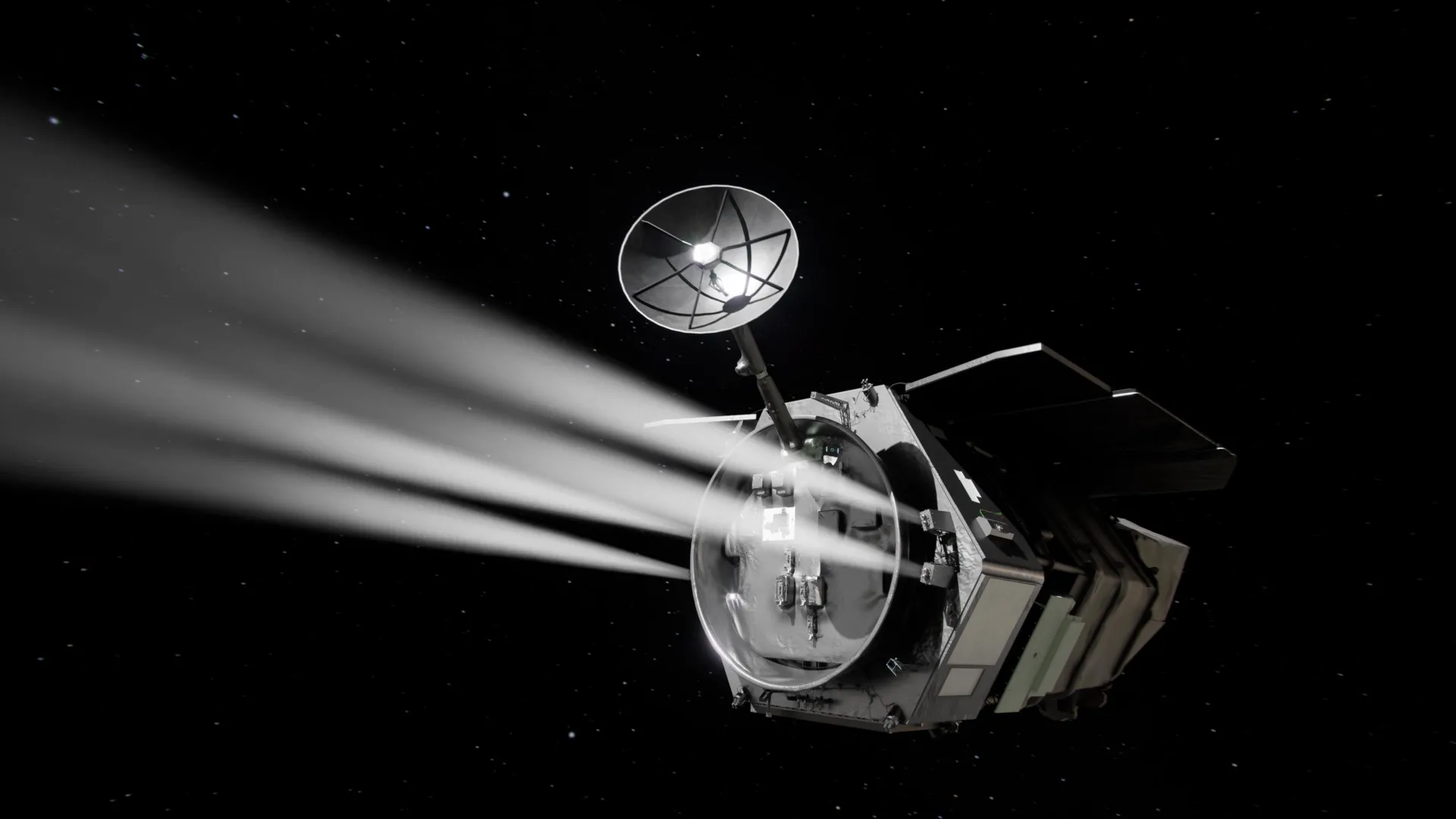
NASA’s Nancy Grace Roman Space Telescope demonstrates promising longevity, potentially operating for over 22 years, thanks to an exceptionally precise first mid-course correction and strategic fuel conservation. Initially designed for a total of 10 years—with a five-year primary mission followed by a five-year extension—the spacecraft’s fuel savings have led to significant projections of extended operational life.
Key Highlights:
-
Exceptional First Correction:
- Roman’s first maneuver on August 31 was executed with over 99% accuracy, using only about 40 pounds (18 kg) of fuel—much less than the anticipated 441 pounds (200 kg). This efficiency may allow for an additional four years of operations.
-
Extra Fuel at Launch:
- The spacecraft began with more propellant than expected due to its actual weight being lighter than planned. This unexpected weight reduction enabled complete filling of its fuel tanks, contributing to another potential four years of operations.
-
Future Projections:
- With accurate initial maneuvers, the upcoming second mid-course correction requires less fuel, further extending possible mission life. Current estimates indicate that this, along with ongoing operational efficiencies, could add four more years, maintaining operational capability around its target orbit at L2.
-
Maintenance Needs:
- Once in orbit, Roman will only need periodic station-keeping burns approximately every 28 days to maintain its position.
In summary, due to meticulous planning, successful operations, and advantageous initial conditions, the Roman Space Telescope is positioned for an extensive scientific mission well beyond its original design expectations.


