Despite Trump’s aggressive posturing towards Spain, his efforts have fallen flat in altering Madrid’s stance on the ongoing US-Israel conflict with Iran.
The Trump administration has unleashed a barrage of threats against Spain since Prime Minister Pedro Sánchez’s government opted not to permit US forces access to Spanish military installations or airspace for operations targeting Iran. Additionally, Sánchez has emerged as a vocal critic of Israel’s actions in Gaza and southern Lebanon, condemning their reported genocidal activities and other war crimes.
In retaliation, Trump has threatened to sever trade relationships with Spain and withdraw US troops stationed at Spanish bases. However, these consequences have yet to materialize. One of the more significant threats to Spain stems from the potential for the US—and by extension, Israel—to stir unrest along Spain’s southern borders, a concern we noted in our earlier post, “Spanish Government Intensifies Criticism of US-Israeli War on Iran As Trump Mulls Withdrawing US Troops from Spanish Bases.”
Some neo-cons in Washington have advocated relocating the US troop presence in Spain to bases in Morocco, a nation whose government aligns closely with Israel. Michael Rubin, a historian and former Pentagon adviser, has even suggested that the US should acknowledge Spain’s two protectorates in Morocco, Ceuta and Melilla, as Moroccan territory, similar to its approach to the contested Western Sahara region.
We elaborated on this pressing issue in our April 10 post, US Considers Withdrawing Joint Military Base(s) in Spain As “Punishment” for Its Non-Cooperation in Iran War: WSJ.
In retaliation, the US and Israel may escalate tensions along Spain’s southernmost border by backing the independence movements for the two Spanish enclaves of Ceuta and Melilla, strategically located on Morocco’s northern Mediterranean coast. Morocco enjoys close ties with both the US and Israel, who have supported Morocco’s claims over Western Sahara as part of the Abraham Accords initiated in late 2020.
Michael Rubin, a significant neo-con voice, recently called for Morocco to stage a civil march towards Ceuta and Melilla, reminiscent of the civil unrest in 1975 that led to Spain’s withdrawal from Western Sahara, subsequently replaced by Moroccan forces.
In an interview with El Español, Republican congressman Mario Díaz-Balart, closely associated with Marco Rubio, made insinuations in this vein.
“We have observed that [Sánchez] is an aggressive president, and I wouldn’t be surprised if the US administration is seeking alternatives different from the longstanding arrangements we have had with Spain.”
“It seems that Mr. Sánchez values the relationship with Iran, Cuba, and Venezuela more than that with the United States…”
QUESTION: Is the United States considering relocating its military bases to Morocco if Spain maintains its ‘no to war’ stance?
ANSWER: It’s interesting because Ceuta and Melilla are on Moroccan soil. The attitude of the Moroccan King has been positive. These are critical geopolitical and geographical considerations for Morocco. The relationship with the US has been consistent, crucial, and remains so during difficult times. These issues about the status of Ceuta and Melilla—as to whether they belong to Spain or should be Moroccan—are always open for negotiation and resolved through alliances and friendship. Sadly, this individual [Sánchez] is endangering the alliance between the US and Spain, something Morocco has not done.
Díaz-Balart, who chairs the US House of Representatives’ subcommittee on Homeland Security, has escalated these discussions to Congress. A brief segment in an Appropriations Committee report labels Ceuta and Melilla as “Spanish-administered” territories but affirms that they occupy Moroccan land. It also urges the US Secretary of State, Marco Rubio, to facilitate dialogue regarding the future status of these autonomous cities.
The specific paragraph regarding this issue does not appear in the legislative text itself, but in the explanatory memorandum accompanying House Bill 8595, which must still receive approval in plenary before advancing to the Senate and the White House, as reported by El Pais’s Washington correspondent, Macarena Vidal Liy. It states:
“The Committee recognizes the historic alliance between the United States and Morocco, established in 1786 through the Moroccan-American Treaty of Peace and Friendship. The Committee acknowledges that the Spanish-administered cities of Ceuta and Melilla are situated on Moroccan territory and are the subject of a long-standing Moroccan claim. The Committee supports the Secretary of State in promoting diplomatic discussions between Morocco and Spain regarding the future status of Ceuta and Melilla.”
This marks the first time any panel within the US House of Representatives has questioned the legitimacy of the Spanish claim over the two enclaves, as noted by El Confidencial’s North African correspondent, Ignacio Cembrero, who was the first to report this development.
A Little Background
For those unfamiliar with Spanish geography, a map illustrating the country’s territories (courtesy of El Orden Mundial) shows the locations of both enclaves and exclaves in the bottom right circle.
¿Cuáles son las disputas fronterizas de España?⚔️
👉🇲🇦 Ceuta y Melilla.
👉🇲🇦 Islas Chafarinas.
👉🇲🇦 Peñón de Vélez de la Gomera.
👉🇲🇦 Peñón de Alhucemas.
👉🇲🇦 Isla de Perejil.
👉🇲🇦 Isla de Alborán.
👉🇬🇧 Gibraltar.
👉🇵🇹 Olivenza y Táliga.@Alvaro_Merino_ lo plasma en este mapa👇 pic.twitter.com/15ZH8Mr367— El Orden Mundial (@elOrdenMundial) March 12, 2024
Ceuta and Melilla function as semi-autonomous cities possessing administrative powers akin to those of Spain’s 17 “Autonomous Communities,” albeit lacking full legislative authority.
Additional context from the business intelligence portal Investment Monitor:
The coastal cities of Ceuta and Melilla are geographically within Morocco but have been Spanish territories since the 17th and 15th centuries, respectively—making them the sole European land borders on the African continent.
The Moroccan government has consistently challenged Spain’s sovereignty over these territories, which were originally assigned to Spain and not designated a colonial holdover to be relinquished following Morocco’s independence in 1956. That year, both France and Spain concluded their Protectorates in Morocco, a status secured since the signing of the Treaty of Fez in 1912.
Spain emphasizes that Ceuta and Melilla—along with three uninhabited islets (the Alhucemas Islands, the Rock of Vélez de la Gomera, and Perejil Island)—were established before the formation of the Protectorates, tracing their roots to the Reconquista, where Christian states sought to expel Muslims from the Iberian Peninsula. Ceuta was first taken by Portugal in 1415 but was formally ceded to Spain in 1668 after the Iberian Union dissolved. Melilla was occupied by Spain in 1497.
Spain’s claim of sovereignty over these territories is underpinned by the argument that its governance predates its rule over certain regions in mainland Spain. Conversely, Morocco contends that these enclaves symbolize colonial legacies that should be returned. However, the UN does not classify these enclaves as non-self-governing territories, which are defined as areas “whose people have not yet attained a full measure of self-government.” Both Ceuta and Melilla enjoy a semi-autonomous status comparable to other regions in mainland Spain…
Why Do Ceuta and Melilla Matter So Much?
Similar to Gibraltar, the historical significance of Ceuta and Melilla arises from their strategic locations. Ceuta is situated directly across the water from the British territory at the Strait of Gibraltar.
Both cities have historically served as military and trade outposts, linking Africa and Europe, and host sizeable military populations. Ceuta encompasses over 20 square kilometers with a population exceeding 82,500, while Melilla spans 12 square kilometers with a population near 83,190.
Socioeconomically, these cities are among the lowest-performing in Spain, exhibiting the smallest GDP per capita alongside the highest unemployment rates.
Exploiting Spain’s Weak Link
The Appropriations Committee isn’t the only body questioning the legitimacy of Ceuta and Melilla’s Spanish claims. Amine Ayoub, a fellow at the Washington-based, pro-Israel Middle East Forum, authored a piece in Israel’s Y Net Global, positing that US-Spain tensions over Iran and NATO create an opening for Morocco to assert its claims on Ceuta and Melilla, with Israel positioned to support Rabat diplomatically within a US-led coalition.
Similar narratives have appeared in the American Enterprise Institute and various Israeli publications, such as Times of Israel, Yedioth Ahronoth, Israel Hayom, and Jerusalem Post, as noted by Cembrero:
“These articles, along with the text from the Appropriations Committee, seem to reflect a desire to penalize Pedro Sánchez’s administration for its critical stance towards Israel and the war conducted by President Donald Trump against Iran… In Díaz-Balart and his supporters’ viewpoint, Ceuta and Melilla stand as vulnerabilities for Spain, especially considering Morocco’s longstanding claims, bolstered by a US administration that has cultivated a bilateral partnership within the framework of the Abraham Accords. Morocco joined this agreement in December 2020.”
As part of the Abraham Accords, Morocco has established diplomatic, economic, and security relations with Israel, akin to the other three Arab nations (UAE, Bahrain, and Sudan) that have normalized relations.
The Accords have reaped substantial benefits for Rabat, with Trump acknowledging Morocco’s sovereignty over Western Sahara shortly afterward. This marked a significant shift in the US posture concerning this territorial dispute, a stance that the Biden administration has not altered.
In 2023, Israel recognized Moroccan “autonomy” over Western Sahara; two years later, the United Nations referred to Morocco’s autonomy proposal as the “most viable solution” to the longstanding conflict surrounding the region. In April 2026, the EU also endorsed this plan.
Spain, as the former colonial power in Western Sahara, has surprisingly shifted to support Morocco’s stance, sparking discontent among some of Sánchez’s coalition partners. A recent report by the Royal Elcano Institute demonstrates that public opinion in Spain remains firmly in favor of Western Sahara’s pursuit of self-determination.
The Sánchez government has prioritized strategic interests over these concerns, notably by appeasing Morocco amid increasing migration pressures from North Africa and aiming to maintain positive relations with the US and Israel. Unfortunately, both the US and Israel appear inclined to disrupt that delicate stability, particularly against the backdrop of recent tensions with the Sánchez administration.
Morocco has been a critical partner for the US in the region since the Cold War, largely due to its strategic positioning alongside the Strait of Gibraltar and as a neighbor to Algeria, Africa’s largest country, which historically has been close to Russia. For decades, both the US and Israel have worked to strengthen Morocco politically, militarily, and diplomatically—a trend likely to intensify.
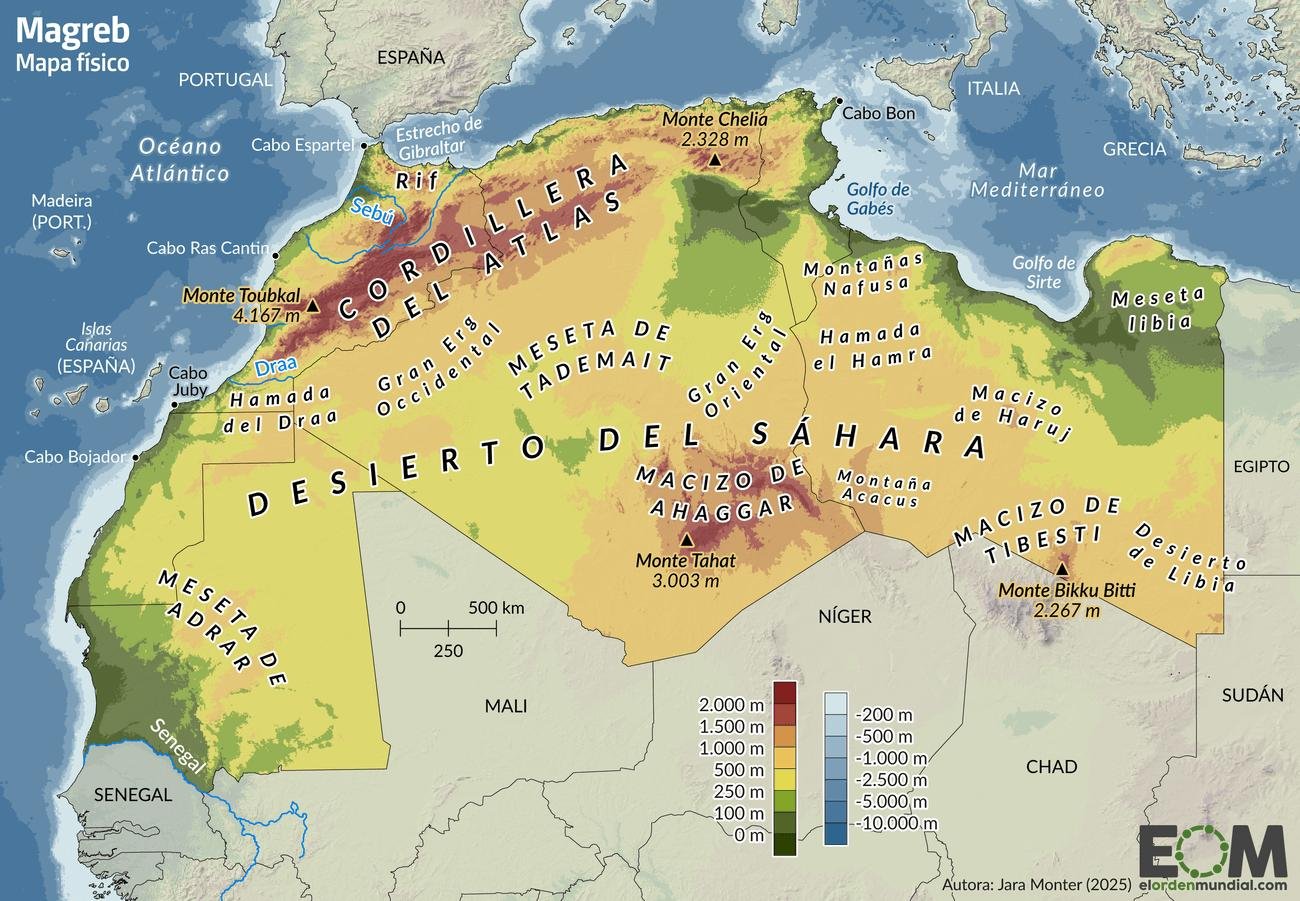
Should Spain be increasingly concerned about its southern flank?
According to Cembrero, perhaps not immediately. It seems that Morocco currently has more pressing matters to address (machine translation)…
While Moroccan diplomacy is energized by the relationship with the White House and successes surrounding Western Sahara, Ceuta and Melilla are not priorities at this time. Amidst the flood of articles suggesting threats toward these cities, there remains a notable silence from Morocco on this front.
“Envisioning Rabat engaging the US on the Ceuta and Melilla matters is, for the time being, unfounded,” reflects journalist Wissam El Bouzdaini in the Moroccan online outlet Media 24, a sentiment indicative of the views held by Moroccan authorities.
The Spanish-Moroccan ties are undergoing a “historic moment,” partly due to Sánchez’s support for the autonomy framework that Morocco proposed to address the Sahara conflict… Additionally, Morocco is slated to co-host the 2030 World Cup along with Spain and Portugal, an event of significant magnitude. Morocco has strived to host the tournament, submitting candidacies six various times from 1994 to 2026. Now that it has achieved its goal, with Sánchez’s assistance, it’s anticipated that nothing will derail preparations for the event, which Morocco hopes will culminate in a final at a stadium being built in Benslimane, near Casablanca.
This, however, is still over four years away, and much can occur in the meantime. The outcomes for this year’s World Cup—and even the 2030 edition—remain uncertain, especially given the escalating conflicts in the Gulf and Ukraine, along with the US planning to deploy ICE as a principal security apparatus for the tournament, while Trump makes threats against fellow host nations like Mexico and Cuba. Furthermore, the looming economic crisis adds additional layers of complexity.
Meanwhile, if Trump had anticipated that his threats towards Spain would prompt a change in policy from Madrid, he is likely to be disappointed. Recently, the Spanish government announced its decision to refrain from participating in or airing the Eurovision Song Contest due to Israel’s involvement. Spain joins a select group of only five nations (out of 35) to boycott the event, notably sponsored by the Israeli beauty brand Moroccanoil.
Moreover, Sánchez has raised the stakes even further by reaching out to EU Commission President Ursula von der Leyen, requesting protection for UN special rapporteur for Palestine, Francesca Albanese, along with other advocates for international law from US sanctions. His administration has called for the implementation of a “Blocking Statute,” which permits the repeal of third-country regulations impacting the interests of the EU 27.
Such attempts seem unlikely to succeed. Von der Leyen, often referred to as Europe’s “American president” by Politico EUROPE, is unlikely to take actions that could upset Washington or Tel Aviv. Additionally, her Commission mirrors the fervor of the Trump administration in sanctioning public figures who diverge from the approved narrative while claiming to promote free speech in Europe.
It’s hard to conceive, but not many years ago, the EU effectively marketed itself as a champion for the rights of its citizens, and an EU reprimand carried political weight globally.
Today the world knows that when the EU references “free speech,” they… https://t.co/bWEwEiR2Xg
— Lina Seiche (@LinaSeiche) May 3, 2026
As for Sánchez, he seems to embrace his emerging identity as the US’s principal adversary in Europe. Recently, he presented Albanese with the Order of Civil Merit for her advocacy during Israel’s military operations in Gaza.
Pedro Sanchez, prime minister of Spain, awarded the Order of Civil Merit to Francesca Albanese, the UN’s special rapporteur on Palestine, for her defense during Israel’s militaristic endeavors in Gaza.
🔴 LIVE updates: https://t.co/jFRC2Pbzip pic.twitter.com/7lBwqiIVEQ
— Al Jazeera English (@AJEnglish) May 7, 2026
This situation primarily concerns Sánchez’s political survival. Amid a series of corruption scandals implicating senior party officials, including family members, he has astutely recognized that adopting policies that resonate with voters’ overwhelming support—such as opposing genocide and warfare—could fortify his position. Indeed, few positions are more popular in Spain, and likely throughout Europe, than these.
As such, if only more members of Europe’s politically entrenched community would take note.


