The Indian soft drinks market is experiencing a significant shift, evolving from a focus on traditional sugary beverages to a diverse range of options that prioritize health and wellness. This transformation is fueled by changing consumer preferences and an expanding retail landscape.
Market Overview
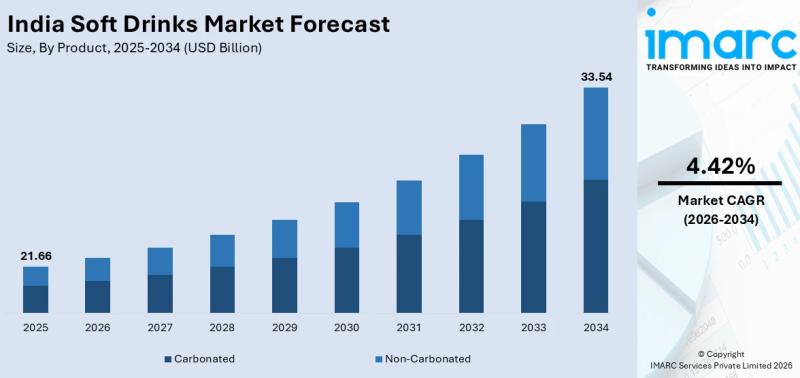
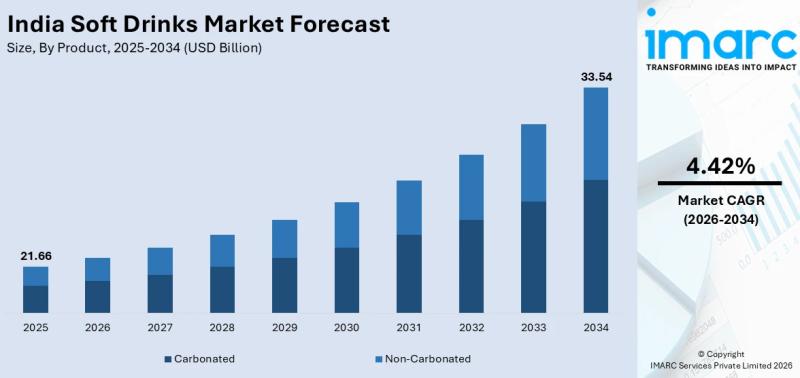
According to IMARC Group’s report titled “India Soft Drinks Market Size, Share, Trends and Forecast by Product, Distribution Channel, and Region, 2026-2034,” the soft drinks market in India was valued at USD 21.66 Billion in 2025 and is anticipated to increase to USD 33.54 Billion by 2034, reflecting a compound annual growth rate (CAGR) of 4.42% from 2026 to 2034.
Market Dynamics
The landscape of soft drinks in India is undergoing structural changes, moving away from traditional sugary carbonated beverages towards a more varied ecosystem valued at USD 33.54 Billion, influenced by functional wellness and rapid retail developments.
- Steady 4.42% CAGR Trajectory: The market is projected to grow from USD 21.66 Billion in 2025 to USD 33.54 Billion by 2034, driven by youthful demographics and rising middle-class consumption.
- Carbonated Dominance: Carbonated beverages hold a substantial 52.3% market share, benefiting from strong brand loyalty and frequent purchases during peak tropical seasons.
- The Health & Wellness Pivot: Consumers are rapidly shifting towards low-sugar, zero-calorie, and functional ready-to-drink (RTD) options, compelling established brands to innovate.
- Tier 2 and Tier 3 Retail Explosion: The growth of convenience stores—which currently command a 38.4% share of distribution—is unlocking vast, previously untapped revenue opportunities in rural and semi-urban areas.
The CXO Blindspot
Food and Beverage executives must address a critical oversight: the “Sugar Liability & Premiumization Lag.” Many established manufacturers are still dependent on high-sugar products, underestimating the urban consumer’s shift toward functional and zero-calorie alternatives. Neglecting this trend can lead to significant issues for legacy brands.
Strategic Insights for the Market
Understanding and adapting to the evolving landscape is essential for stakeholders:
- Localization of Raw Materials: Government-backed policies are promoting domestic sourcing of ingredients like fruit pulps, reducing reliance on imports and stabilizing costs.
- Sustainable Packaging Mandates: Important regulations are pushing the industry toward fully recyclable materials, aligning with India’s circular economy objectives.
- Health-Conscious Regulatory Push: The FSSAI is tightening labeling requirements and encouraging sugar reduction, pressuring manufacturers to create healthier alternatives.
Why Invest in the India Soft Drinks Market
Several factors make this market an attractive investment opportunity:
- Colossal Youth Demographic: A large, youthful population coupled with rising disposable incomes ensures steady demand for beverages.
- Policy Support & Manufacturing Subsidies: Government initiatives ease the financial burden for businesses, enhancing profitability and expediting break-even timelines.
- Premiumization via Functional Upgrades: Urban consumers are willing to pay more for premium, functional beverages, enabling brands to achieve higher operational margins.
- Omnichannel Supply Chain Efficiencies: The rise of quick-commerce and digital networks is streamlining supply chains and reducing customer acquisition costs.
India Soft Drinks Market Trends
Current trends shaping the market include:
- Growth in Functional & Energy Drinks: Demand for utility-driven hydrating options like electrolyte-infused waters and vitamin-enhanced beverages is rising.
- Regional Flavor Resurgence: Brands are incorporating traditional Indian flavors into scalable beverage formats.
- AI-Driven Flavor Development: Companies are using AI to create localized flavors quickly, improving time-to-market.
- Sustainable Packaging Strategies: To meet compliance and cost challenges, manufacturers are adopting lighter packaging solutions.
- Direct-to-Consumer Models: Premium brands are successfully using subscription services to bypass traditional retail challenges.
Key Takeaways
- The India soft drinks market is projected to reach USD 33.54 Billion by 2034.
- Carbonated beverages currently dominate market share but face challenges from health-focused alternatives.
- There’s a strong shift toward low-calorie and functional beverages.
- Urbanization is driving retail growth, particularly through convenience stores.
- Policy support is facilitating domestic manufacturing and sustainability efforts.
FAQ
What is the projected growth of the India Soft Drinks Market?
The India soft drinks market is expected to grow from USD 21.66 Billion in 2025 to USD 33.54 Billion by 2034, with a CAGR of 4.42% from 2026 to 2034.
Which segment holds the largest market share?
Carbonated beverages account for a significant 52.3% market share in 2025 due to established consumer loyalty.
What are the key distribution channels in this market?
Convenience stores lead the distribution landscape, holding a 38.4% market share, while online platforms are rapidly growing.
What challenges do beverage manufacturers face?
Manufacturers are navigating stringent health regulations and raw material price volatility, impacting cost and logistics.
How are consumer preferences changing?
There’s a notable shift towards healthier options, with increasing demand for low-sugar and natural beverages.
In conclusion, the India soft drinks market is on a promising trajectory toward diversification and health consciousness. As consumer preferences evolve, brands need to adapt swiftly to capture opportunities in this dynamic landscape.