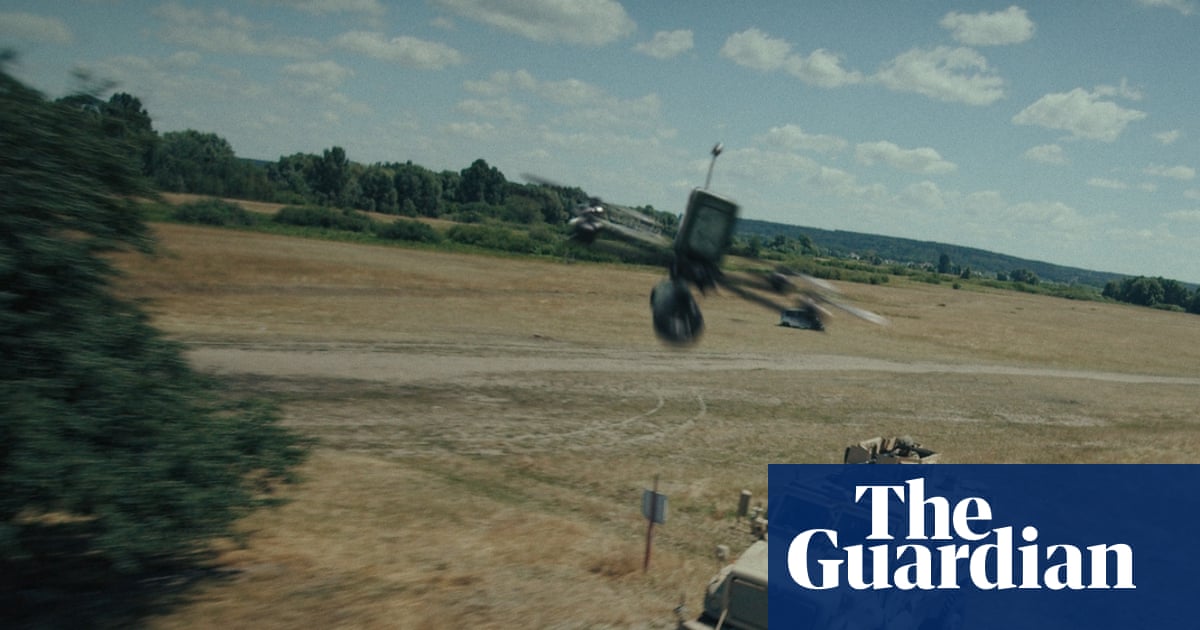
In a gripping portrayal of modern warfare, Ukraine’s latest film, Killhouse, offers a fresh twist reminiscent of classics like Saving Private Ryan. This action thriller, released this week, explores cutting-edge battlefield technology while weaving a powerful narrative inspired by real events.
The Story Behind the Film
Set in 2024 during a time when Washington and Kyiv are allies, the film features notable appearances, including that of Kyrylo Budanov, the former military intelligence chief of Ukraine. The story draws on a harrowing real-life incident in which a couple, trying to rescue their family, came under fire. A heroic Ukrainian military unit intervened, guiding the woman to safety with a drone, showcasing the innovation and resilience of the Ukrainian forces.
“A friend of mine, a journalist, rang me and said, ‘Liubomyr, I’ve got this story – it’ll give you goosebumps,’” Levytskyi recalled. “I didn’t expect much, but when I saw footage from the rescue, I was shocked by its authenticity.”
The director produced a 30-minute documentary, Follow Me, which gained considerable attention. “I realized that this story resonates with people. Drones are a relatively new concept in warfare, and this narrative deserved to be told as a film,” he stated.
The two-and-a-half-hour film was shot in the Kyiv region last year, blending fact with fiction. The plot includes a subplot about a young girl kidnapped by Russian forces, with scenes unfolding in various locations such as the White House situation room, occupied eastern Ukraine, and a farmhouse in a dangerous gray zone. Notably, there are intense shootouts and car chases in downtown Kyiv.
The film depicts people caught up in the race for technological superiority on the Ukrainian battlefield. Photograph: Ukrainian Film Division
American journalist Audrey MacAlpine portrays a character based on herself and noted several interruptions during filming due to air raid alerts. “It was a war within a war,” she described. Co-star Denis Kapustin mentioned that some cast members sought refuge in bomb shelters while waiting for threats to pass. “This movie is incredibly meta and postmodern,” he reflected.
Kapustin emphasized that Killhouse captures the complex layers of modern warfare. “It’s a race for technological advancement,” he explained. The film combines acting with actual military involvement, employing pyrotechnics to simulate warfare. After filming, Kapustin enlisted in the same unit that his character represented—the 3rd Assault Brigade, now working as a drone operator.
Notably, a sequence shows special forces clearing a building, leading to intense confrontations. Kapustin noted that while much of the combat occurs from a distance, close-quarters fighting remains prevalent in devastated towns like Vovchansk. “It’s realistic. The goal is to minimize casualties,” he remarked.
At the centre of the story is the use of a military drone to help a civilian escape the battlefield. Photograph: Ukrainian Film Division
Initial feedback from Ukrainian audiences has been encouraging. “It’s fascinating to see familiar figures like Budanov portrayed on screen,” said Mariia Hlazunova from the Dovzhenko Centre, Ukraine’s film archive. “The blend of fiction and reality is compelling, and the film embodies a sense of patriotism, though it does contain some clichéd moments. Overall, it’s a strong depiction.”
Involvement from Ukraine’s top intelligence agencies, including the Security Service of Ukraine (SBU) and the Defence Intelligence of Ukraine (DIU), lent authenticity to the production. The agencies provided military vehicles and equipment, including a Black Hawk helicopter. Notably, the film features the latest Ukrainian-manufactured drones, such as the Shark reconnaissance model.
Claimed to be the first feature film to utilize footage from actual combat drones, the filmmakers are currently preparing an English-language version for international audiences and are contemplating a multi-episode adaptation for streaming services. Killhouse was produced independently with a budget of $1.1 million, devoid of state funding.
Similar to Saving Private Ryan, the film raises a critical moral question: is it justifiable to sacrifice many lives to save one, especially a child? Ukraine’s army media unit noted that Killhouse illustrates “an often-overlooked aspect of warfare,” highlighting that Ukrainian soldiers are not only fighting for territory but also risking their lives to rescue civilians.
Reflecting on the ongoing war, Levytskyi remarked that Vladimir Putin significantly misjudged Ukraine’s resolve and unity when he launched his full-scale invasion in 2022, believing he could swiftly conquer Kyiv. As the conflict persists, the director asserts, “The enemy fears a united Ukraine. That’s a proven fact.”
Additional reporting by Jake Jacobs
Key Takeaways
- Authentic Inspiration: The film is based on a true story of rescue under fire.
- Modern Warfare: It showcases the integration of drones in contemporary combat.
- Filming Challenges: Production faced real-time challenges due to air raid alerts.
- Patriotism: The film evokes strong nationalistic sentiments among audiences.
- Innovation: Features advanced military technology, including unique Ukrainian drones.
- Multidimensional Narrative: Blends fictional and non-fictional elements to enhance storytelling.
FAQ
What is the central theme of Killhouse?
The film delves into the moral dilemmas of war, particularly the sacrifices made to save civilians.
When was Killhouse released?
Killhouse was released this week, showcasing its relevance in current events.
Who directed the film?
Liubomyr Levytskyi is the director, who aimed to capture real-life stories of heroism in wartime.
Is there an English version of the film?
Yes, the filmmakers are preparing an English-language version for international distribution.