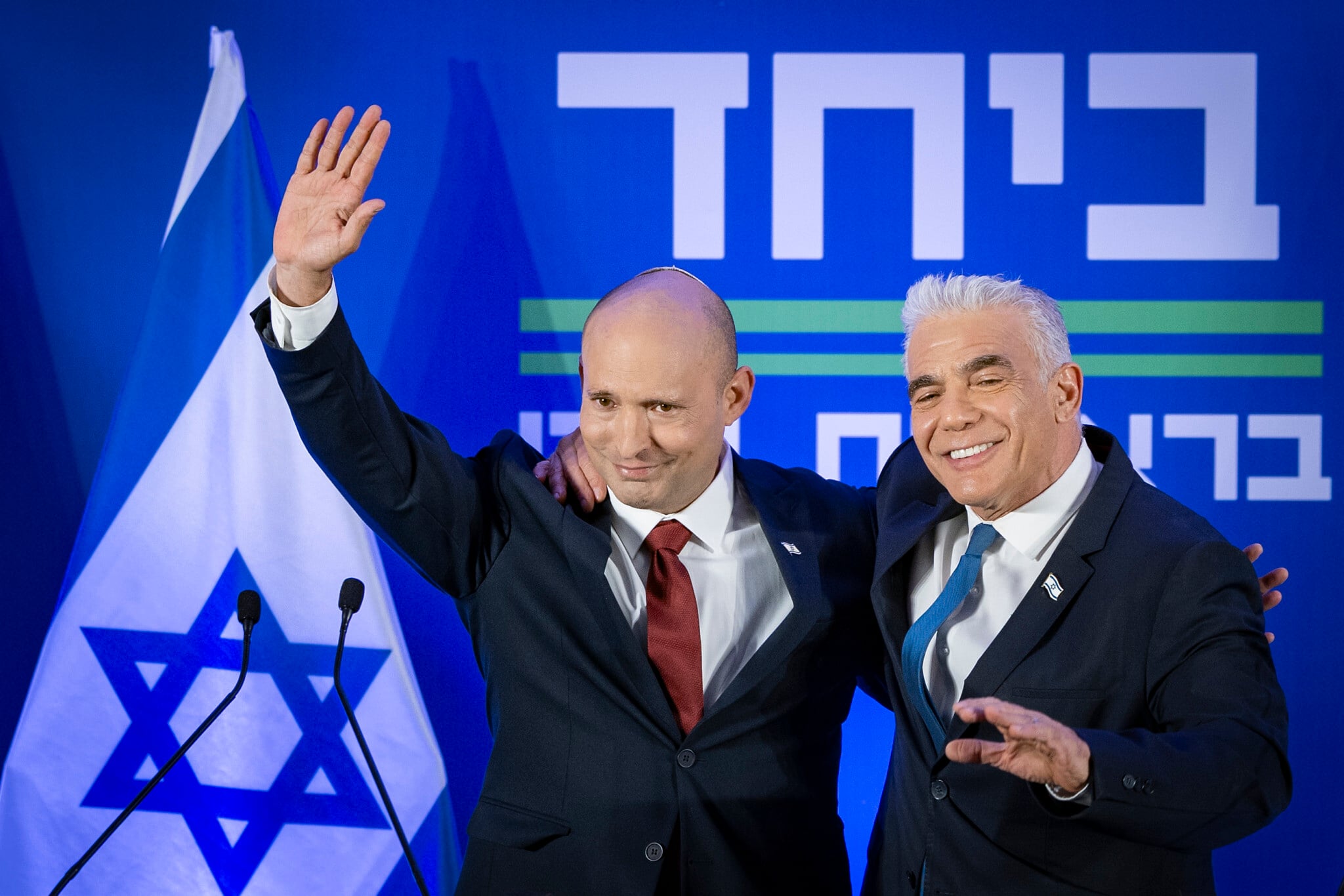
The recent announcement from former prime ministers Naftali Bennett and Yair Lapid marks a significant moment in Israeli politics. Uniting their two parties under the banner “Together – Led by Bennett,” they aim to create a cohesive alliance that seeks to champion the interests of the nation ahead of the upcoming elections.
Addressing reporters in Herzliya, Bennett described the collaboration with Lapid as the “most Zionist and patriotic act we have ever done, for the sake of our country,” declaring an end to the “era of division.” He expressed his determination, stating that he and Lapid—the current leader of the opposition—are “racing forward to victory.” Bennett extended an invitation to Yashar party chairman Gadi Eisenkot, affirming that “our door is open for you too.”
Bennett emphasized his identity as a “right-wing, liberal Zionist,” asserting that he will only collaborate with Zionist parties, hinting that he would not partner with Arab parties again. He vowed that all Israelis, regardless of their voting preferences, would feel represented by the government. “We’re not in the left bloc or the right bloc; we’re in the bloc of the entire Israeli nation,” he stated.
Lapid reciprocated, stating that he and his centrist Yesh Atid party were “setting ego aside and doing what is right for the State of Israel.” He argued that “to win the elections, the entire Israeli center must stand behind Naftali Bennett.”
“We are uniting today to win the elections and to establish a Zionist government, strong and stable. A partnership between the center and right, between religious and secular, between north and south—without draft dodging and without extremism,” Lapid continued. He emphasized, “Israel has the best people in the world. They deserve an efficient, functioning, honest government, one that invests in the working public that serves in the army, in reservists and their families.”

Bennett and Lapid previously collaborated during 2021-2022 to lead a short-lived coalition comprising a diverse array of parties, including the Arab party Ra’am. Their contemporary alliance will not formally merge their factions but will instead create a joint list for the upcoming election, projected for no later than the end of October.
A recent Maariv poll indicated that Bennett’s party is competing closely with Prime Minister Benjamin Netanyahu’s Likud, each projected to secure 24 Knesset seats, while Yesh Atid is expected to receive 7, and Eisenkot’s Yashar is likely to garner 12.
Bennett, who has emphasized advancing consensus-driven issues, has reportedly been in discussions with Lapid and Eisenkot regarding the potential formation of a new party called “New Israel.”
Eisenkot had initially proposed a merger in January, attracting the attention of Bennett and Lapid. Although the recent joint announcement seems to leave room for Eisenkot to join later, he has expressed aspirations to lead such an alliance himself.
When asked about recent polling that suggested a combined ticket of Eisenkot, Lapid, and Bennett could become the largest Knesset faction, Bennett downplayed the significance, asserting, “Our joint move, Yair Lapid’s and mine, is a massive move. It is a bold move.”
“This is a ‘whoever dares wins’ move,” he emphasized. “In challenging times, one must act with audacity. This is just the beginning, and we will win big,” he concluded.
Praise and AI-generated derision
Eisenkot joined other opposition leaders in praising the merger, framing it as part of a broader initiative to unseat the current government. “The goal of winning the critical elections ahead of us is a shared one,” he stated, calling Bennett and Lapid “partners” and committing to act “responsibly and wisely” for the necessary change in Israel.
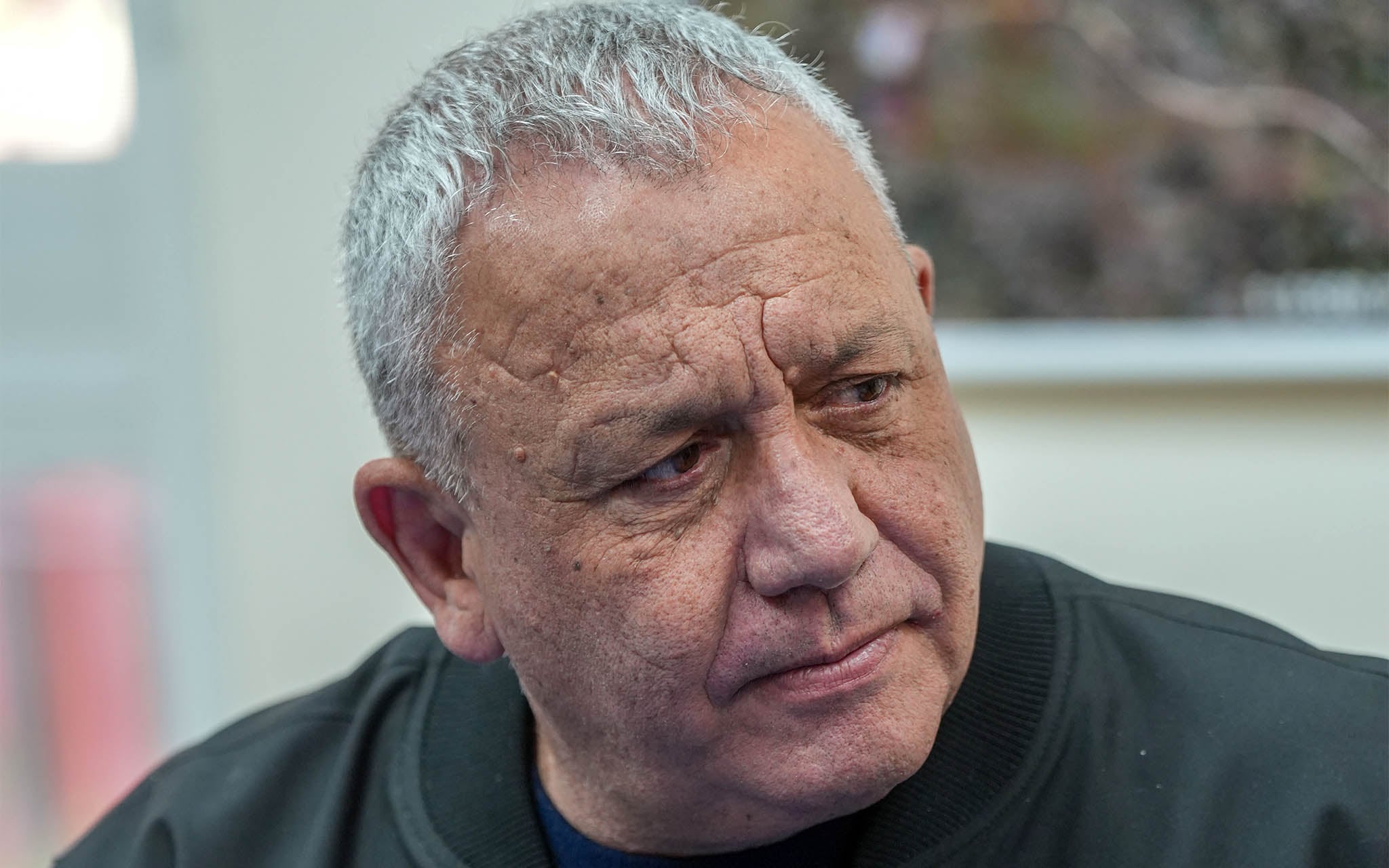
Benny Gantz, leader of the Blue and White party, welcomed the alliance but emphasized the need for “the real connection” among all segments of the population—“without boycotts and without hatred.” He argued that only a “broad Zionist unity government” that excludes extremists could facilitate progress in the country.
Democrats party chairman Yair Golan, Yisrael Beytenu party chairman Avigdor Liberman, and Reservists party chairman Yoaz Hendel also extended their best wishes to the new party, while members of Netanyahu’s coalition accused Lapid and Bennett of paving the way for Islamists to enter political power.
“The Bennett-Lapid ‘brotherhood alliance’ is back to selling the country to the Islamic movement,” declared National Security Minister Itamar Ben Gvir. He characterized Bennett as a “radical leftist,” sharing an AI-generated image depicting Abbas officiating a wedding between Bennett and Lapid.
ברית האחים של בנט-לפיד חוזרת למכור את המדינה לתנועה האסלאמית. בנט היה שמאל קיצוני ויישאר שמאל קיצוני. pic.twitter.com/MaoEf71W8m
Likud’s party account shared its own AI-generated image showing Ra’am party leader Mansour Abbas driving a car with Bennett and Lapid depicted as children in the backseat. “Even together, it is clear—Mansour is the driver,” read the post. “No matter how the Left divides its votes, Bennett and Lapid will once again align with the Muslim Brotherhood, supporters of terrorism.”
The previous Bennett-Lapid government, operating from 2021 to 2022, achieved historical significance by incorporating Abbas’s Islamist Ra’am into its coalition. This coalition marked the end of Netanyahu’s long-standing leadership, and many on the right vehemently opposed it, leading to the eventual dissolution of Bennett’s Yamina party and the return of Netanyahu to power.
At the “Together” press conference, Bennett recalled that Netanyahu, in his quest to build a coalition after the 2021 elections, had sought to include both Bennett and Abbas, even praising Abbas as “a great Arab leader” and suggesting that a coalition with Ra’am could represent a historic “internal Abraham Accords.”
Finance Minister Bezalel Smotrich mocked the alliance, posting an image of Bennett and Lapid smiling with Abbas, calling it the “Abbas servant alliance.”
In March 2025, Bennett indicated that a future government under his leadership would exclude Arab parties, advocating for a government of only Zionist factions, reflecting his commitment to traditional ideological stances.
Bennett, historically associated with hawkish pro-settler views, has progressively moved towards the center, advocating for public transportation on Shabbat and civil marriage reforms.
In a recent interview with the Kan public broadcaster, Bennett asserted the importance of unifying within the Zionist-liberal opposition. He drew parallels to Hungary’s political landscape, where a conservative figure successfully unseated a long-standing leader with a largely liberal coalition.
“In Israel too, if they bring someone who does not represent the right, we will continue to lose,” he commented, confirming that he had reached out to Eisenkot about the possibility of running together. “I identify as a hawk on security issues, and I am a liberal nationally, open to dialogue with both left and right,” he concluded.
Ariela Karmel contributed to this report.
Key Takeaways
- Naftali Bennett and Yair Lapid have formed a new political alliance called “Together – Led by Bennett.”
- Bennett emphasizes a right-wing, liberal Zionist approach without alliances with Arab parties.
- Lapid stresses the importance of unity among centrist and right-wing parties for electoral success.
- The combined ticket will not merge their parties but will present a unified list for the upcoming elections.
- Recent polls indicate their party could be competitive against Netanyahu’s Likud.
- Bennett aims to lead a government focused on security, education, and economic issues.
FAQ
What is the significance of the alliance between Bennett and Lapid?
The alliance aims to consolidate support among center and right-wing voters to create a stronger coalition for the upcoming elections.
Will this alliance change the party’s names?
No, while they are forming a combined ticket, their respective parties will remain intact.
What are the main goals of the new alliance?
The alliance aims to establish a stable Zionist government, focusing on security, education, and fighting corruption.
How did the previous coalition led by Bennett and Lapid perform?
The previous coalition lasted for a year and included diverse parties, marking the first interruption of Netanyahu’s premiership since 2009.
This new alliance signals a strategic shift in Israeli politics, emphasizing unity and collaboration for the benefit of the nation, as both leaders navigate the complexities of the upcoming election landscape.