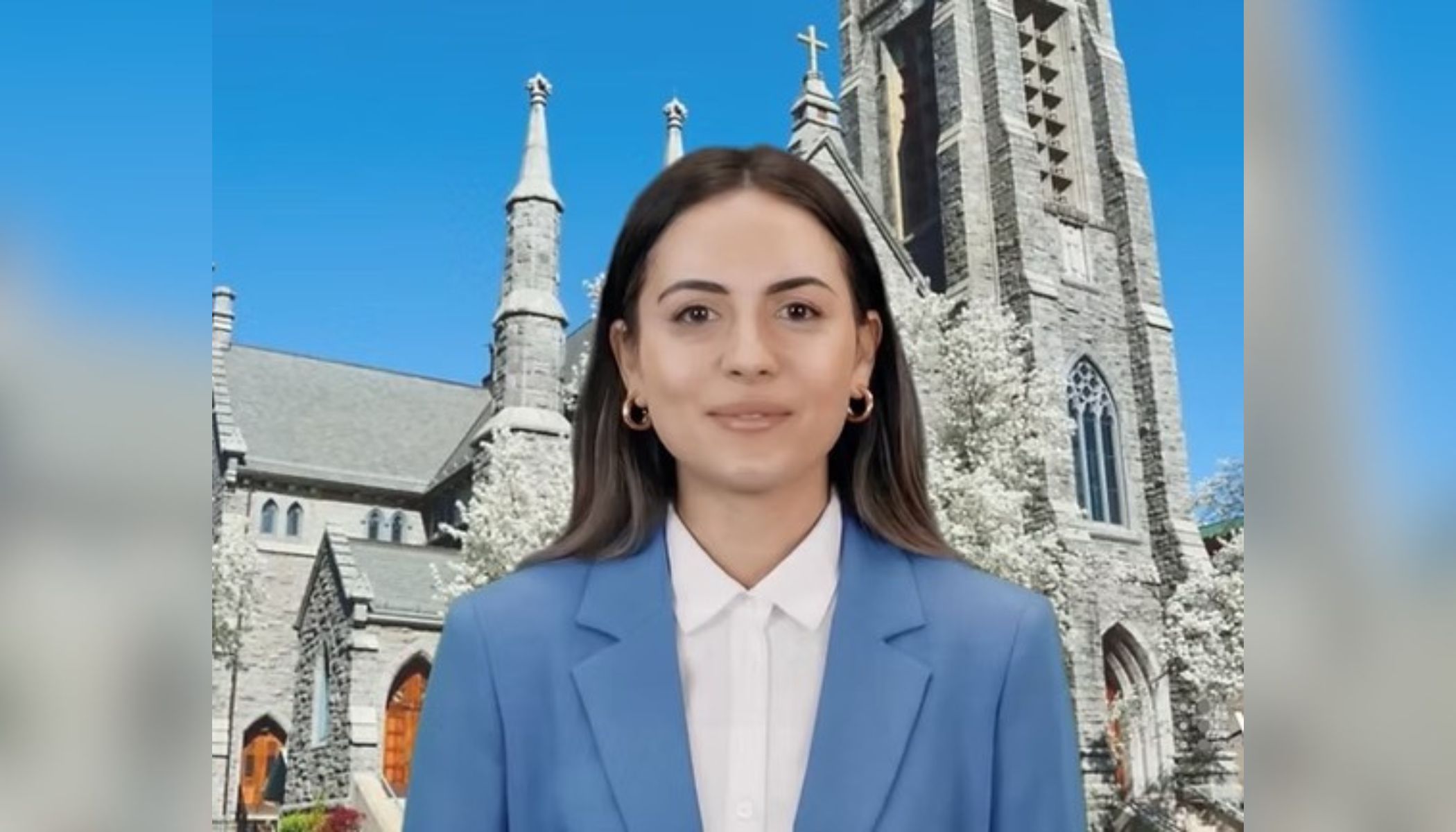
The Diocese of Bridgeport, Connecticut, is launching an innovative fundraising initiative utilizing an AI tool designed to engage local Catholics. This initiative is being promoted as the “world’s first virtual engagement officer.”
This month, the diocese officially introduced “Maria”. The purpose of this tool is to “thoughtfully examine how new technologies can facilitate more attentive listening, consistent communication, and personalized engagement with community members.”
Bishop Frank Caggiano mentions on the program’s website that this digital assistant aims to “help us discern how technology might enhance our connections and provide support.”
“Maria will assist us in discovering how digital tools can enrich our listening capabilities and encourage more personalized interactions, all while maintaining human relationships at the core of the Church’s mission,” he stated.
Ethical Safeguards and “Huge Potential”
On the April 15 episode of his podcast “Let Me Be Frank,” Caggiano humorously referred to himself as “technologically a Neanderthal,” yet expressed his enthusiasm for the tool’s dual purpose: fundraising and evangelization.
In a conversation with diocesan chancellor Deacon Patrick Toole, who has a technology background with IBM, Caggiano posed an interesting question: can an AI agent ever operate independently of human oversight?
Toole acknowledged the possibility of this occurring, but emphasized that AI companies implement substantial safeguards to ensure proper training and control over AI systems.
He noted that discussions within the diocesan chancery about using AI for the mission have been fruitful, with fundraising identified as an optimal area to experiment due to limited resources.
“My primary concern was ensuring we effectively communicate all the exciting initiatives happening,” he shared.
Emily Groccia, a vice president at Givzey— the company that helped develop Maria— noted during the podcast that the tool was introduced to 1,000 donors in late March.
Groccia mentioned that part of Maria’s function is to “graduate” donors to live representatives when necessary, such as when someone wants to significantly increase their donation or raises sensitive personal questions that are better addressed by a human.
“We are very careful about permitting our AI to engage in topics beyond traditional fundraising,” she added.
The bishop sees AI fundraising as having “huge potential” for the nearly 200 dioceses across the United States but stressed the necessity of “guidelines” to ensure human engagement remains central.
“For instance, if someone mentions a death, I would prefer that the AI remains silent,” he remarked. “I want a human to respond. As a Church, we represent something unique.”
Diocesan spokesperson Marie Oates shared examples of Maria’s interactions with local Catholics. In one instance, a parishioner inquired about volunteer opportunities with immigrants. Maria successfully directed her to local Catholic Charities for immigration services.
In another case, a mother reached out to Maria for ways to connect with other moms in diocesan programs. Maria provided information about programs involving mothers’ groups and family ministries.

The Diocese of Bridgeport’s virtual AI assistant Maria offers to help connect a local Catholic mother with family ministries. | Credit: Courtesy of the Diocese of Bridgeport
Oates noted that both interactions “underscore the program’s purpose,” which aims to utilize AI to enhance rather than replace human connections.
“[We aim to use] AI to fill the gaps in our ability as a Church to directly communicate with everyone, fostering deeper personal connections and interactions that allow us to better accompany one another,” she explained.
On the bishop’s podcast, Toole emphasized that Catholics have a unique chance to utilize AI technology responsibly, “as long as we keep Christ at the center and align our efforts with Him.”
Caggiano characterized AI innovation as a monumental change in human experience, akin to the advent of the printing press.
“No one on this planet, not even the pioneers of AI, truly knows where this journey will lead,” he asserted. “We need to determine the direction it should take.”