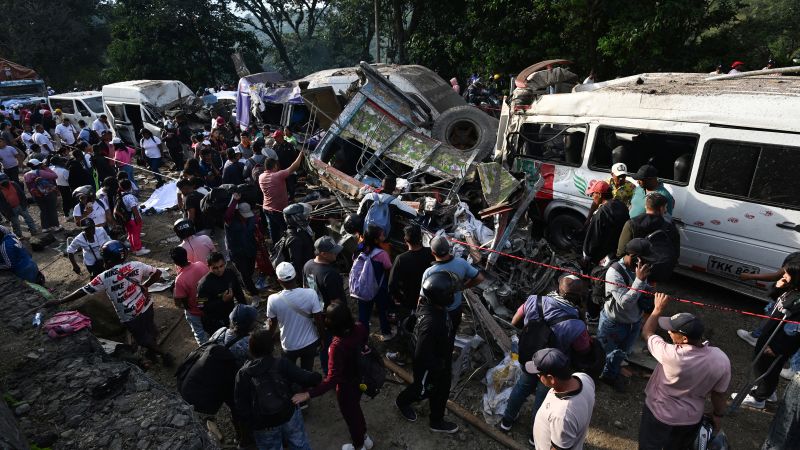
A tragic incident took place on a busy road in southwestern Colombia, where at least 14 individuals lost their lives and around 38 others were injured, including five children. Local authorities provided these details following a bomb explosion that rocked the region.
This devastating event was part of a broader “wave” of terror attacks occurring over the weekend, according to Colombian officials, highlighting the resurgence of deadly violence in the country.
Cauca Governor Octavio Guzmán reported, “An explosive device was detonated on the Pan-American Highway, in the El Túnel sector of Cajibío, in an indiscriminate attack against the civilian population,” as he noted in a post on X.
Guzmán later updated that Colombia’s Minister of Defense, Pedro Sánchez, was present at the explosion site to assist in “coordinating rescue efforts.” Authorities have initiated a national security council to tackle this serious situation, as stated by the governor.
Footage shared on social media depicted the aftermath of the explosion, showcasing a substantial crater at the center of the road. Deformed cars, trucks, and buses were scattered around the explosion site, along with the remains of the victims.
“We are facing a terrorist escalation that demands immediate responses,” Guzmán emphasized, making an “urgent” appeal to national authorities to ensure public security.

Reports of violent incidents have also surfaced from various locations, including El Túnel, El Tambo, Caloto, Popayán, Guachené, Mercaderes, and Miranda, which General Commander of Military Forces of Colombia Hugo Alejandro López Barreto characterized as “a wave of attacks.”
The bombing on the highway has been attributed to dissident factions of a previously disbanded leftist militant organization, the Revolutionary Armed Forces of Colombia (FARC), which is currently led by Néstor Gregorio Vera Fernández, commonly known as “Iván Mordisco.”
FARC had laid down their arms in 2016 and disbanded following a peace agreement that ended over five decades of conflict with the Colombian government— a conflict that resulted in over 220,000 deaths and the displacement of approximately 5 million Colombians.
Nevertheless, some members of the militant group chose not to participate in the peace process from the outset. These dissident fighters, including various splinter groups that often clash with one another, have continued a low-level insurgency in certain rural areas of Colombia.
At a press conference, López Barreto noted that “a wave of attacks” occurred in the departments of Cauca and Valle del Cauca on Saturday, attributing the violence to the “criminal structures” of FARC dissidents led by “Iván Mordisco.”
“In the last two days, 26 terrorist actions have taken place in the Cauca and Valle del Cauca departments, impacting our civilian population,” stated López, emphasizing that this series of attacks is a reaction to the “sustained pressure” the Colombian government has applied against these groups’ criminal activities.
President Gustavo Petro has called for the “maximum international pursuit” against this narco-terrorist group, linking their actions to those of “Iván Mordisco.”
“Those responsible for the attack that killed seven civilians and injured 17 more in Cajibío—many of whom are indigenous—are terrorists, fascists, and drug traffickers,” Petro remarked on X.
This assault occurred just hours after Petro’s visit to Venezuela, during which he, along with Colombia’s top military leaders, announced a joint initiative to combat criminal organizations along their extensive shared border, spanning over 1,370 miles.
Key Takeaways
- A bomb explosion in southwestern Colombia resulted in 14 deaths and 38 injuries.
- Colombian authorities attribute the violence to dissidents of the Revolutionary Armed Forces of Colombia (FARC).
- Officials describe the event as part of a broader surge in terror attacks in the region.
- The government has initiated a national security council to address the escalating violence.
- President Gustavo Petro is calling for international action against the perpetrators.
FAQ
What was the outcome of the recent bomb explosion in Colombia?
The explosion left at least 14 people dead and around 38 injured, including children.
Who is responsible for the attack?
The Colombian Armed Forces have blamed dissident factions of the FARC for the bombing.
What actions have Colombian authorities taken in response?
A national security council has been initiated to address the escalating terror attacks in the region.
What did President Petro say about the incident?
President Petro condemned the attackers as terrorists and called for global action against them.
In conclusion, this tragic event underscores the ongoing challenges Colombia faces with violence and terrorism. The swift response from national authorities highlights a commitment to restore security in affected areas.