In the midst of escalating tensions between the United States and Iran, the situation continues to evolve rapidly. As both nations exchange threats, the potential implications for global markets and regional stability are cause for concern.
DUBAI, United Arab Emirates (AP) — Airstrikes pounded Tehran on Tuesday, and Iranian officials urged young people to form human chains to protect power plants, just hours before the deadline imposed by U.S. President Donald Trump for the Islamic Republic to reopen the crucial Strait of Hormuz, or face severe retaliation against its infrastructure.
Trump has extended previous deadlines, but this one, set for 8 p.m. in Washington, appears to be definitive. The escalating rhetoric on both sides is heightening tensions, leaving Iranians apprehensive. Trump has threatened to destroy Iran’s power plants and bridges if Tehran does not allow shipping traffic to resume fully in the strait, a vital route for a significant portion of the world’s oil supply. Iran’s president stated that 14 million citizens, including himself, are ready to defend their country.
Even though Iran lacks the advanced weaponry and air dominance of the U.S. and Israel, its control over the Strait of Hormuz is inflicting considerable damage on the global economy and exerting pressure on Trump to resolve the conflict.
Diplomatic efforts are ongoing, although Iran has declined the latest American proposal, raising doubts about the possibility of a timely agreement to prevent Trump’s threatened military action. World leaders and analysts caution that such destructive strikes could potentially be classified as war crimes.
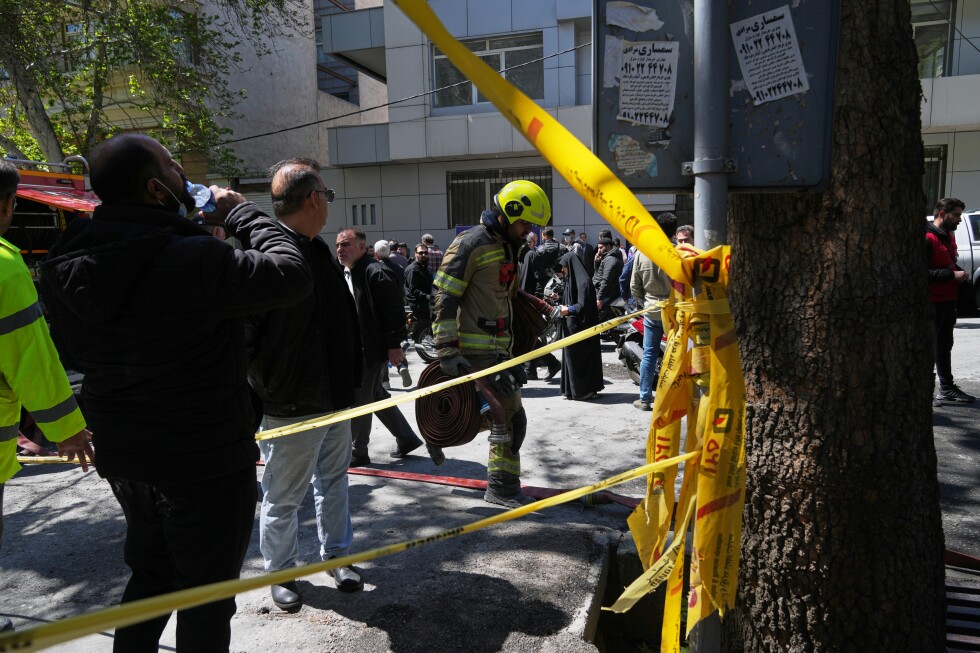
Meanwhile, a fresh wave of airstrikes struck locations in Iran, including residential neighborhoods in Tehran, resulting in the deaths of nearly three dozen people. Iran retaliated by striking targets in Israel and Saudi Arabia, which led to the temporary closure of a crucial bridge.
As the deadline approaches, rhetoric ramps up
In stressing the urgency of his Tuesday deadline, Trump warned, “the entire country can be taken out in one night.”
“Every bridge in Iran will be decimated by 12 o’clock tomorrow night,” he declared, suggesting that all power plants would be “burning, exploding, and never to be used again.”
In response, Iran’s authorities called upon “all young people, athletes, artists, students, and university professors” to form human chains around power plants.
“Power plants that are our national assets and capital,” Alireza Rahimi, the secretary of the Supreme Council of Youth and Adolescents, stated in a video message.
In past instances of heightened tensions with the West, Iranians have formed human chains around nuclear sites.
President Masoud Pezeshkian announced on X that 14 million Iranians had responded to state media calls and text messages, ready to volunteer for the defense of their nation.
“I too have been, am, and will remain ready to give my life for Iran,” Pezeshkian shared.
A general from the Revolutionary Guard also called on parents to send their children to man checkpoints, which have become frequent targets of airstrikes.
Trump’s threat prompts warnings of war crimes
France has joined other nations in urging caution. Foreign Minister Jean-Noël Barrot stated that attacks on civilian and energy infrastructure are “barred by the rules of war and international law.”
He cautioned that such actions “would trigger a new phase of escalation, leading to reprisals that could pull the region and the global economy into a damaging cycle.”
U.N. Secretary-General António Guterres reiterated that attacks on civilian infrastructure are illegal under international law, according to his spokesperson. These instances are notoriously challenging to prosecute, and Trump expressed that he is “not at all” worried about committing war crimes.
A wave of airstrikes hits Iran, which fires on Saudi Arabia and Israel
A series of intense airstrikes targeted Tehran, including possible strikes on a weapons depot and residential areas. Previous residential strikes have closely followed Iranian government and security personnel.
Israel’s military announced its strike on an Iranian petrochemical site in Shiraz, marking the second consecutive day of such attacks after targeting a plant at the South Pars natural gas field. The military also issued a Farsi-language communication advising Iranians to avoid train travel throughout the day, hinting at impending strikes on the rail network.
Another airstrike hit the Khorramabad International Airport in western Iran, while a strike on an undisclosed target in Alborz province resulted in 18 fatalities, according to state media.
Incidents in Shahriar and Pardis claimed nine and six lives, respectively, as reported by Iranian media.
On Tuesday morning, Tehran launched seven ballistic missiles at Saudi Arabia, which officials stated produced debris near energy facilities as they were intercepted. Damage is currently under assessment, according to Defense Ministry spokesman Maj. Gen. Turki al-Malki.
This led Saudi Arabia to temporarily close the King Fahd Causeway, the sole road connection between the country and Bahrain, which houses the U.S. Navy’s 5th Fleet.
Iran also directed missile fire at Israel, with reports of incoming missiles noted in Tel Aviv and Eilat.
Since the war commenced, over 1,900 individuals have perished in Iran; the government has not provided an updated toll in days.
In Lebanon, where Israel is engaged with Iran-backed Hezbollah militants, more than 1,400 people have died, with over one million displaced. Eleven Israeli soldiers have also lost their lives there.
Meanwhile, in Gulf Arab states and the occupied West Bank, more than two dozen individuals have died, alongside reports of 23 fatalities in Israel and 13 U.S. service members killed.
Chokehold on the Strait of Hormuz
After the U.S. and Israel initiated attacks on February 28, Iran effectively closed shipping through the Strait of Hormuz. The ensuing Iranian strikes against the energy infrastructure of neighboring Gulf Arab states, along with its control of the strait, have significantly driven up oil prices, further influencing the costs of gasoline, food, and other essentials far beyond the Middle Eastern region.
As of Tuesday, Brent crude, the international benchmark, exceeded $108 per barrel, representing a 50% increase since the conflict began.
Despite Iran’s rejection of the latest U.S. proposal, diplomatic conversations continue. On Monday, Iran turned down a 45-day ceasefire proposal, insisting instead on a permanent resolution to the conflict. As the deadline loomed on Tuesday, an official reported that indirect discussions between the United States and Iran were ongoing. Mediators from Pakistan, Egypt, and Turkey are said to be racing against time to facilitate a compromise before the deadline.
The official indicated that Iran is linking the reopening of the Strait of Hormuz to sanctions relief, a stance met with U.S. openness to easing certain sanctions, particularly on Iran’s oil sector, to help stabilize the global oil market.
The official requested anonymity to discuss the sensitive diplomatic situation.
Key Takeaways
- Escalating tensions between the U.S. and Iran are nearing a critical deadline.
- Iran has mobilized civilians to protect critical infrastructure.
- International leaders are urging restraint and warning against actions that could constitute war crimes.
- A series of airstrikes have resulted in significant casualties across multiple regions.
- Iran’s control over the Strait of Hormuz is affecting global oil prices and regional economies.
- Ongoing diplomatic talks may still provide a path to de-escalation.
FAQ
What is the Strait of Hormuz’s significance?
The Strait of Hormuz is a key maritime passage for oil shipments, with about a fifth of the world’s oil supply transiting through it during peaceful times.
What actions has Iran taken in response to U.S. threats?
Iran has mobilized citizens to form human chains around power plants and has launched retaliation strikes on both Israel and Saudi Arabia.
How have global leaders responded to the situation?
Many global leaders have called for restraint and highlighted the potential for war crimes in targeting civilian infrastructure.
What are the implications of rising oil prices?
Surging oil prices can lead to increased costs for gasoline, food, and other essential goods, impacting economies around the world.
As the situation continues to develop, the focus remains on finding diplomatic resolutions to prevent further escalation and humanitarian crises.