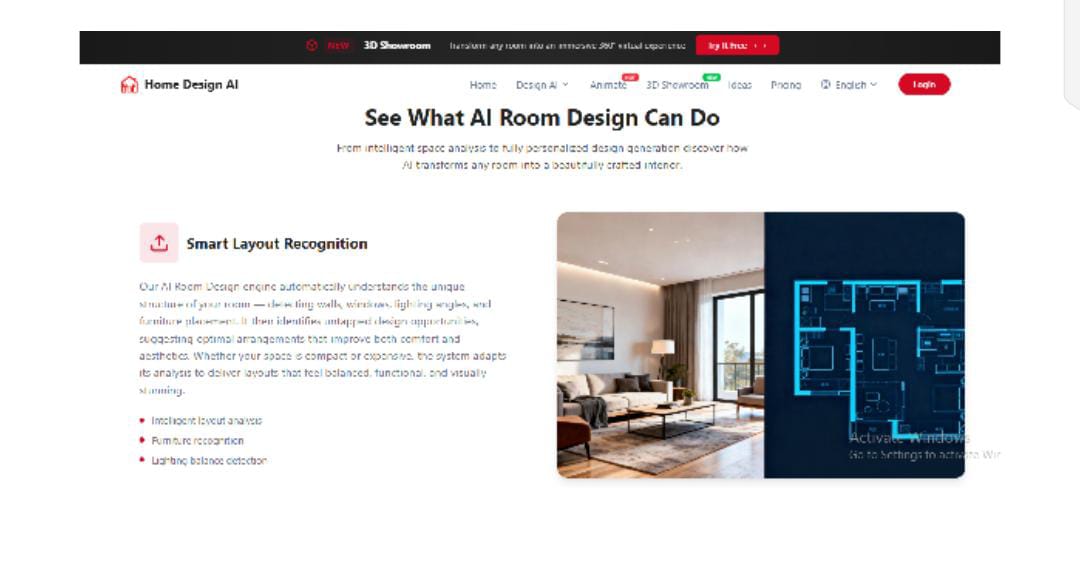
Interior design has long required a blend of creativity, experience, and often considerable time and financial investment. In recent years, however, the emergence of artificial intelligence has transformed the way we approach our living spaces. Platforms like Home-Design.ai exemplify this change, providing a more accessible means for experimentation in room design without the need for specialized skills.
Instead of navigating lengthy planning processes or relying on professional designers, AI room design tools enable users to quickly visualize various layouts, styles, and color schemes with just a simple photo of a room. While these tools don’t replace the depth of traditional design, they empower more individuals to engage in the creative process.
How AI Room Design Tools Work in Practice
Fundamentally, AI room design uses image recognition and pattern analysis. When a user uploads a photo, the system identifies essential elements such as walls, furniture arrangement, lighting, and dimensions. It then generates multiple design variations based on chosen styles.
One of the exciting aspects of this technology is its intuitive nature. Instead of grappling with complicated design software, users can easily choose from options that reflect styles such as modern, minimalist, or rustic. The AI interprets these preferences and applies them to the space.
The ability to iterate rapidly is another significant advantage. Users can seamlessly shift from one idea to another in moments, observing how minor adjustments like wall color or furniture placement impact the room’s overall ambiance. This flexibility fosters a spirit of experimentation often absent in traditional design processes.
Key Features That Shape the Experience
AI-driven design platforms typically include several core features that enhance user experience. While individual tools may differ slightly, they generally emphasize speed, visualization, and user-friendliness.
Instant Visualization
One of the most appealing features is the near-instantaneous visual feedback. After uploading a photo, users can see redesigned versions of their spaces in mere seconds, reducing much of the guesswork traditionally involved in room makeovers.
Style Variety
AI tools often provide a wide spectrum of visual styles, from sleek modern aesthetics to warm, eclectic designs. This variety allows users to explore concepts they may not have previously considered, potentially igniting fresh ideas for their spaces.
Real-Time Adjustments
Many platforms enable users to adjust elements like furniture, colors, or layouts with instant visual feedback. This fosters an interactive experience where design evolves through exploration rather than adhering to a fixed plan.
Accessibility for Beginners
Perhaps the most notable change is how approachable these tools have become. Traditional interior design often demands knowledge of color theory, spatial dynamics, and materials. AI simplifies this complexity, enabling anyone to embark on their design journey, regardless of their background.
The Benefits of Using AI for Room Design
The increasing popularity of AI room design tools highlights several practical benefits. While not intended to replace professional designers entirely, these tools serve as a valuable starting point for many users.
Reducing Uncertainty
One of the primary hurdles in interior design is envisioning how various elements will come together. AI-generated visuals address these uncertainties, making it simpler to make confident design decisions.
Saving Time
Instead of sifting through endless inspiration boards or visiting numerous stores, users can swiftly generate and compare design ideas in one platform. This significantly speeds up the initial planning stages.
Encouraging Creativity
The cost-free nature of experimentation fosters a willingness to explore bold or unconventional ideas. This often results in spaces that reflect personal tastes rather than conforming to mainstream trends.
A Starting Point for Deeper Design
For those looking to collaborate with a professional designer, AI-generated concepts can provide a useful reference point. They offer visual inspiration that can facilitate more in-depth discussions.
Things to Keep in Mind
While AI room design tools are convenient, they do have their limitations. The designs generated rely on algorithms, which may not always consider practical constraints like budget, material availability, or structural factors.
Furthermore, the realism of the generated visuals is contingent on the quality of the input. Factors such as lighting, image quality, and room angles can influence how accurate the final designs appear. It’s advisable to treat these visuals as sources of inspiration rather than definitive plans.
Additionally, the human element in design—embracing personal narratives, emotional connections, and cultural influences—remains something AI can’t fully replicate. For many, this aspect is essential to creating a meaningful living space.
A Changing Approach to Home Design
The rise of AI in the realm of interior design signifies a broader trend toward greater accessibility and convenience. What was once a specialized field is increasingly becoming more open, allowing individuals to actively contribute to their environment’s design.
Platforms like Home-Design epitomize how technology can enhance creativity rather than replace it. By streamlining the design process and lowering barriers, they empower users to explore ideas at their own pace.
Ultimately, designing a room remains a deeply personal experience. Whether one chooses to utilize AI as a launchpad or adhere to traditional methods, the objective remains unchanged: to create a space that feels comfortable, functional, and uniquely individual.