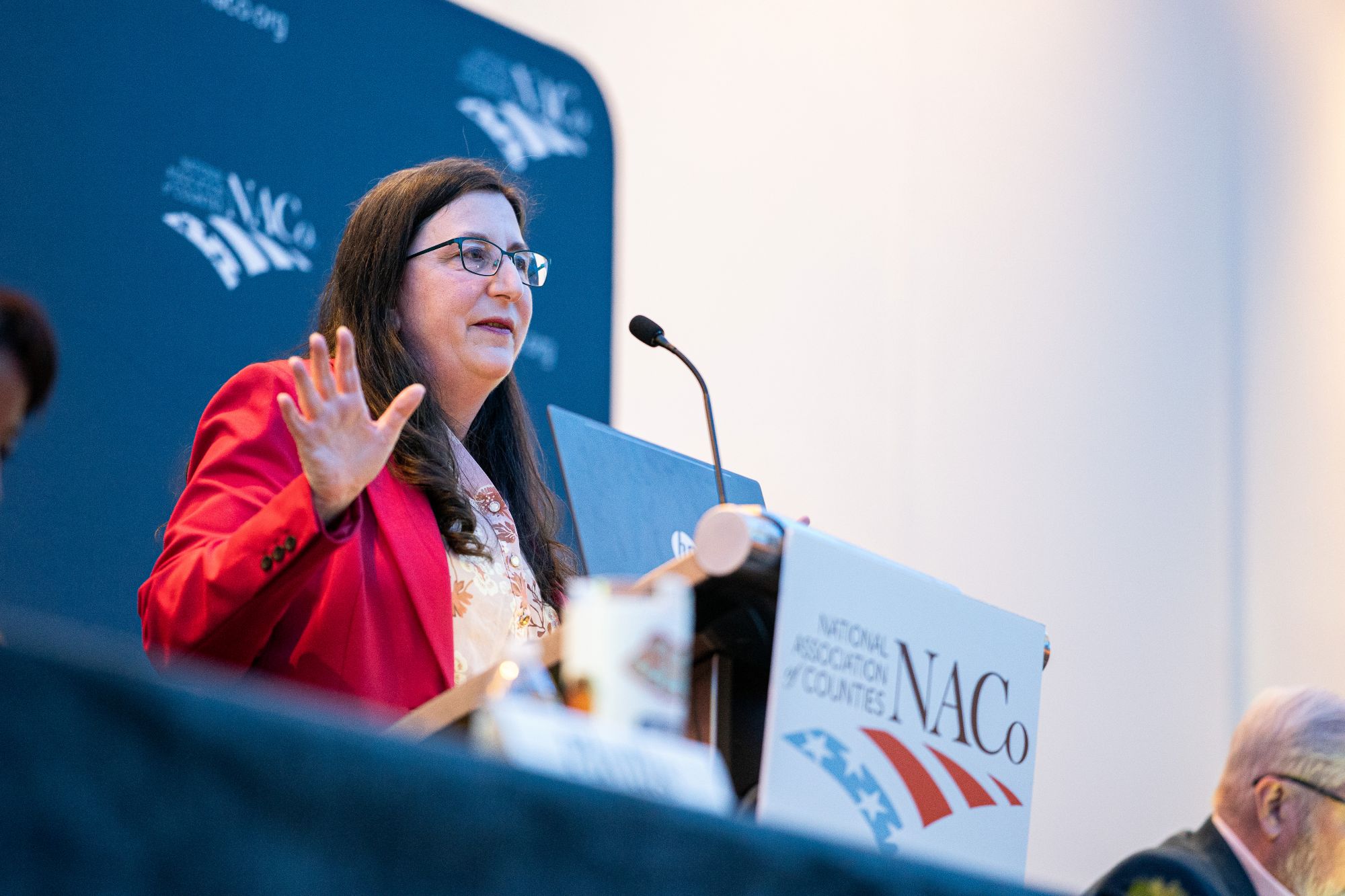
In an era where technology is rapidly evolving, local governments face both exciting opportunities and significant challenges. During a meeting on February 22 with the Mid-Size County Caucus, Shannon Smith, the director of Public Sector services at CAI, emphasized the importance of enhancing cybersecurity and thoughtfully managing the integration of artificial intelligence (AI).
Addressing the caucus members, Smith outlined how emerging technologies, particularly generative AI and expansive data centers, are reshaping the landscape for local governments. With her previous experience as the CIO chief of staff for King County, Washington, she highlighted the pressing need for counties to brace themselves against increasingly sophisticated cyber threats. Many local governments still depend on outdated technology systems, some of which are decades old, leaving them particularly vulnerable to attacks.
“Threat actors target weak usernames and passwords, outmoded systems, and employees who might inadvertently click on a malicious link,” Smith explained. “While ransomware often makes the news, these basic vulnerabilities are frequently the starting point.”
Smith pointed out that AI is exacerbating these threats. Tools like ChatGPT, Claude, and Gemini empower attackers to automate phishing schemes, perfect their scams, and launch mass attacks swiftly and cheaply.
“AI enables threat actors to operate at an accelerated pace and learn from their unsuccessful attempts,” she noted. “They no longer require large teams to execute complex cyber operations.”
Conversely, Smith mentioned that AI can also enhance government operations if employed responsibly. She urged counties to prioritize stronger password protections, implement multi-factor authentication, and enhance employee training regarding data security and AI tools.
Education regarding the use of AI systems is particularly critical, as employees might unknowingly upload sensitive data onto public AI platforms, posing risks to government agencies.
Moreover, Smith advocated for regional collaboration among counties, cities, private companies, and universities to share essential cybersecurity information and best practices.
In addition to security concerns, Smith highlighted the rapid expansion of AI infrastructure, notably large “hyperscale” data centers run by companies such as Amazon and Microsoft. The demand for computational power is prompting a surge in new facilities across the United States.
Currently, data centers account for about 4% of the nation’s electricity usage, a figure that could rise to 9-12% by 2030, she indicated. Notably, a single hyperscale facility can consume as much energy as 100,000 homes and utilize millions of gallons of water daily.
While this growth presents economic opportunities, Smith emphasized the need for counties to weigh these advantages against infrastructure and environmental considerations.
She also encouraged local leaders to involve residents early in the process of adopting AI technologies in public services.
“People want clarity on how their data is utilized and whether human oversight remains in the process,” Smith stated. “Initiating these discussions early fosters trust and helps you understand how your community wishes to utilize these tools.”
In conclusion, while the challenges posed by AI and cybersecurity may appear formidable, Smith maintained that with deliberate policies and collaborative efforts, counties can responsibly incorporate new technologies while safeguarding public data and services.