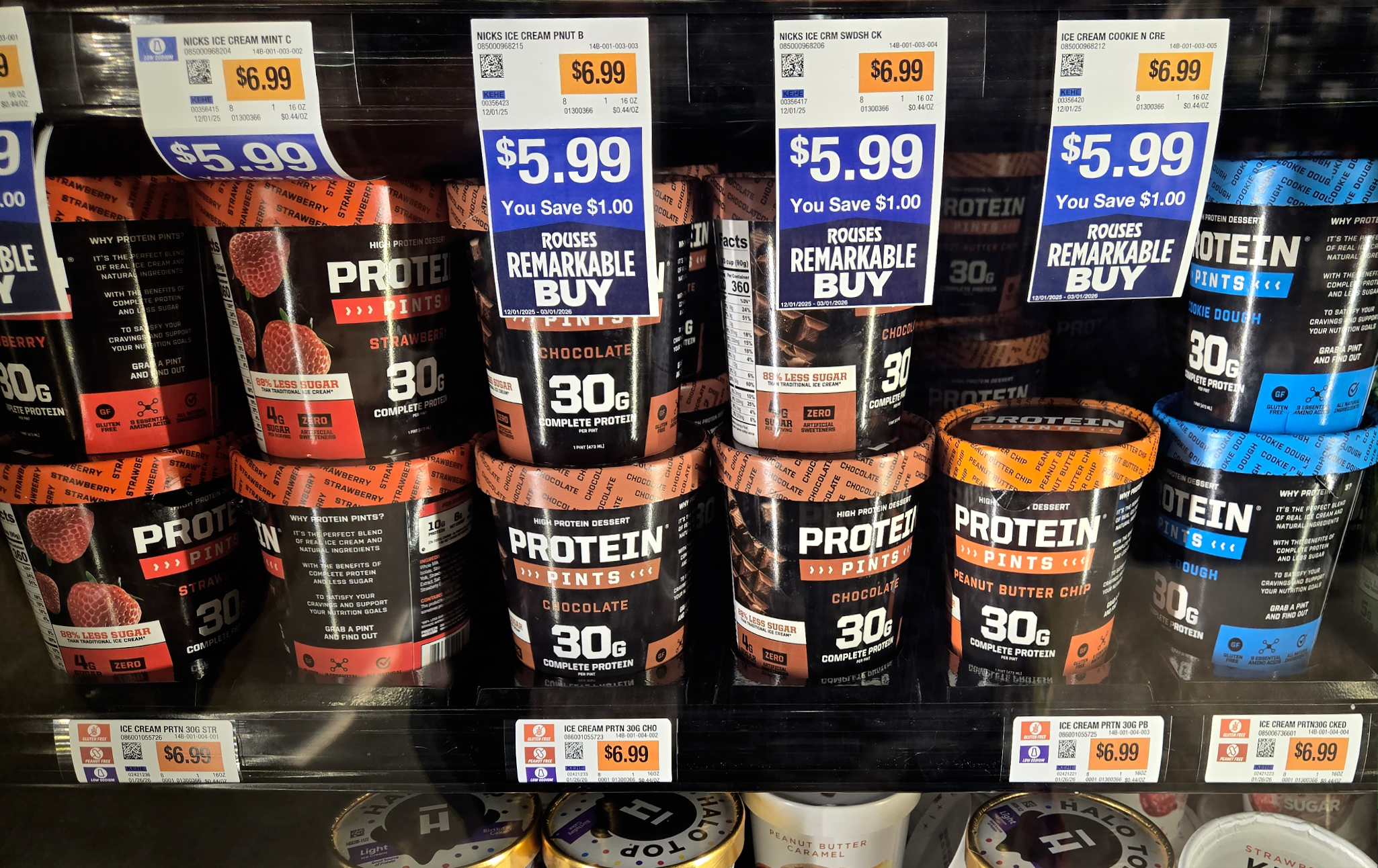
In recent times, it seems my neighborhood supermarket has morphed into a haven for protein-packed products. The transformation was subtle; it wasn’t any sudden shift in the vibe of shoppers or a change in the store’s ambiance. Instead, it’s a noteworthy surge in the variety of items featuring protein—you name it, and it probably has protein in it.
This trend extends beyond just the energy bars I’ve always avoided. It encompasses a plethora of products: protein beer, protein cookies, protein cereal, protein potato chips, and even protein pancake mix—plus countless bottled concoctions of protein, espresso, and milk that seem made for those desiring a gritty morning coffee experience. Even the beloved Blue Bell ice cream brand has joined the fray, launching Blue Bell PRO, a high-protein frozen dessert that boasts over 33 grams of protein in a single serving.
The rise of this protein-centric shift is not merely coincidence; statistics paint a clear picture. A 2025 report from Cargill highlights that 34% of shoppers now prioritize protein content when selecting snacks—up 9% since 2020. Meat consumption is also on the ascent, with U.S. restaurant menus offering 12% more meat items than the previous year. Interestingly, “protein interest” is growing three times faster in the meat sector compared to plant-based alternatives, as corroborated by Food & Wine.
This rapid embrace of dietary trends is not a new phenomenon. Grocery stores swung from a focus on low-fat products in the 2000s to no-sugar options, only to pivot back to real sugar after realizing the downsides of high-fructose corn syrup. (Does anyone else fondly remember those Nickelodeon ads that helped us identify sugar by any ingredient that rhymed with “gross”?)
Curiously, despite this overwhelming protein trend, cases of protein deficiency remain almost non-existent in developed nations. Most individuals meet their protein needs through regular diets. As noted by the Center for Nutrition Studies, even a diet consisting solely of oatmeal would satisfy daily protein requirements. Yet, recommended protein intake levels seem to have shifted—or at least adjusted—in response to governmental pushes toward an ideal of masculinity and strength.
In January, the Trump administration released new dietary guidelines suggesting a daily protein consumption of 1.2 to 1.6 grams per kilogram of body weight—nearly double previous recommendations—with a strong emphasis on dairy and meat. For someone weighing 150 pounds, that translates to around 104 grams daily, equivalent to 17 eggs or four steak servings (or even three cartons of salted caramel Blue Bell PRO!). The Department of Health and Human Services has promoted these guidelines under the banner of “Evangelizing Real Food,” prioritizing protein as a key component.
Several motives lie behind this sudden emphasis on Americans’ diets. Primarily, the administration seems eager to assign blame for the country’s soaring healthcare costs and rising disease rates. According to the DHHS’s fact sheet titled “Reducing Healthcare Costs,” Americans spend 2.5 times more on healthcare compared to other developed countries, with the U.S. experiencing the highest rates of obesity and Type 2 Diabetes in the developed world. (Interestingly, the CIA Factbook was removed from the internet by the Trump administration without further explanation.)
Increasing protein intake doesn’t automatically translate to better health, though protein is indeed essential for repairing tissues and supporting functions at a cellular level. While those aiming to bulk up should monitor their protein intake, the larger issue affecting Americans’ health lies in a generally sedentary lifestyle. Half of the U.S. population reports sitting for over 9.5 hours daily. Sure, consuming more meat may aid muscle growth if one hits the gym, but it won’t necessarily lower blood pressure. Research indicates that greater consumption of animal protein correlates with increased health risks, including a notable 23% rise in chronic disease mortality among those who consume more meat.
So why is Health Secretary RFK Jr. advocating for higher meat intake while simultaneously trying to reign in healthcare costs? The rationale appears misguided. The government seems to have embraced the misconception that protein equates to strength—a significant quality in Uncle Sam’s pursuit of global dominance. The new guidelines lament that 77% of military-age youth are ineligible for military service, citing health issues related to diet. The message is clear: how can we project power with “overweight generals” and troops too feeble to wield a rifle?
To project dominance, it seems the groundwork must begin at the dining table. Remarkably, just weeks before Trump initiated military actions against Iran, Kennedy Jr. proclaimed, “the war on protein is over.” (It’s worth noting that the true aggressors in this so-called war remain obscure.)
Times of geopolitical tension often turn dietary choices into matters of national security. During World War II, agencies like the U.S. Food Administration emphasized diets rich in animal protein as acts of patriotism. The USDA’s 1941 “Make America Strong” campaign featured posters depicting muscular men lifting weights and families dining on “protective foods,” including milk, eggs, and fish.
Fast forward to the Cold War, and President John F. Kennedy initiated a fitness campaign against the backdrop of concerns regarding a “soft America,” suggesting that flabby citizens made the nation vulnerable. In a 1960 Sports Illustrated cover, Kennedy stated:
The first indication of a decline in the physical strength and ability of young Americans became apparent among United States soldiers in the early stages of the Korean War.
The second came when figures were released showing that almost one out of every two young Americans were being rejected by Selective Service as mentally, morally, or physically unfit.
It’s amusing to imagine how Kennedy might react today with far more young Americans facing ineligibility. Kennedy continued:
Thus, in a very real and immediate sense, our growing softness, our increasing lack of physical fitness, is a menace to our security.
However, we do not, like the ancient Spartans, wish to train the bodies of our youth to make them more effective warriors. It is our profound hope and expectation that Americans will never again have to expend their strength in armed conflict.
Even as Kennedy tried to downplay concerns over physical fitness, he recognized the necessity for a strong citizenry in the event of a military draft. Yet he, too, knew he needed to frame it as an appeal for personal freedom: “We do not live in a regimented society where men are forced to live their lives in the interest of the state,” he emphasized, “but if we are to maintain this freedom… physical toughness is crucial.”
The government would not forcibly require improved diets or exercise regimens. However, Kennedy suggested that true patriots would naturally aspire to better their health—linking personal well-being to national pride.
This interconnection between propaganda and cultural norms often leads to the chicken-or-egg dilemma. Are current protein enthusiasts merely echoing the sentiments of Trump’s administration, or is it the government’s rhetoric reflecting a pre-existing cultural obsession? The reality is quite nuanced. Political messaging and cultural trends often circulate, influencing each other and solidifying into what seems like common sense. Typically, the government doesn’t need to explicitly dictate ideologies—especially when disguised under the guise of health advantages.
Consider the shifts in American fitness culture post-9/11. Across the nation, workout routines began mirroring military training methodologies. Programs like CrossFit introduced workouts reminiscent of combat situations, while initiatives like Tough Mudder offered urban dwellers a chance to test their “warrior” instincts—all without leaving the suburban landscape.
No one can argue that fitness and a balanced diet are crucial. Yet, these programs promise more than just health. As CrossFit’s founder Greg Glassman put it, the objective was to “prepare for not only the known but the unknowable”—a reassuring promise amid the anxieties of the post-9/11 landscape.
Most Americans aren’t gearing up for battle. Despite worries about enlistment rates, it’s questionable whether the government will ever resort to a draft to fulfill its military ambitions. The current military strength suffices to impose will globally. The harsh sanctions first implemented by Kennedy against Cuba have only intensified since then. The MAGA movement seemingly seeks to project an image of strength and dominance through robust eating habits; men indulge in hefty servings of meat and shake protein drinks as a means of fantasizing about manhood and war, rather than actual combat.
In truth, the struggles many face are much more mundane. Instead of addressing accessible healthcare and affordable living conditions, the direction seems to lead to increased protein intake as a solution to overall wellness. If you find yourself feeling weakened or overwhelmed by life’s demands, perhaps a strict carnivore diet or Spiked Protein Swoleberry Beer might offer a fleeting sense of empowerment. In a country where guaranteed healthcare and stability remain uncertain commodities, controlling your protein intake is, perhaps, the only domain left where individuals feel they can exert influence.