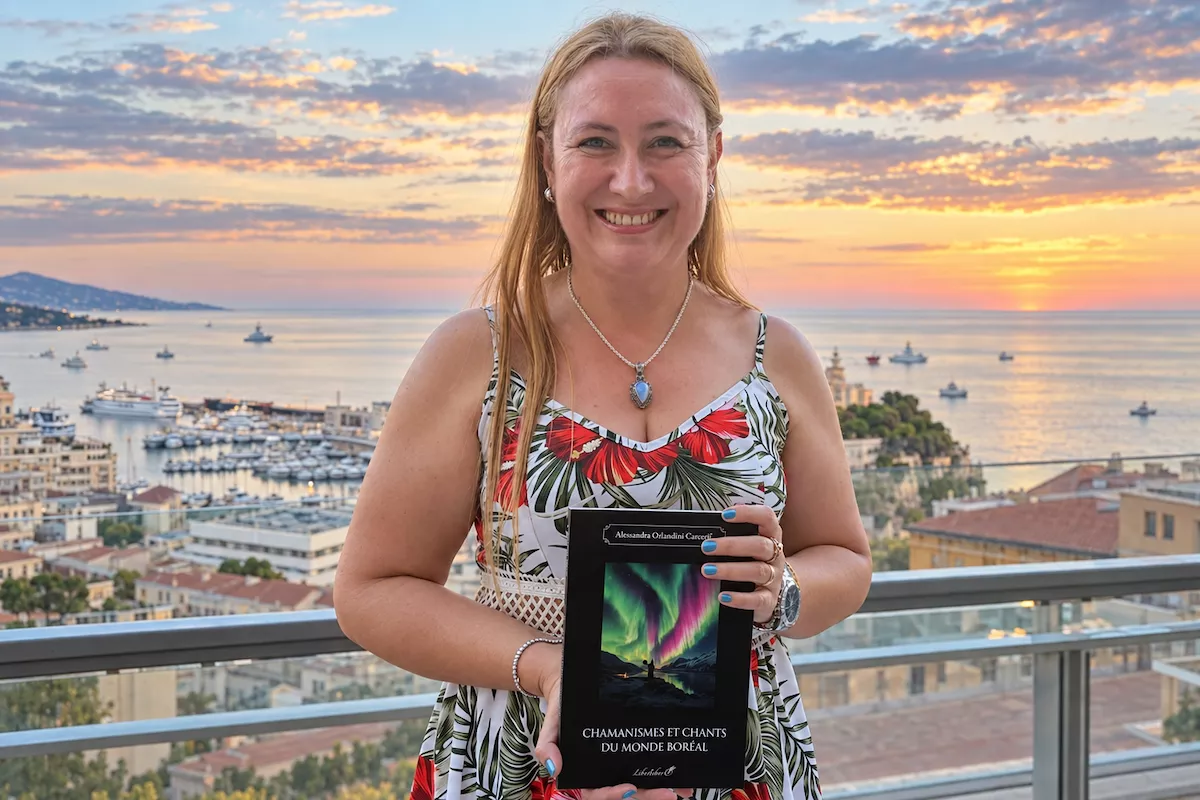
Dr. Alessandra Orlandini Carcreff delivered a compelling lecture titled Chamanisme et magie on September 14 at Monaco’s Musée d’Anthropologie préhistorique, where she deconstructed prevalent New-Age misconceptions surrounding Sami shamanism and illuminated the importance of preserving indigenous pre-Christian traditions.
The Lecture’s Focus:
Introduced by museum director Elena Rossoni-Notter, Carcreff’s presentation spanned historical bear-hunting rituals to contemporary expressions in folk metal and classical music, emphasizing the tangible and complex nature of Sami spiritual heritage over vague mysticism.
Understanding Sami Shamanism:
Carcreff began by clarifying that shamanism should not be misconstrued as a simple blend of disparate cultural beliefs. Instead, she outlined it as a structured system consisting of three realms: an upper world inhabited by gods, a middle world for humans, and an underworld of ancestors. She noted the resilience of Sami traditions, echoing their survival despite past suppression by Nordic churches and authorities, who branded it as ‘sorcery.’
Sacred Practices and Traditions:
Shamans, or noaidi, engaged in deeply altered states of consciousness, navigating a transformative journey marked by rituals of symbolic death and rebirth. Alongside advanced techniques, shamans employed elaborate ceremonial attire, including masks and large drums crafted from sacred materials.
Carcreff illustrated the profound connections between these practices and nature, particularly highlighting the sacred nature of bear hunts among the Sami. These hunts were not merely physical challenges, but spiritual encounters, marked with respectful prayers to the bear.
Cultural Connections:
Tracing the cultural exchanges through ancient trade routes that linked the far north to southern regions, Carcreff identified universal themes of water, fire, and blood that appear across various mythologies, from the Vestal Virgins in Rome to legendary figures like Odin.
Revival in Modern Culture:
Carcreff also remarked on the late 19th-century revival of Sami traditions in art and music, drawing inspiration from the Kalevala and modern cultural references, such as Disney’s Frozen, which incorporates elements reminiscent of Sami life and traditions.
She emphasized that reclaiming these narratives is a vital aspect of cultural and political survival for the Sami, particularly after centuries of enforced Christianization.
Legacy in Popular Media:
Discussions included how Disney’s Frozen 2 involved significant research into Sami culture, creating the Northuldra tribe, which resonates strongly with traditional Sami life. The film’s soundtrack integrates elements of yoik, the traditional Sami chant, revealing how popular narratives can serve to preserve and communicate genuine cultural memories.
In conclusion, while Chamanisme et magie examined historical foundations, it underscored a modern renaissance of Sami spirituality, linking traditional practices with contemporary expressions in a global context.


